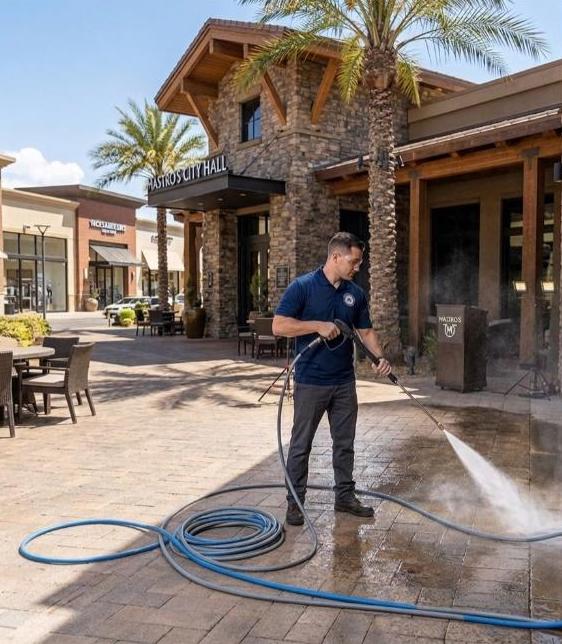

When discussing professional pressure washing, especially for commercial property cleaning in Phoenix, two acronyms frequently come up: PSI and GPM. While many assume PSI (Pounds Per Square Inch) is the only factor that matters, GPM (Gallons Per Minute) often plays a far more critical role in achieving superior, efficient, and safe results. Understanding the difference between these two measurements is fundamental to effective cleaning and is a hallmark of an experienced contractor.
At AZ Power Clean, we understand that effective pressure washing isn’t just about blasting away dirt; it’s about applying the right amount of pressure and water flow for the specific job at hand. For commercial properties, this distinction becomes even more vital, impacting everything from cleaning speed to surface integrity. Let’s break down what PSI and GPM truly mean in the real world of professional cleaning.
Decoding PSI and GPM: Beyond the Numbers
What is PSI (Pounds Per Square Inch)?
PSI refers to the force with which water exits the nozzle. Think of it as the cutting power. A higher PSI means more concentrated force on a smaller area. This is essential for breaking down stubborn contaminants like caked-on mud, graffiti, or deep-seated grime on hard, durable surfaces.
- High PSI (3000-4000+): Ideal for heavy-duty cleaning on resilient surfaces like concrete sidewalks, driveways, parking garages, and industrial equipment. It helps dislodge tough stains and deep-seated dirt.
- Low PSI (500-1500): Necessary for delicate surfaces such as stucco, painted exteriors, wood decks, or asphalt shingles, where excessive force could cause irreparable damage. This is often achieved through “soft washing” techniques, utilizing detergents more than brute force.
While high PSI sounds powerful, using too much pressure on the wrong surface can lead to etching, strip paint, splinter wood, or even compromise structural integrity. A professional knows precisely when to dial up the PSI and, more importantly, when to back off.
What is GPM (Gallons Per Minute)?
GPM measures the volume of water flowing through the pressure washer per minute. This is the rinsing power. While PSI breaks the bond between dirt and surface, GPM is what carries that loosened dirt away quickly and efficiently. For large commercial cleaning equipment and projects, GPM is often the unsung hero.
- High GPM (4-8+): Crucial for speed and efficiency, especially on expansive areas. More water volume means you can cover more ground faster, rinse away debris effectively, and prevent streaks.
- Low GPM (1-3): Typically found in residential or light-duty consumer units. These machines work, but they take significantly longer to clean large surfaces and can struggle with thorough rinsing.
Imagine trying to wash a large parking lot with a garden hose versus a fire hose. The garden hose has some pressure, but the sheer volume of the fire hose cleans and rinses much faster. That’s the GPM difference in action.
💡 Key Takeaway: PSI provides the force to break down dirt, but GPM provides the volume to rinse it away quickly. For large commercial jobs, higher GPM often translates directly to faster completion times and superior rinsing, minimizing streaks and ensuring a thorough clean.
Why GPM Often Matters More for Commercial Pressure Washing
For commercial properties, time is money, and efficiency is paramount. While adequate PSI is necessary to loosen grime, a higher GPM is what truly drives productivity on large surfaces like parking lots, expansive sidewalks, building exteriors, and fleet vehicles. Here’s why:
- Faster Cleaning: More water flow allows for a wider spray pattern and quicker coverage. You’re not just cleaning a thin line; you’re washing a significant area with each pass.
- Superior Rinsing: High GPM ensures all loosened dirt, grime, and cleaning solutions are thoroughly flushed away. This prevents unsightly streaks, residue buildup, and the need for re-rinsing.
- Consistent Results: With sufficient GPM, professionals can maintain a consistent cleaning pace, leading to uniform results across vast areas, a critical aspect for maintaining a professional appearance.
- Chemical Application & Rinsing: Many commercial cleaning tasks involve pre-treatment with detergents. Higher GPM machines are excellent for both applying these chemicals evenly and then rinsing them completely, preventing damage or residue.
A machine with high PSI but low GPM might be able to clean a small, extremely dirty spot, but it would be agonizingly slow and ineffective for a large commercial parking structure. Conversely, a machine with moderate PSI and high GPM can often clean large areas effectively by leveraging the sheer volume of water.
Matching Equipment to the Job: The Professional Approach
True professionals don’t just pick the highest PSI or GPM machine; they carefully match their equipment’s capabilities to the specific surface and type of contaminant. This nuanced understanding is what separates a DIY enthusiast from a seasoned expert.
Concrete and Masonry
For durable surfaces like concrete, brick, or pavers, a balance is key. We typically use machines delivering 3000-4000 PSI with 4-8+ GPM. The PSI is enough to break down oil stains, tire marks, and biological growth, while the high GPM quickly flushes everything away, preventing standing water and speeding up the process. For especially delicate or aged masonry, we might reduce PSI and rely more on specialized cleaning agents and increased GPM for rinsing.
Building Exteriors (Stucco, Siding, EIFS)
These surfaces require a gentler touch. High PSI can easily damage stucco, strip paint, or force water behind siding. Here, we often employ soft washing techniques, utilizing lower PSI (typically 500-1500) combined with higher GPM (4-6+). The cleaning solutions do the heavy lifting to loosen mold, mildew, and dirt, and the higher GPM ensures a thorough, streak-free rinse without damaging the building envelope.
Delicate Surfaces (Wood Decks, Awnings, Painted Metal)
For extremely delicate materials, the PSI can be as low as a garden hose, with specialized nozzles. The focus shifts entirely to chemical application and gentle rinsing with high GPM to carry away loosened contaminants without etching or marring the surface. This requires precise nozzle selection and careful distance management.
💡 Key Takeaway: Professional operators select the optimal PSI and GPM for each job. This ensures effective cleaning while protecting the integrity of diverse commercial surfaces, from robust concrete to delicate stucco.
The Difference Between Consumer and Commercial-Grade Equipment
It’s important to note that consumer-grade pressure washers, readily available at big box stores, typically offer 1200-2500 PSI and 1-3 GPM. While suitable for occasional home use, they are simply not built for the demands of commercial property cleaning.
| Feature | Consumer-Grade | Commercial-Grade |
|---|---|---|
| Typical PSI Range | 1200 – 2500 PSI | 3000 – 4000+ PSI |
| Typical GPM Range | 1 – 3 GPM | 4 – 8+ GPM |
| Pump Type | Axial Cam (shorter lifespan) | Triplex Plunger (durable, rebuildable) |
| Engine Type | Smaller electric or gas | Larger, more powerful gas engines |
| Duty Cycle | Intermittent use | Continuous, heavy-duty use |
Commercial-grade pressure washing equipment is built for durability, sustained performance, and higher output (both PSI and GPM) necessary to tackle large-scale projects efficiently and effectively. This robust equipment, combined with specialized training, allows companies like AZ Power Clean to deliver consistent, high-quality results.
💡 Key Takeaway: Commercial pressure washing demands robust, high-performance equipment with significantly higher GPM and durable components compared to consumer-grade models. This investment is crucial for delivering efficient, professional-grade cleaning on an ongoing basis.
For commercial property owners and managers in Phoenix, understanding the nuances of PSI and GPM helps clarify why professional pressure washing services are a worthwhile investment. It’s not just about having a powerful machine, but knowing how to wield it responsibly and effectively for every unique cleaning challenge.
Have questions about professional concrete cleaning in Phoenix? Give us a call today.
Frequently Asked Questions About Professional Pressure Washing
What is the ideal PSI for cleaning commercial concrete?
For commercial concrete, an ideal PSI range is typically between 3000-4000 PSI, coupled with a high GPM (4-8+) to effectively break down and rinse away tough stains, oil, grease, and grime without damaging the surface.
Can high PSI damage a commercial building’s exterior?
Yes, excessive PSI can severely damage various commercial building exteriors, including stucco, siding, paint, and mortar. Professionals utilize soft washing techniques and adjust PSI based on the material to prevent etching, cracking, or water intrusion.
Why is GPM more important than PSI for large projects?
For large projects, GPM dictates how quickly you can cover an area and how effectively you can rinse away loosened dirt and cleaning solutions. Higher GPM leads to faster job completion, superior rinsing, and more uniform, streak-free results across expansive surfaces.
What kind of equipment does AZ Power Clean use for commercial jobs?
AZ Power Clean utilizes commercial-grade pressure washing equipment specifically designed for heavy-duty, continuous operation. Our machines feature powerful engines, durable triplex plunger pumps, and outputs typically ranging from 3000-4000+ PSI with 4-8+ GPM, ensuring optimal performance for diverse commercial cleaning needs.