Family-Owned, Licensed and Insured, Serving Tempe Since 2015

Commercial Pressure Washing Services in Tempe, AZ

Tempe’s exterior cleaning problem is not a once-a-year inconvenience. It is a two-season cycle that keeps resetting. From January through June, Sonoran Desert dust settles into every horizontal surface, hard-water mineral deposits from irrigation overspray build a white haze across stucco facades, and UV exposure bakes both layers deeper into the material week by week. Then monsoon season arrives. A single haboob in July can cake mud-laced water across an entire building face overnight, and within days of the storm passing, the intense post-storm sun fuses that layer to the surface in a way that a simple rinse will not lift.

For a property manager responsible for a retail strip on Mill Avenue, an office park near the ASU Research Park, or a mixed-use building along Rio Salado Parkway, this cycle creates a credibility gap that costs real money. The building was clean two weeks ago. It does not look clean today. And in a city with the foot traffic density Tempe carries, every person who walks past is forming an impression before they reach the door.

AZ Power Clean works through the full cycle, not just the visible emergency, so that credibility gap stays closed.
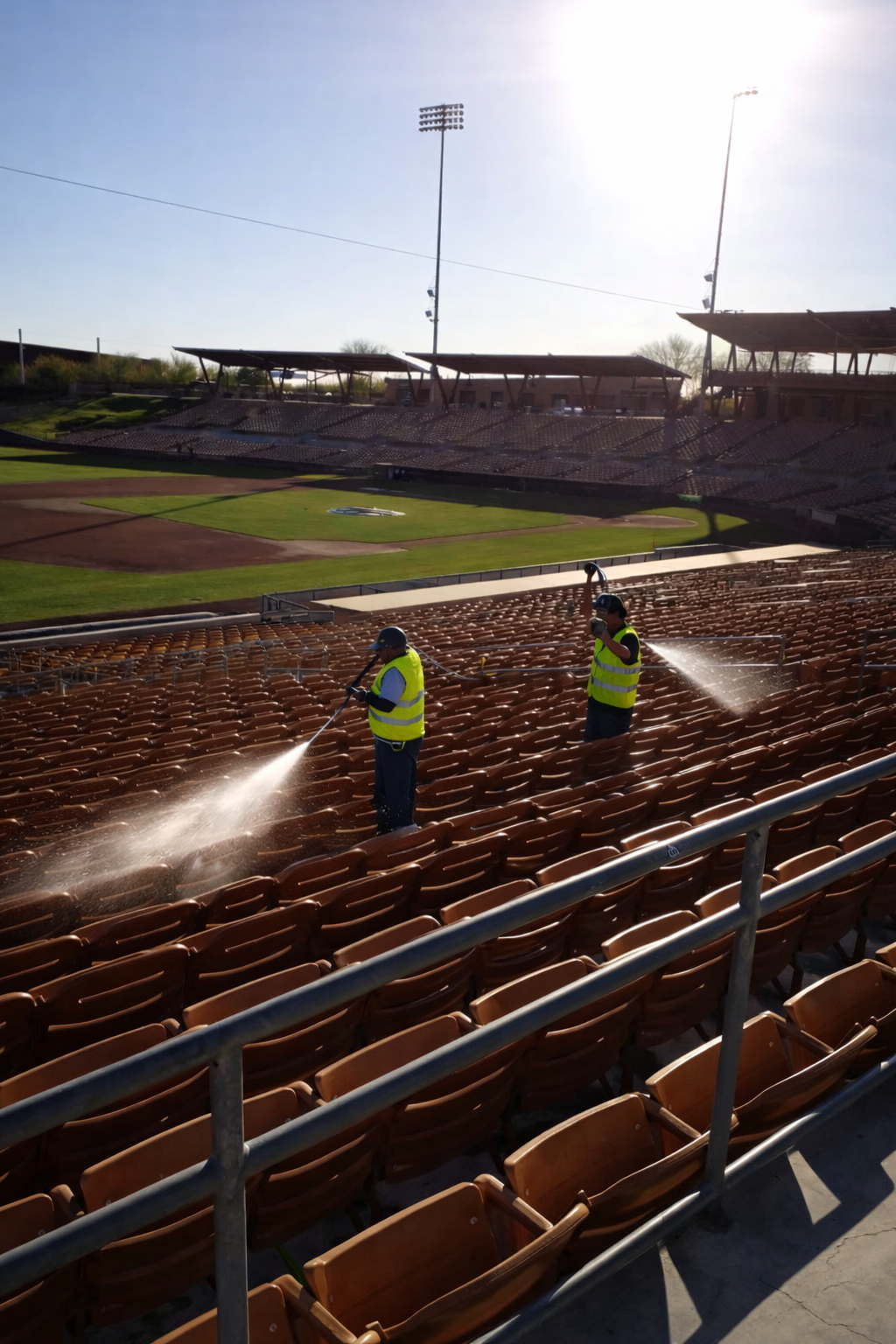
Hot-water pressure washing a Tempe commercial stucco facade with monsoon mud line and hard-water mineral haze

TEMPE CLIMATE REALITY

Why Tempe Commercial Properties Can’t Afford to Skip Exterior Cleaning

Three forces stack against exterior surfaces in Tempe faster than most property managers expect, and each one compounds the next.

Tempe’s urban density along corridors like Apache Boulevard, University Drive, and Rio Salado Parkway means exhaust particulate, food grease, and foot-traffic rubber are pressing into walkways and building bases continuously. This is not rural dust that brushes off. It bonds with surface pores under heat and compression.
Monsoon season deposits mud-laced stormwater across stucco, concrete, and storefronts in a matter of hours. The window to address it before UV baking sets it into the surface is measured in days. Property managers who schedule cleaning reactively, after the storm season wraps, are working against material that has already started to etch.
The white deposits that appear at building bases and on concrete entry plazas within weeks of cleaning are not cosmetic. Left unaddressed, they become a permanent etching problem that chemical pretreatment and professional equipment can still reverse, but only if addressed before the mineral bond fully cures.

A retail tenant on Mill Avenue or an office landlord near the ASU Research Park whose facade carries mud rings and mineral streaks is losing prospective tenants and customers before they reach the front door. The longer the surface sits, the more expensive the remediation.

TEMPE COMMERCIAL EXTERIOR CLEANING

Commercial Exterior Cleaning Services for Tempe Properties

A Tempe property manager working through a full-portfolio maintenance schedule needs more than a crew that shows up with one pressure setting and works through the list. The city’s building stock spans stucco from mid-century commercial strips, painted CMU block, glass curtain-wall panels, and concrete hardscape, and each surface requires a different combination of pressure, temperature, chemical pretreatment, and technique. The right vendor moves from the building facade to the parking lot to the storefront windows in a single scheduled visit, respects early-morning windows before tenants open, and treats the surface correctly the first time rather than returning because something was damaged.

Building Washing

Stucco and painted masonry facades along Apache Boulevard, Broadway Road, and older commercial corridors carry a predictable two-layer problem: a grey-brown monsoon mud line at the base and a streaky mineral haze from hard-water overspray higher up the wall. Both layers require different treatment. Building washing combines the correct pressure setting, a surface-matched soft-wash solution, and controlled application technique to lift both without stripping paint or forcing water behind the stucco membrane. In Tempe’s sealed-wall construction, water intrusion behind stucco creates moisture damage that far exceeds the cost of the original cleaning, so technique matters as much as equipment.

Concrete Cleaning

Concrete surfaces on Tempe commercial properties carry a layered contamination problem that a standard pressure rinse will not resolve. Loading docks in the Tempe Makers’ District accumulate heavy hydrocarbon deposits from vehicle traffic. Drive-through aprons at quick-service restaurants on University Drive combine grease, tire rubber, and compacted post-monsoon silt. Pedestrian plazas near campus-adjacent retail add chewing gum pressed deep into surface pores. Each layer represents both a visual liability and a slip-hazard risk that property managers carry responsibility for. Professional concrete cleaning uses appropriate pressure levels, heated water where the contamination requires it, and pretreatment chemistry to remove the embedded material and restore the surface to a condition that reduces that liability.

Window Cleaning

Tempe’s dust-laden air and hard-water irrigation overspray are a consistent combination that leaves commercial glazing coated with a mineral haze and particulate film that is visible to anyone approaching on a bright day. For office buildings near Tempe Town Lake or storefronts along Mill Avenue, that haze does two things: it reduces the natural light transmission that makes interiors feel inviting, and it creates a visual impression of neglect that undercuts even a freshly cleaned facade. Professional window cleaning removes the mineral bond that glass-safe chemical treatment dissolves, not just the surface dust, and restores full clarity. Scheduling window cleaning alongside building washing delivers a complete exterior reset in a single visit, with one crew, one scheduling conversation, and one billing relationship.

NEIGHBORHOODS & COMMERCIAL DISTRICTS

Pressure Washing Services Across Tempe Neighborhoods

Tempe is a compact city, but it is not a uniform one. The building types, foot traffic patterns, surface materials, and environmental exposures shift significantly from one district to the next. What a concrete cleaning program looks like for a loading dock facility near the northern edge of the city is different from what it looks like for a restaurant patio steps from the university. The right maintenance approach is built around what kind of property it is, who is walking past it, and what the local environmental exposure actually produces on the surface.

Mill Avenue is one of the highest foot-traffic corridors in Tempe, and it shows on the surfaces. Restaurant patios here are in direct contact with outdoor dining spills, beverage runoff, and grease from adjacent kitchen exhaust all week, and then a monsoon event deposits mud-laden water across the same concrete before the grease has been addressed. Post-storm UV then bakes a compound layer into the patio surface that is genuinely resistant to standard cleaning. Add the gum and scuff residue that late-night pedestrian traffic deposits on entry thresholds and pavers, and a storefront or patio that has gone a full season without professional cleaning looks its age in a way that competes directly against the neighbor who just had theirs done.

For retail and restaurant tenants operating on Mill Avenue, the stakes of that visual comparison are immediate. A prospective customer deciding between two patio restaurants uses what they see from the sidewalk as information about what to expect inside. A property manager whose tenants are making that argument in leasing renewals needs to be ahead of the surface condition before it becomes a negotiating point.

Outdoor dining concrete here requires concrete cleaning that addresses both the grease and food residue layer and the monsoon silt that has compacted into surface pores, not a surface rinse. Entry thresholds and decorative pavers need gum extraction and scuff removal that only targeted, professionally managed cleaning achieves. Building facades along the corridor benefit from building washing that lifts the monsoon mud line and mineral haze in the same visit, so the block comes back as a complete presentation rather than a patchwork.

Given the operating hours on this corridor, early-morning scheduling before businesses open is practical and reduces disruption to both tenants and foot traffic. A property in this district that runs a quarterly exterior cleaning program stays ahead of the compound layering problem, rather than spending more each time on remediation of a season’s worth of baked-in debris.

The northern section of the city carries a different character. The Tempe Makers’ District, light industrial properties along Priest Drive, and the commercial development near the Loop 202 interchange operate in a zone where the surface contamination is heavier and the cleaning requirements are more technically demanding. This is not primarily a foot-traffic presentation problem. It is a facility management and compliance problem.

Loading dock concrete in this zone sees constant heavy-vehicle traffic, and the result is hydrocarbon staining from oil and fluid drips that compounds with tire rubber, industrial particulate, and post-monsoon silt into a layered surface condition that standard cold-water pressure washing does not reach effectively. Heated-water cleaning and appropriate chemical pretreatment are the difference between a surface that looks clean and one that actually has the contamination removed.

There is a regulatory dimension here that facility managers in this corridor cannot overlook. Contaminated hardscape that drains improperly during monsoon events becomes a stormwater runoff liability. Hydrocarbons and industrial particulate on poorly maintained concrete surfaces can put a facility out of compliance with local stormwater guidelines when those surfaces drain toward the street. Professional exterior cleaning that includes proper wastewater containment and recovery addresses the compliance exposure, not just the appearance.

For a facility manager overseeing warehouse or light industrial space in this area, a concrete cleaning program is not optional maintenance. It is part of the risk management picture. Deferring it does not reduce the cost; it raises it, both in the difficulty of eventual remediation and in the regulatory risk that accumulates in the meantime.

South Tempe operates in a different register entirely. The ASU Research Park, corporate office campuses, and technology company headquarters here are competing for professional tenants and skilled workers who form strong opinions about the physical environment their employer or prospective employer occupies. The surface problem in this area is less about heavy contamination and more about the subtle, cumulative effect of hard-water irrigation systems on newer construction.

Glass-and-steel facades and stucco mid-rise buildings in South Tempe develop calcium deposits at building bases and mineral haze on glass panels within weeks of cleaning, because the area’s irrigation systems are running consistently and the overspray lands on every nearby surface. A building that was pristine after a spring cleaning can show white haze and streaking on its lower panels by late summer. That streaking is not dramatic at first. It becomes dramatic over a full season without intervention.

The professional cost of that appearance is specific to this market. A technology tenant whose clients, recruits, or board members are approaching a building that looks streaked and uncared-for draws conclusions about the landlord’s attentiveness and the overall quality of the facility. Those conclusions surface in lease renewal conversations and in the informal word-of-mouth that shapes a campus’s reputation among the professional community it serves.

Building washing that includes proper mineral deposit treatment, not just pressure rinsing, removes the calcium bond before it reaches the etching stage. Window cleaning scheduled alongside building washing addresses the glass panel haze that is especially visible on bright days. A semi-annual or quarterly program in this area keeps the mineral accumulation from reaching a level where remediation requires more aggressive chemical treatment.

The lakefront and Rio Salado Parkway corridor is Tempe’s most visually competitive commercial environment. Class A office towers, hospitality properties, and mixed-use developments sit directly adjacent to each other, and prospective tenants, hotel guests, and event visitors are forming impressions in the parking structure, on the approach walkways, and from across the water before they reach a lobby. The building that looks comparatively dingy next to a freshly cleaned neighbor loses the visual argument that drives leasing conversations in this district.

The surface challenge here combines several factors. Lakeside humidity adds a moisture component that accelerates biological surface growth on concrete and lower building facades. Monsoon splash from the nearby water surface adds mineral-laden water to glass curtain-wall panels and concrete plazas. Irrigation runoff from the corridor’s landscaping leaves white calcium deposits on building bases and entry plaza surfaces that are visible from a distance under Tempe’s bright, direct sunlight.

For a building manager in this corridor, the maintenance calculus is straightforward. When the building next door just completed a facade wash and entry plaza cleaning, the comparison is immediate and public. Class A office leasing in a lakefront environment is partly a visual competition, and the property that shows up looking its best on any given day has an advantage in that competition.

A cleaning program here typically combines building washing for the facade and lower wall mineral deposits, concrete cleaning for entry plazas and parking structure surfaces, and window cleaning for the glass curtain-wall panels. The combination addresses the full visual impression from every approach angle, so the building holds its position in the corridor rather than falling behind it.

COVERAGE AREA

One Vendor for Properties Across the Region

A Tempe-based property manager whose portfolio includes properties in surrounding suburbs and neighboring communities faces a coordination challenge that compounds with every additional vendor they add. Different scheduling contacts, inconsistent cleaning standards, separate invoicing, and the overhead of managing service quality across multiple relationships adds up to a real administrative cost that shows up in how much time facilities staff spend on vendor management rather than property management.

The team’s service area extends across the broader region, covering surrounding suburbs and outlying portfolios with the same scheduling standards and surface-specific techniques used on Tempe properties. A property manager with a Tempe office campus and additional locations in the broader service area can consolidate exterior cleaning under one vendor relationship, one scheduling contact, and one quality standard. That consolidation does not mean sacrificing local knowledge on any individual property. It means applying consistent expertise across the full portfolio without multiplying the administrative overhead.

For facilities directors managing larger portfolios, the practical value of a single reliable vendor across multiple geographies is not abstract. It shows up in fewer service gaps, fewer quality inconsistencies between locations, and fewer hours spent coordinating across multiple vendor relationships.
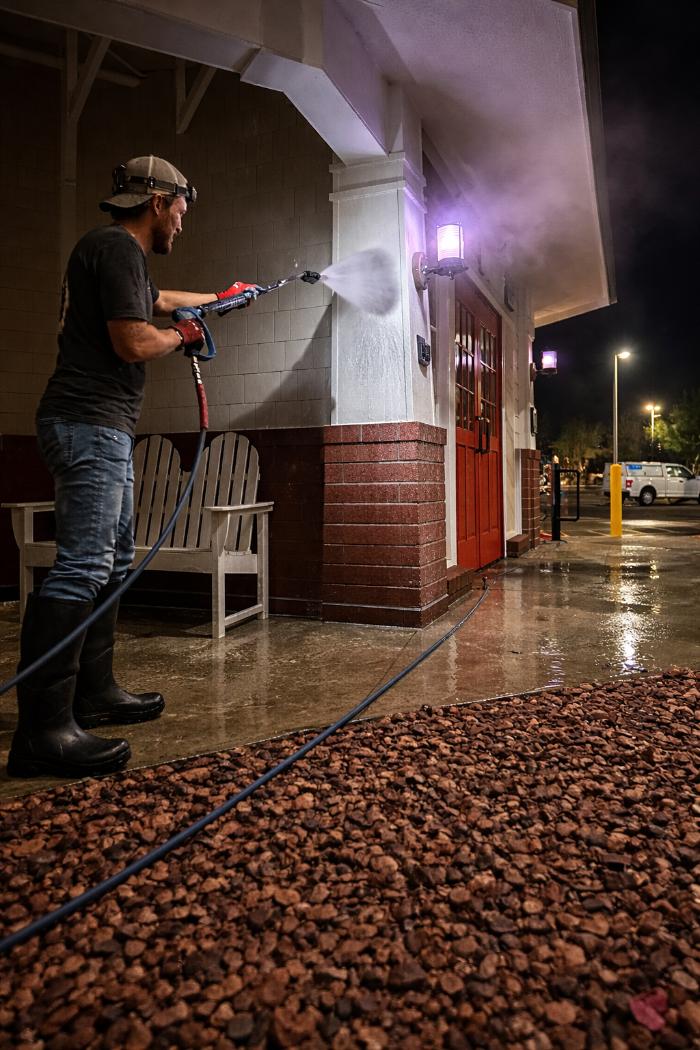
AZ Power Clean crew serving a Tempe commercial property and surrounding metro service area

COMMON QUESTIONS

Frequently Asked Questions About Pressure Washing in Tempe

Tempe’s two-season exterior cycle creates a practical minimum of two full building washes per year for most commercial properties. The first addresses the spring dust and mineral accumulation from dry months; the second clears the mud deposits and baked-on debris from monsoon season. High-visibility properties along Mill Avenue or near Tempe Town Lake typically benefit from quarterly service to stay ahead of mineral buildup and exhaust particulate before either layer reaches the etching stage.
Professional exterior cleaning in Tempe requires proper wastewater containment and recovery to comply with local stormwater runoff guidelines. Contaminated runoff from pressure washing operations that enters storm drains can create regulatory liability for the property owner. The team manages wastewater on-site during every commercial cleaning job, preventing contaminated water from reaching the drainage system and protecting clients from that exposure.
Tempe’s commercial building stock spans stucco facades, painted CMU block, glass curtain-wall panels, concrete walkways and plazas, and decorative pavers. Each surface requires a specific pressure setting and technique. Stucco and painted surfaces are protected through soft-washing, which uses lower pressure and chemical pretreatment to lift contamination without stripping the surface or forcing water behind the wall assembly. Concrete and hardscape handle higher-pressure applications. Matching the method to the material is what prevents damage and produces lasting results.
Tempe’s municipal water and irrigation systems carry high calcium and mineral content. On stucco, concrete, and glass, this produces deposits that are faint at first but accumulate into visible white haze or etching over months of irrigation overspray. Pressure alone does not break the mineral bond. Professional cleaning uses appropriate chemical pretreatment that dissolves the calcium deposit before the surface is rinsed, lifting the bond rather than grinding against it. Addressing deposits before they reach the full etching stage is significantly less costly than remediating etched material.
In a city as active as Tempe, where university-adjacent retail runs extended hours and office buildings have early arrivals, cleaning during normal business hours creates real disruption for tenants and customers. The team offers early-morning and after-hours availability specifically to work around operating schedules, so tenants open to a clean exterior rather than an active cleaning crew, and customers are not navigating equipment or wet surfaces on their approach.

GET A FREE QUOTE

Request a Free Quote for Your Tempe Property

Another monsoon season will arrive before the calendar makes it feel urgent. By the time the mud-caked facade or the mineral-streaked entry plaza becomes a visible problem for tenants and customers, the cleaning is harder, the remediation is more expensive, and the impression has already been made on everyone who walked past.

If you manage a Tempe commercial property and exterior cleaning has been deferring itself to the next quarter, now is the right time to get a clear picture of what a scheduled program would actually look like for your specific buildings and surfaces. AZ Power Clean offers free quotes with no obligation, sized to your property type and the specific surface conditions you are working with.

Reach out to request your free quote and start the conversation about what consistent exterior maintenance looks like for your Tempe portfolio.

Open 24 hours, Monday through Sunday. Family-owned, licensed, and insured.
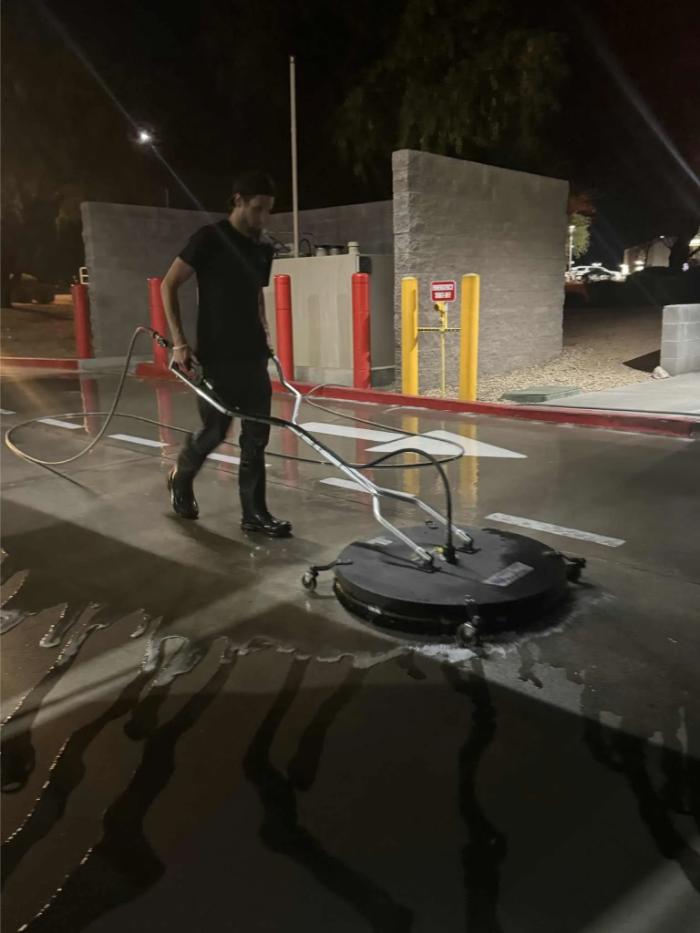
AZ Power Clean technician performing commercial exterior cleaning on a Tempe Arizona property