In the industrial landscape of Phoenix, AZ, maintaining clean and functional facilities is paramount. However, properties frequently grapple with tenacious issues like removing industrial coatings paint overspray, and various types of hardened buildup. These aren’t just aesthetic nuisances; they can compromise safety, hinder operations, and even lead to costly downtime if not addressed properly. Standard cleaning methods often fall short against these challenging contaminants, requiring specialized knowledge and equipment.
At AZ Power Clean, we understand the complexities involved in industrial-grade cleaning. Our experience spans diverse sectors, from manufacturing plants to construction sites, where we’ve perfected techniques for tackling the toughest residues. Whether it’s accidental paint overspray on equipment, cured coatings on concrete, or mineral deposits on machinery, our approach is tailored to the specific material and contaminant, ensuring effective removal without damage. Our commitment to using the right tools and methods is what makes us a trusted partner for intricate cleaning tasks, including industrial pressure washing services.
The Challenge of Industrial Buildup: Why Standard Cleaning Falls Short
Industrial environments are inherently prone to unique forms of accumulation. Unlike residential or commercial dirt, industrial buildup is often chemically bonded, extremely hard, or widespread, making conventional cleaning efforts ineffective and potentially damaging.
Understanding Industrial Coatings and Their Removal
Industrial coatings are designed for durability, resilience, and specific protective qualities. This means they’re built to withstand harsh conditions, which, while beneficial in their intended application, makes their removal a significant challenge when they’re no longer desired or are on the wrong surface.
Common scenarios include:
- Old Paint Layers: Flaking or chalking paint on steel structures, concrete floors, or machinery that needs to be prepped for a new coating.
- Epoxy and Urethane Coatings: These are extremely tough, often used for flooring or protective linings, and require aggressive methods for removal.
- Anti-Corrosive Treatments: Specialized coatings applied to prevent rust or chemical damage, which are formulated to adhere strongly to surfaces.
- Failed Coatings: Coatings that have deteriorated, delaminated, or were improperly applied and must be removed before a new application.
Effective industrial coating removal often involves a combination of methods, carefully selected to prevent damage to the underlying substrate. This precision is critical, especially when dealing with expensive equipment or structural components.
💡 Key Takeaway: Industrial coatings are engineered for toughness, making their removal a specialized task that demands careful consideration of both the coating type and the underlying material to prevent damage.
Tackling Stubborn Paint Overspray
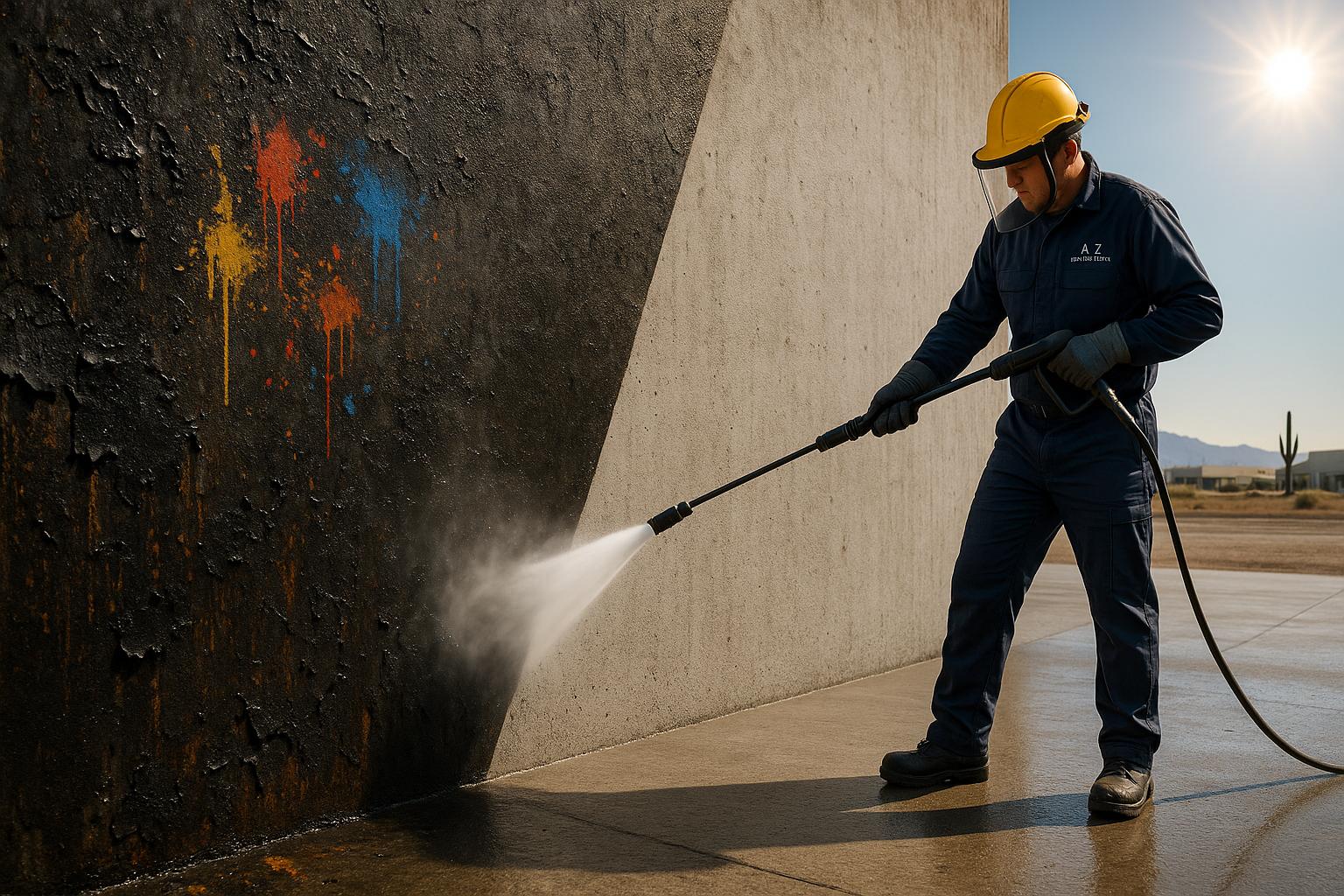
Paint overspray, whether from touch-ups, large-scale painting projects, or even nearby construction, can be a headache. It adheres to everything from vehicle fleets and building exteriors to walkways and windows, often unnoticed until it’s cured and much harder to remove. In the Phoenix heat, paint can dry and harden exceptionally fast, embedding itself deeply into porous surfaces.
The key to effective paint overspray cleaning is identifying the type of paint and the affected surface. A one-size-fits-all approach can easily damage the underlying material, leading to more expensive problems than the overspray itself. Our methods often include:
- Chemical Paint Removers: Specialized solvents that safely break down the paint bond without harming the substrate. These require careful application and neutralization.
- High-Pressure Washing (with Heat): For larger areas, hot water pressure washing combined with specific detergents can loosen and blast away overspray.
- Abrasive Media Blasting (Light): In some cases, very fine media (e.g., soda blasting) can be used for delicate removal on certain surfaces, acting as a gentle abrasive. This is highly specialized and requires expert handling.
- Manual Techniques: For sensitive surfaces like glass or polished metals, careful manual methods like clay bar treatment or razor scraping might be necessary, performed by skilled technicians.
💡 Key Takeaway: Removing paint overspray requires a nuanced approach, combining chemical, mechanical, and sometimes manual techniques, carefully selected to match the paint type and protect the underlying surface.
Dealing with Hardened Buildup and Contaminants
Beyond coatings and paint, industrial sites often accumulate various other types of hardened grime that defy conventional cleaning. These can include:
- Mineral Deposits: Hard water stains, efflorescence on masonry, or rust streaks from metallic components.
- Concrete and Mortar Splatter: Accidental spills during construction or repair that have cured onto adjacent surfaces.
- Gum and Tar Residue: Particularly common in high-traffic areas or parking lots.
- Heavy Oil and Grease Buildup: Layers of caked-on lubricants and hydraulic fluids around machinery or on shop floors.
For these types of contaminants, the challenge lies in their adhesive strength and often abrasive nature. Our professional solutions frequently involve:
- Powerful Pressure Washing: Using industrial-grade pressure washers with high PSI and GPM to physically break apart and blast away hardened materials.
- Hot Water/Steam Cleaning: Heat significantly enhances the effectiveness of detergents and can melt or soften stubborn substances like tar and heavy grease.
- Specialized Chemical Treatments: Acids (for mineral deposits, rust) and strong alkaline degreasers (for oil/grease) are used under strict control to dissolve and loosen buildup.
- Surface Preparation Equipment: For large concrete areas, specialized floor scrubbers and grinders might be used to strip away layers of grime and old sealants, preparing the surface for new applications.
💡 Key Takeaway: Hardened industrial buildup demands robust cleaning solutions, often combining high-pressure hot water, specific chemical agents, and powerful equipment for complete and safe removal.
Choosing the Right Removal Technique: A Professional’s Perspective
The “best” removal technique isn’t universal; it depends heavily on the specific circumstances. Here’s a brief comparison of common methods:
| Method | Description | Best For | Considerations |
|---|---|---|---|
| Hot Water Pressure Washing | High-pressure water, often heated, with detergents. | Grease, oil, general grime, light overspray, preparing surfaces. | Versatile, eco-friendly options, but requires careful pressure management. |
| Chemical Stripping | Application of specialized solvents/acids/alkalines. | Heavy coatings, paint overspray, mineral stains, rust. | Requires safety protocols, proper disposal, and expertise to prevent damage. |
| Abrasive Blasting (e.g., Soda, Sand) | Propelling abrasive media at high speed. | Very tough coatings, rust, surface profiling. | Can be aggressive; specific media chosen for substrate; dust/cleanup concerns. |
| Manual Scraping/Grinding | Hand-tools or power tools for physical removal. | Localized heavy buildup, concrete scale, small areas. | Labor-intensive, risk of surface gouging if not careful. |
Why Trust AZ Power Clean for Your Industrial Needs in Phoenix?
The desert environment in Phoenix poses its own set of challenges, from rapid drying times for chemicals to dust accumulation that can embed itself into freshly applied overspray. Our team has the local expertise and state-of-the-art equipment to handle these conditions effectively. We pride ourselves on:
- Experienced Technicians: Our crew is trained in the latest industrial cleaning techniques and safety protocols.
- Advanced Equipment: We utilize commercial-grade hot water pressure washers, specialized chemical applicators, and surface cleaners.
- Customized Solutions: We assess each project individually, recommending the most effective and safest method for your specific coating, overspray, or buildup challenge.
- Safety and Compliance: We adhere to all environmental and safety regulations, ensuring proper waste disposal and site safety.
Don’t let industrial coatings or paint overspray hinder your operations or diminish your property’s appearance. Trust the experts at AZ Power Clean to restore your surfaces efficiently and safely.
Have questions about professional concrete cleaning in Phoenix? Give us a call today.
Frequently Asked Questions About Industrial Cleaning
What types of surfaces can you clean industrial coatings or overspray from?
We can effectively clean a wide range of industrial surfaces, including concrete floors, exterior building facades (metal, stucco, brick), asphalt parking lots, machinery, equipment, metal structures, and specialized vehicle fleets. Our approach is always tailored to the specific material to ensure safe and effective removal.
Is chemical stripping safe for all surfaces?
No, chemical stripping is not safe for all surfaces. The type of chemical stripper must be carefully chosen based on the contaminant and the underlying substrate. Some chemicals can etch sensitive materials, discolor finishes, or cause damage. Our technicians are trained to identify the correct, safest chemical for each application and to neutralize surfaces afterward.
How long does it take to remove industrial coatings or heavy overspray?
The duration depends heavily on the scope of the project, the type and thickness of the coating/overspray, the surface material, and the chosen removal method. A small area of light overspray might take a few hours, while a large industrial floor requiring heavy coating removal could take several days or even weeks. We provide detailed estimates after an on-site assessment.
What precautions do you take to protect surrounding areas during overspray removal?
Protecting surrounding areas is a top priority. We implement thorough containment strategies, including tarping, masking, and creating exclusion zones to prevent removed materials or chemicals from affecting adjacent structures, landscaping, vehicles, or waterways. We also adhere strictly to environmental regulations for runoff and waste disposal.