Family-Owned, Licensed and Insured, Serving Goodyear Since 2015

Commercial Pressure Washing Services in Goodyear, AZ

Goodyear is adding square footage faster than most cities in the country. Distribution centers are going up along the Loop 303. Retail pads are filling in near Palm Valley. Mixed-use developments are reshaping corridors that were empty desert five years ago. And every one of those surfaces, the tilt-up concrete walls, the stucco storefronts, the loading dock aprons, the entry plazas, is collecting caliche dust, hard-water mineral deposits, diesel exhaust, and UV-baked grime from the day it opens. For the facility manager overseeing a Class A logistics campus or a retail center general manager watching foot traffic build, that accumulation is not a cosmetic inconvenience. A loading dock streaked with tire rubber and diesel residue signals neglect to corporate facility auditors and logistics clients before a single conversation happens.
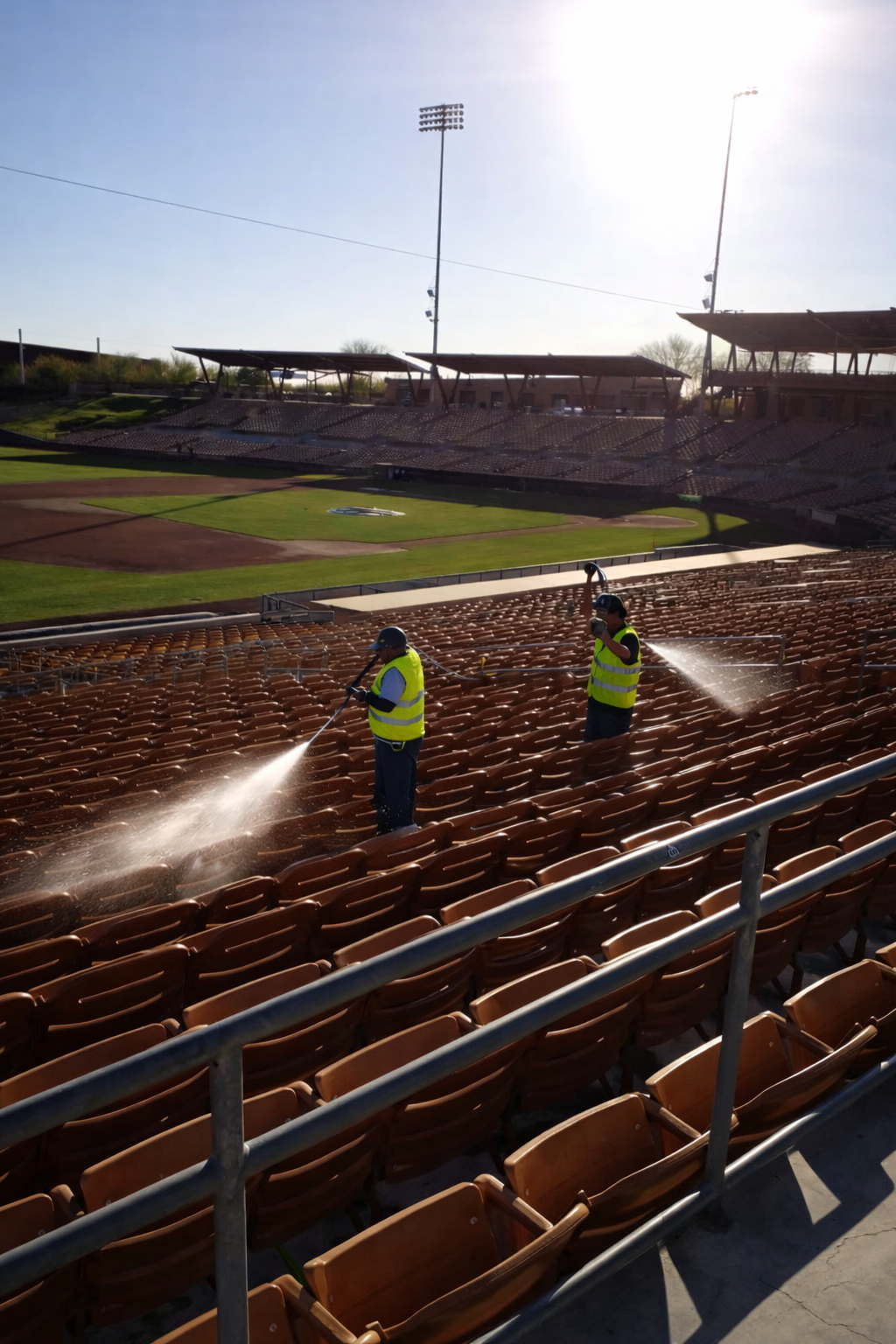
Hot-water pressure washing a Goodyear Arizona commercial tilt-up wall along the Loop 303 corridor

GOODYEAR CLIMATE REALITY

Why Goodyear Properties Face a Harder Exterior Cleaning Problem Than Most

The conditions in Goodyear do not give exterior surfaces a break. Dust funneling off the Estrella Mountains and the White Tank Mountains settles continuously on hardscape and building faces, and with roughly 300 days of sunshine annually, the UV intensity bakes mineral deposits and caliche stains into stucco, concrete, and metal panel cladding before most maintenance calendars even flag the issue. Then the monsoon arrives, layering hard-water streaking and dried mud splatter across storefronts, walkways, and parking lot surfaces. Three forces compound on every commercial exterior in this city, and none of them pause between visits from your maintenance crew.

Dust funneling off the Estrella Mountains and the White Tank Mountains settles continuously on hardscape and building faces. With roughly 300 days of sunshine annually, the UV intensity bakes mineral deposits and caliche stains into stucco, concrete, and metal panel cladding before most maintenance calendars even flag the issue. Standard sweeping and rinsing move surface dust. They do not pull heat-fused buildup out of the substrate, which is where the dull, faded look on a Goodyear building face actually lives.
Winter is the season that makes the problem worse in a quiet way. Fine particulate settles undisturbed into concrete pores for months at a stretch, building a base layer of contamination that no routine sweep or maintenance crew rinse can reach. By the time spring exposes the result, the staining is already embedded and harder to remove than it would have been at any earlier point in the cycle.
Then the monsoon arrives. Summer storms leave hard-water streaking and dried mud splatter across storefronts, walkways, and parking lot surfaces, on top of whatever dry-season dust and mineral residue is already there. The result is a property that never quite catches up to the condition it was in when it opened. For a facility manager whose industrial tenant is approaching lease renewal, a loading area that looks like it has not been touched in two years is a conversation that does not need to happen. For a retail center manager, sidewalks showing years of gum, grease, and tire marks send a message to customers before they reach any tenant’s door.

Regular professional cleaning is not a luxury in this environment. It is the maintenance cycle the climate demands, and the cost of putting it off is a property that gets harder and more expensive to bring back the longer the work waits.

GOODYEAR COMMERCIAL EXTERIOR CLEANING

What Goodyear’s Commercial Properties Need from an Exterior Cleaning Partner

A commercial operator in Goodyear is rarely managing just one building type. The same property management portfolio might include a stucco-clad strip retail center on a major thoroughfare, a tilt-up industrial warehouse off a freight corridor, and a newly constructed mixed-use pad still collecting construction residue. Each surface type responds differently to cleaning approaches, and each tenant environment carries different scheduling constraints. What that operator needs is a vendor who assesses the surface before selecting the technique, and who builds a cleaning schedule around business hours rather than requiring the business to work around the cleaning. The services below are organized around the situations Goodyear property managers actually face, not as a feature list.

Building Washing

Goodyear’s commercial building exteriors are under constant pressure from the environment. Stucco facades on retail centers collect oxidation streaking amplified by intense UV exposure. Metal panel cladding on industrial buildings accumulates a fine film of desert particulate that hardens into a gray cast. Painted concrete tilt-up walls at logistics facilities develop caliche mineral deposits wherever irrigation overspray reaches the building face, and biological growth accelerates during the brief monsoon window each summer. Soft-washing techniques apply lower pressure with appropriate cleaning agents calibrated to the surface, removing embedded contamination that a standard rinse cannot reach without introducing the risk of stucco cracking or paint delamination. For tenants and corporate clients inspecting a facility, a clean building exterior signals that the property is actively maintained. That signal carries weight in lease conversations and facility audits.

Concrete Cleaning

The concrete at Goodyear’s commercial properties takes a different kind of abuse depending on the building type, but the result is the same: surfaces that look worn far earlier than their actual age. At distribution centers and logistics facilities along the freight corridors, semi-trailer traffic leaves diesel drips, rubber transfer from repeated maneuvering, and hydraulic fluid spills across loading dock aprons and truck courts. At retail parking lots serving high-traffic anchors, oil stains and grease accumulation create slip hazards that expose property operators to liability and detract from the first impression customers form before they park. Goodyear’s hard water compounds the problem: irrigation runoff and post-rain drying leave white mineral hazing across concrete surfaces, making a relatively new pad look permanently worn. Professional concrete cleaning removes that accumulated history and restores the surface to a condition that reflects current maintenance standards.

Pressure Washing

Some cleaning needs do not fit neatly into building washing or concrete restoration. The drive-thru lane at a quick-service restaurant pad accumulates grease and carbonized residue that compounds with each service day. Dumpster enclosures at restaurant tenants develop biological growth and odor-generating buildup between collection cycles. Sidewalks along retail frontage corridors grind fine desert silt into surface texture under foot traffic until the original concrete color is barely visible. Entry plazas at professional office parks accumulate a film that no amount of sweeping addresses. Pressure washing handles all of those, with technique and pressure calibrated to the surface. For Goodyear’s commercial tenants, the scheduling reality matters as much as the cleaning itself. Retail tenants need work done before morning open. Logistics facilities need dock areas cleared without interrupting fleet arrivals. The ability to work after close of business or before dawn is what separates a single cleaning event from a sustainable maintenance relationship.

NEIGHBORHOODS & COMMERCIAL DISTRICTS

Goodyear Neighborhoods and Commercial Districts We Serve

Goodyear’s commercial landscape is not uniform, and the right cleaning approach shifts significantly depending on which part of the city a property sits in. A retail center manager in Palm Valley is dealing with different surface challenges, tenant types, and scheduling constraints than a facility operations manager at a Loop 303 industrial campus. The submarket context shapes everything from cleaning frequency to the specific contamination profile the crew will encounter.
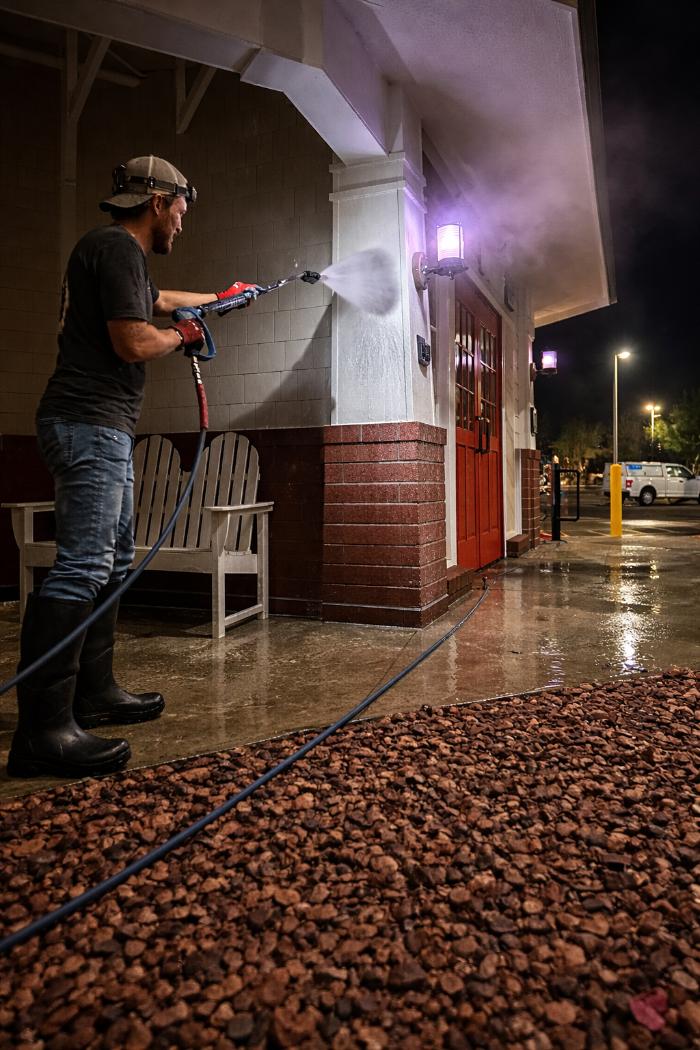
Palm Valley is Goodyear’s most established commercial submarket, anchored by Palm Valley Crossing and a dense concentration of service retail, restaurants, quick-service tenants, and professional offices along a corridor that sees consistent daily traffic from the surrounding residential base. For the retail center manager working here, the parking lot is a public-facing statement that gets evaluated every time a customer pulls in.

The surface challenges are what years of high-volume retail traffic produce. Parking lot concrete carries layers of oil stains, tire marks, shopping cart scuffs, and food service overflow from restaurant pad tenants. Sidewalks along storefront frontage collect gum, grease, and ground-in silt that pressure washing removes systematically but that routine maintenance crews simply move around. Stucco facades on older retail buildings in the corridor have accumulated UV oxidation streaking and hard-water mineral deposits from irrigation systems that overspray building bases, creating a faded appearance that undercuts the investment tenants make in their own storefronts.

The visibility of Palm Valley’s commercial frontage from major thoroughfares raises the stakes. Shoppers form opinions about a retail center from the parking lot before they interact with any individual tenant. A clean, well-maintained exterior communicates that the property is actively managed, a signal that matters both to existing tenants evaluating lease renewals and to prospective tenants selecting their next location. Scheduling pressure washing in Palm Valley requires coordination around anchor store hours and peak traffic windows, with most work best handled in early-morning or after-close windows to avoid disrupting the customer flow that defines this corridor.

The GSQ district at McDowell Road and 150th Avenue is Goodyear’s emerging mixed-use core, and the properties here are in the business of making first impressions in a market that is still establishing its identity. New restaurant pads, retail storefronts, and entertainment venues are delivering into a district that the city is positioning as its downtown, and the exterior condition of those properties is part of what makes or breaks that positioning.

Newly delivered commercial properties in GSQ carry their own cleaning challenges that differ from established retail corridors. Construction-phase residue, including concrete splatter, mortar haze, and construction dust embedded into flatwork, does not wash off with standard rinsing. Freshly poured concrete aprons and entry plazas pick up hard-water staining from irrigation systems almost immediately after installation. Restaurant tenants with drive-through lanes begin accumulating grease residue within the first weeks of operation.

The audience managing properties in GSQ understands that a dirty exterior undercuts premium positioning. When a mixed-use district is asking diners and shoppers to choose it over established alternatives, the physical condition of outdoor dining areas, entry plazas, and storefront sidewalks is part of the pitch. Soft-washing techniques protect the newer surface materials common in recently delivered commercial construction, while concrete cleaning restores flatwork that construction activity has already compromised before the first tenant even opens. Establishing a regular cleaning cadence early in a property’s life cycle prevents the accumulation patterns that become far more costly to address after several seasons.

The industrial and logistics campuses along the Loop 303 and Cotton Lane corridors represent Goodyear’s largest commercial footprint by square footage, and the cleaning demands here are categorically different from retail or mixed-use environments. Tenants operating at these facilities include major national logistics operators, e-commerce fulfillment centers, and aerospace manufacturers, and their lease standards reflect corporate facility maintenance expectations, not just neighborhood aesthetics.

The contamination profile at these facilities is specific. Loading dock faces and dock doors accumulate diesel exhaust streaking that builds into a dark film over months of daily truck traffic. Concrete truck courts and aprons develop rubber transfer marks from semi-trailer tires maneuvering in tight staging areas, layered over hydraulic fluid drips and fuel spills that standard maintenance crews are not equipped to remove. Road grime tracked into dock bay interiors by forklifts and delivery equipment spreads from the dock into the facility if exterior surfaces are not regularly maintained.

For the facility operations manager at a Class A logistics campus, an unclean exterior is not just a visual issue. Corporate tenant lease agreements often include facility maintenance standards, and a loading area that shows months of accumulated diesel residue and grease is a line item in a lease compliance review. Regular professional cleaning of dock areas, truck courts, and building faces documents that maintenance standards are being met, which matters both at lease renewal and during corporate facility audits. After-hours and pre-dawn scheduling keeps cleaning operations from conflicting with fleet arrival windows and shift changes that define the operational rhythm of these facilities.

The southern portion of Goodyear where the Estrella Mountain Ranch master-planned community meets the Ballpark Village mixed-use development presents a distinct combination of audiences and timing pressures. Retail and hospitality operators here serve a high-income residential population year-round and absorb a concentrated surge of visitors every February and March during spring training season.

That seasonal dynamic creates a specific cleaning urgency. A full season of desert dust accumulation, hard-water deposits from irrigation systems, and pollen buildup coats storefronts, outdoor dining surfaces, and entry plazas during the fall and winter months when foot traffic is lower. By the time February arrives and the Goodyear Ballpark draws thousands of out-of-town visitors who are seeing the area for the first time, the window to present the district well has either been used or missed.

A first-time visitor to Ballpark Village who encounters a storefront with streaked stucco and a sidewalk showing a season of grime does not necessarily connect that to deferred maintenance. They connect it to the quality of the experience the property offers. Outdoor dining areas are especially exposed: the patio furniture, the decorative concrete, the entry sequences all form an impression before food or service enters the picture. Scheduling a thorough cleaning before the spring training surge, rather than after, is the standard that operators here need to hold to if they want that first-impression traffic to translate into repeat business from both seasonal visitors and the residential population that shops and dines here year-round. Soft-washing techniques protect the stucco and decorative surface finishes common in this submarket, while concrete cleaning addresses the flatwork that takes the heaviest foot traffic.

AZ Power Clean technician servicing a commercial property in the Goodyear Arizona service area

COVERAGE AREA

Serving Goodyear and the Surrounding Region

Many commercial property managers overseeing Goodyear locations also carry responsibility for properties in surrounding suburbs and outlying communities across the broader service area. Managing separate vendor relationships for each community adds coordination overhead and creates inconsistency in cleaning standards across a portfolio.

A single vendor relationship that follows the portfolio into neighboring communities and the broader regional service area simplifies scheduling, standardizes documentation, and eliminates the friction of re-qualifying a new provider every time a new property comes under management. The team works across Goodyear and into the surrounding area, bringing the same surface assessment approach and scheduling flexibility that Goodyear operators depend on, without requiring a separate contract for each community in the portfolio.

COMMON QUESTIONS

Commercial Pressure Washing Questions Goodyear Property Managers Ask

Goodyear’s combination of 300-plus sunshine days, year-round dust accumulation off nearby mountain ranges, and monsoon-season hard-water deposits means most commercial properties benefit from quarterly or semi-annual cleaning. High-traffic retail locations typically need more frequent attention to maintain a consistent appearance, while lower-traffic office properties and industrial facilities may operate well on a seasonal deep-clean schedule supplemented by targeted spot treatment after major weather events.
Soft-washing techniques calibrated to stucco and painted concrete use lower pressure combined with appropriate cleaning agents to remove mineral deposits, oxidation, and biological growth without cracking stucco or lifting paint. The key is surface assessment before any cleaning begins. Goodyear’s UV intensity and irrigation overspray patterns create specific contamination profiles that require matching the cleaning approach to the material, not applying a single pressure setting across every surface type.
Yes. Local and state environmental guidelines require that contaminated wastewater from pressure washing operations not enter storm drains or natural waterways. A professional crew manages on-site water containment and disposal using equipment designed to recover runoff before it reaches drainage infrastructure. This keeps the property operator compliant with applicable state and local stormwater regulations and avoids the liability exposure that comes with unmanaged runoff from cleaning operations involving degreasers or chemical pre-treatments.
Pricing depends on surface square footage, surface type, degree of contamination, and access requirements specific to the property. A loading dock apron at a logistics facility with years of diesel and rubber transfer requires different equipment and time than a retail sidewalk on a semi-annual maintenance cycle. A site assessment produces a more accurate number than any per-square-foot estimate. Reach out to request a free quote tailored to your specific Goodyear property.
Yes. Retail tenants typically need work completed before morning open. Logistics facilities need scheduling that avoids conflicts with fleet arrival windows and shift changes. After-hours and pre-dawn scheduling is standard practice, not a special accommodation, because the alternative is cleaning that disrupts the customers and operations the property exists to serve.

GET A FREE QUOTE

Get a Free Quote for Your Goodyear Commercial Property

The standard that tenants, corporate clients, and customers hold Goodyear commercial properties to does not soften because the cleaning schedule slipped. A loading area that shows months of diesel residue, a retail sidewalk that has not been properly cleaned since the last monsoon season, or a storefront facade carrying two years of UV-baked caliche deposits communicates something specific about how a property is managed, regardless of everything else the operator does right.

AZ Power Clean works with commercial property managers across Goodyear to establish cleaning schedules that match the pace the environment actually demands, using surface-appropriate techniques that protect the stucco, concrete, and metal panel materials common throughout the city’s commercial corridors. Get in touch to request a free quote for your specific Goodyear location and property type. The assessment is the starting point, and it costs nothing.

Open 24 hours, Monday through Sunday. Family-owned, licensed, and insured.
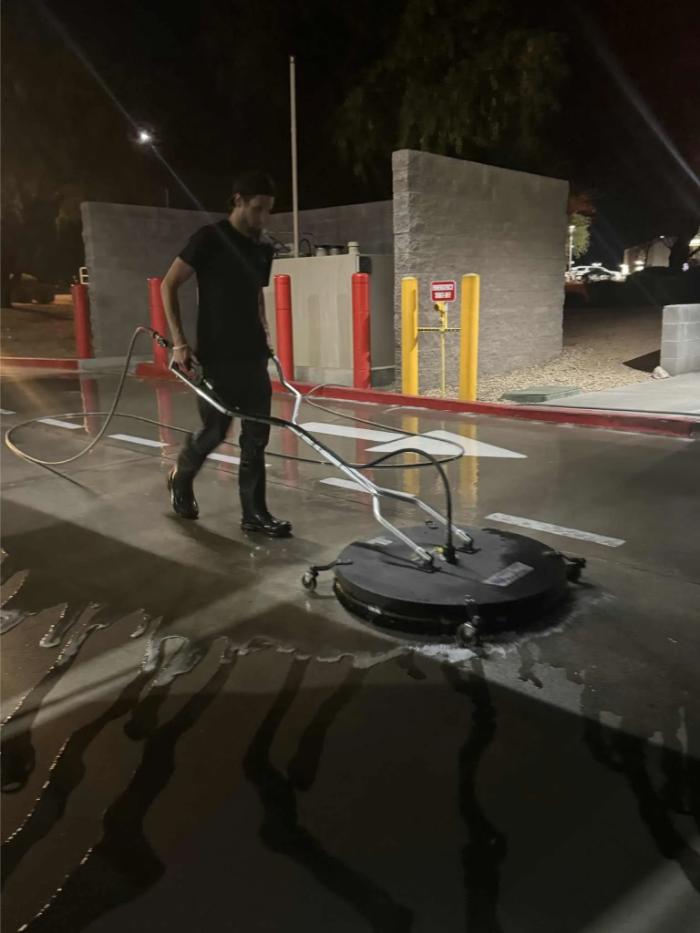
AZ Power Clean technician performing commercial pressure washing on a Goodyear Arizona property