Family-Owned, Licensed and Insured, Serving Chandler Since 2015

Commercial Pressure Washing Services in Chandler, AZ

In Chandler, a building’s exterior competes with the polished campuses of semiconductor giants and the curated storefronts of one of Arizona’s fastest-growing retail corridors. Fine Sonoran Desert dust settles on every surface between July monsoons, then bakes into stucco and concrete once temperatures climb back past 100 degrees. For a property manager or business owner in this city, a grimy facade carries a quiet but real cost.
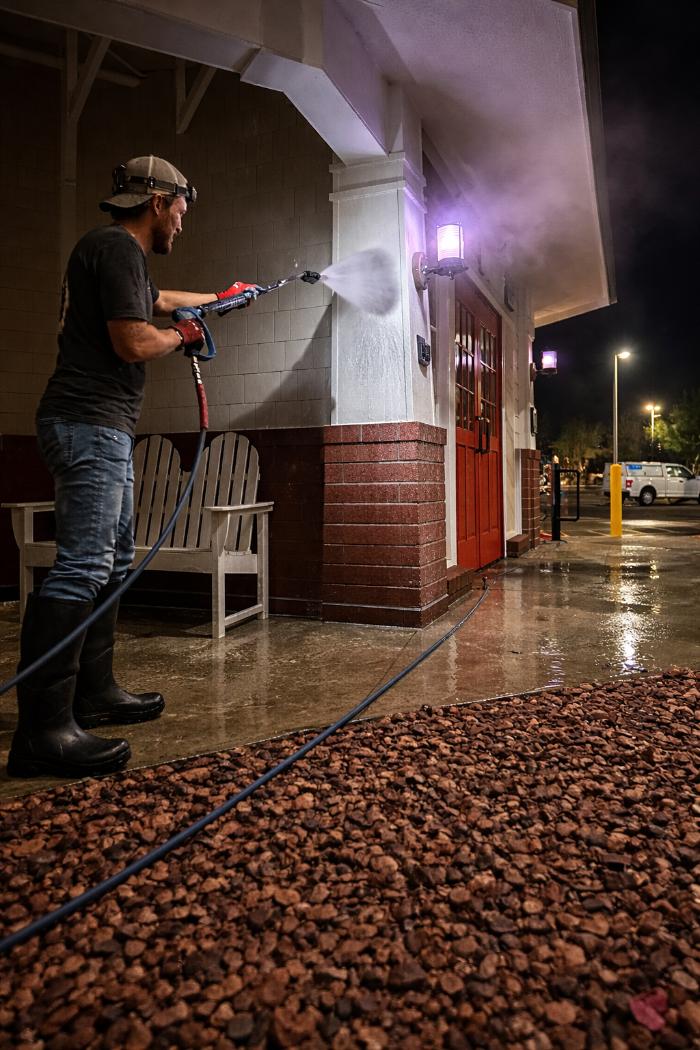
Hot-water pressure washing a Chandler commercial stucco facade with UV-baked Sonoran dust and post-monsoon caliche staining

CHANDLER CLIMATE REALITY

Why Chandler Commercial Properties Face a Year-Round Exterior Cleaning Challenge

Chandler’s exterior cleaning challenge runs on two cycles, and ignoring either one compounds the damage from the other.

From May through late June, intense UV exposure and temperatures that regularly exceed 110 degrees bake fine Sonoran Desert dust into the porous texture of stucco facades and concrete walkways. The result is a chalky, oxidized film that resists a standard hose-down. Standard rinsing only loosens the surface layer while leaving the embedded material behind to absorb the next round of heat.
Between July and September, monsoon storms push caliche-laced dirt across walkways, loading dock aprons, and storefront entries. That sediment dries overnight into a hardened crust that streaks glass and darkens concrete. A prospective tenant touring a Class A suite in the Price Corridor who walks past a streaked entryway after a monsoon may not say anything. They simply keep walking.
Chandler’s municipal water supply adds a third variable. High mineral content leaves white calcium and magnesium deposits on glass and dark-colored building panels within weeks of a rain event or irrigation contact. Left through a full summer season, those deposits begin to etch into glass permanently, turning a cosmetic issue into a structural maintenance problem.

The two-season soil cycle is unavoidable. The damage it causes is not.

CHANDLER COMMERCIAL EXTERIOR CLEANING

Exterior Cleaning Services for Chandler Commercial Properties

A property manager overseeing a Chandler commercial site is not managing one surface. Parking areas, building facades, glass panels, and entry features each collect different soil loads, experience different foot-traffic wear, and tolerate different cleaning methods. What works on tilt-wall concrete in West Chandler can damage decorative tile in Downtown Chandler. The services below are matched to the specific surfaces and soil conditions that Chandler’s commercial building stock actually presents.

Building Washing

Chandler’s commercial building stock is heavily stucco-dominant, and stucco is a surface that punishes the wrong approach. Its porous texture traps desert dust deep in the finish, and biological streaking develops near downspouts and HVAC exhausts within weeks of a monsoon event. Too much pressure or the wrong nozzle angle can gouge the surface permanently, an expensive outcome on a building that may span tens of thousands of square feet. Soft-wash techniques using biodegradable solutions are calibrated to stucco’s specific porosity, breaking down embedded grime without compromising the finish. The morning after the work is done, the building reads the way the architect intended, uniform in tone, without the dark watermarks that signal deferred maintenance.

Concrete Cleaning

A Chandler parking area or pedestrian walkway takes on a specific load over a single summer. Tire rubber deposits accumulate in drive lanes. Cooking oil and grease migrate from restaurant tenant entries at retail centers. Caliche dust collects in shaded spots near building entries and stairwells. The problem is not only visual. A concrete surface embedded with tire rubber and organic residue becomes slick under foot traffic, particularly at retail center entries where customers arrive in sandals and street shoes, not work boots. Slip liability is a real exposure for any high-traffic commercial property. Professional-grade degreasers and high-pressure hot water cut through layers that standard cleaning equipment cannot reach, leaving a surface that is both presentable and genuinely safer for the people using it every day.

Window Cleaning

Chandler’s glass has two enemies: hard water and haboob conditions. Mineral-rich water from the municipal supply leaves white calcium spots on glass within weeks of a rain event or irrigation overspray, clouding panels that were clear the week before. During monsoon season, suspended dust settles on glass as a fine abrasive film that, if wiped or squeegeed incorrectly, can micro-scratch the surface over multiple cleaning cycles. For the floor-to-ceiling glass facades common in the Price Corridor’s Class A office buildings, or for the retail storefronts along Chandler Boulevard and Arizona Avenue, streaked windows do more than reduce natural light. They signal to a tenant, a customer, or a prospective recruit that someone stopped paying attention. Streak-free glass is the difference between a building that reads as professionally maintained and one that raises quiet doubts before anyone steps inside.

NEIGHBORHOODS & COMMERCIAL DISTRICTS

Pressure Washing Services Across Chandler’s Key Commercial Districts

Chandler’s commercial geography is not uniform. A cleaning schedule and method that makes sense for a corporate campus building near the Loop 101 interchange is often a poor match for a historic storefront on Arizona Avenue or a tilt-wall distribution facility in the city’s western industrial corridor. Each of Chandler’s key business districts presents a distinct combination of building materials, tenant expectations, foot-traffic patterns, and soil loads. What follows describes the specific situations that property managers and facilities leads face in each one.
The Price Corridor runs along Price Road near the Loop 101 and Loop 202 interchange and is home to some of the largest technology employers in the state. Semiconductor, software, and engineering tenants whose clients, partners, and prospective recruits arrive on-site regularly occupy mid-rise office buildings and corporate campus structures here. These buildings feature glass-heavy exteriors that make hard water mineral deposits and desert dust accumulation plainly visible against the polished aesthetic these tenants expect and signed leases to occupy.

For a facilities manager responsible for a campus building in this corridor, the exterior is not a secondary concern. It is the first signal a prospective tenant or visiting executive reads before reaching the lobby. A building that reads as neglected in a submarket where tenants have options and premium expectations puts the landlord in a weak position at renewal time. The cleaning cadence here is not reactive. It is scheduled around the two-season soil cycle: a thorough wash after monsoon season clears, and a second pass before the summer heat sets in. Soft-wash techniques preserve glass coatings and metal panel finishes that would be damaged by high-pressure defaults. The outcome is a building that holds its visual standard through both seasons, not one that spends half the year recovering from the last storm.

Downtown Chandler’s commercial properties along Arizona Avenue and Chandler Boulevard occupy a different built environment than the corporate campuses to the north. The historic building stock here includes brick masonry, painted stucco, and decorative tile that predate the city’s tech boom by decades. These materials are more tolerant of age but far less tolerant of aggressive cleaning. The wrong pressure setting or an incompatible cleaning agent can strip painted finishes, erode mortar joints, or pit decorative tile surfaces, damage that costs more to repair than the cleaning would have cost to do correctly the first time.

Foot traffic in Downtown Chandler runs consistently higher than in suburban office parks. Restaurants, boutique retail, and events at Chandler Center for the Arts mean concrete sidewalks and entry pavers accumulate gum, food grease, and organic residue at rates that compound quickly between cleanings. The visual gap between a storefront that has been serviced recently and a neighboring property where surface grime has gone unaddressed is immediately apparent to anyone walking the corridor. That gap matters here because first-time visitors often arrive on foot, making a purchasing decision before they reach the door. A clean entry is part of the product before a customer has seen the interior.

West Chandler’s commercial character is defined by scale. More than 630 businesses employing over 29,000 workers occupy manufacturing plants, mixed-use industrial parks, and large-format retail anchors in this submarket. The soil loads here are categorically different from those in an office park or retail corridor. Loading dock aprons accumulate tire rubber, diesel exhaust residue, and hydraulic fluid. High-traffic employee entrances at distribution and light manufacturing facilities collect oil-tracked grime that standard pressure washing equipment cannot fully break down. Drive lanes in parking areas used by tractor-trailers develop embedded rubber deposits that darken the surface and reduce traction.

For an operations manager or facilities lead at a West Chandler distribution or manufacturing facility, exterior cleanliness is not only a presentation issue. OSHA-aligned walkway maintenance requires that employee and pedestrian surfaces remain free of slip hazards, and the combination of grease, oil, and wet concrete creates exactly that exposure. Specialized degreasers combined with high-pressure hot water cut through the layered residue that accumulates at industrial entry points without requiring the facility to schedule extended downtime. Early morning or weekend cleaning windows keep operations moving while the maintenance work gets done.

The Airpark submarket anchors itself along the Loop 202 corridor near Chandler Municipal Airport and has grown steadily into one of the city’s most active employment zones for aerospace suppliers, light industrial tenants, and flex showroom properties. Its desert-exposed setting and proximity to the flight path create a specific exterior maintenance challenge: building surfaces here collect jet exhaust particulate and red-iron desert dust at rates higher than interior commercial zones, and that combination stains visibly against the tilt-wall concrete panels and metal cladding common to newer Airpark construction.

Those materials do not hide surface staining the way textured stucco might. A red-brown dust deposit or exhaust streak on a light-colored tilt-wall panel reads clearly from 50 feet away. For a property owner preparing a build-to-suit space for a new aerospace or industrial tenant, that kind of surface staining communicates something before a prospect has walked through the door. It signals that maintenance has been reactive, not programmed. In a submarket where new construction sets the visual standard and prospective tenants compare multiple options in the same corridor, curb presence is a legitimate competitive variable. Proper chemical selection matched to tilt-wall concrete and metal cladding removes staining without etching the panel surface, maintaining the material’s finish through multiple cleaning cycles.

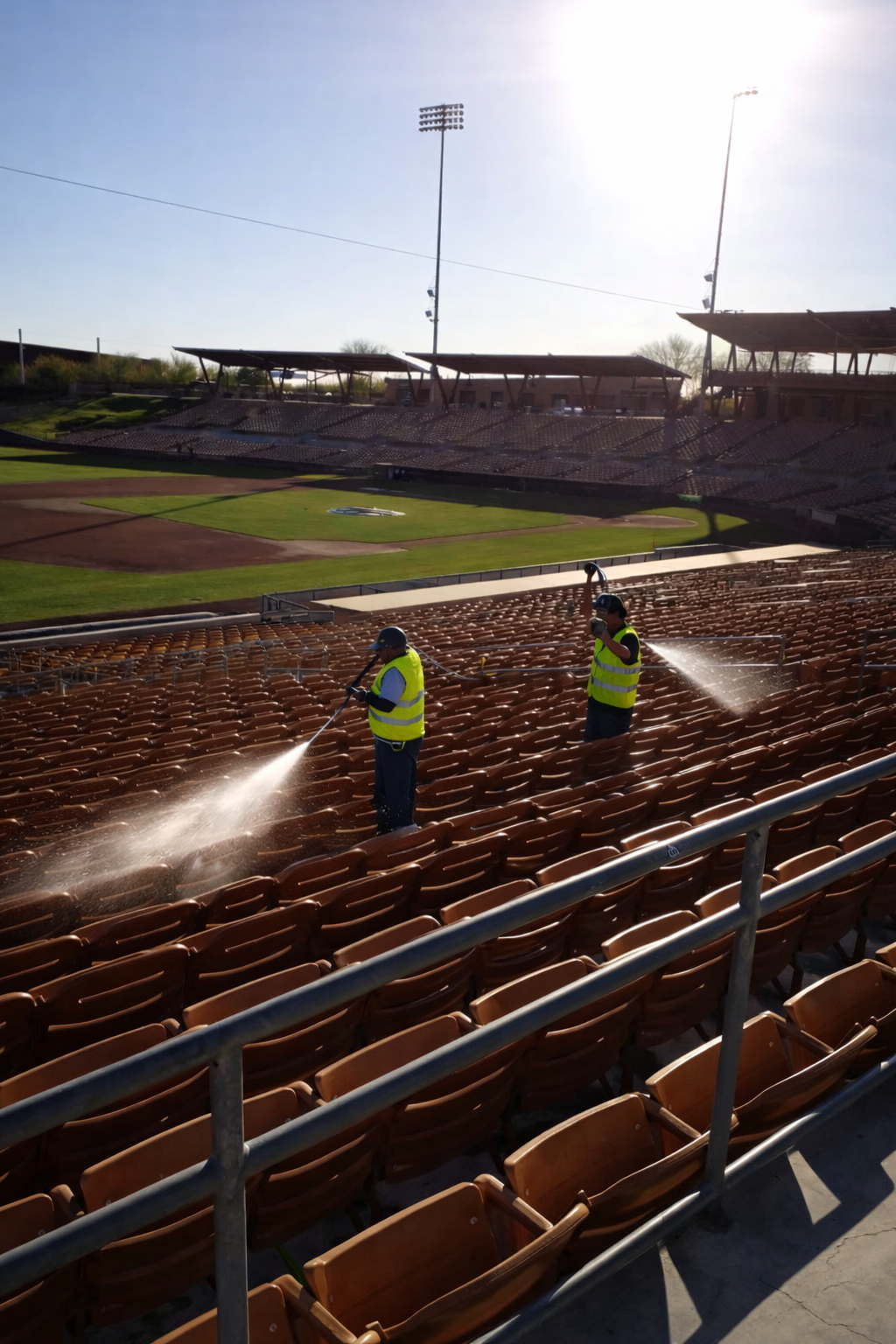
AZ Power Clean crew servicing a Chandler commercial property and the surrounding metro service area

COVERAGE AREA

Serving Property Portfolios Beyond Chandler’s Core Districts

Not every property manager’s responsibilities end at one district or one set of city limits. A commercial real estate operator running a multi-site portfolio needs a cleaning vendor who can follow that portfolio wherever it extends, covering properties in surrounding suburbs, outlying communities, and neighboring commercial corridors without requiring the operator to source, vet, and schedule separate contractors for each location.

A single vendor relationship covering multiple sites means one point of contact for scheduling, one set of service standards across every property, and one account to manage rather than several. When a monsoon season ends and multiple properties across the service area need attention at the same time, a vendor with regional capacity can sequence the work efficiently rather than leaving some properties waiting while others are serviced. For property managers whose time is already divided across a large portfolio, that operational simplicity has real value beyond the cleaning itself.

COMMON QUESTIONS

Commercial Pressure Washing in Chandler: Frequently Asked Questions

The questions below address the specific conditions, regulations, and building types that Chandler property managers and business owners actually encounter, not generic industry language that could apply anywhere.

Chandler’s two-season soil cycle shapes a practical cleaning cadence. Most commercial exteriors benefit from at least two full-service cleanings per year: one timed for late September or October after monsoon season clears, and a second in April or May before peak summer heat sets the accumulated dust permanently. High-traffic retail entries or restaurant-anchored properties may benefit from additional spot cleaning between full-service visits.
Commercial pressure washing generates contaminated wastewater including detergents, oil residue, and sediment that cannot legally enter storm drains under state and local environmental guidelines. Professional service providers use containment and recovery methods to capture runoff before it reaches drainage infrastructure. This is particularly relevant at high-traffic commercial sites where drainage runs toward Chandler’s street and canal systems. Asking a prospective contractor how they handle containment and disposal is a reasonable due-diligence question before any job begins.
Chandler’s commercial building stock spans stucco-clad retail and office buildings, concrete tilt-wall industrial structures, glass-panel Class A office buildings, and decorative paver and tile entry features. Each requires matched pressure levels, temperature settings, and cleaning agents. Applying high-pressure settings to painted stucco or decorative tile in Chandler’s heat can cause etching or finish damage that is expensive to reverse. A proper assessment before work begins determines the right method for each surface, not a single default setting applied across the property.
Yes, and it regularly needs to be. Retail storefronts along Chandler Boulevard, restaurant entries in Downtown Chandler, and corporate campuses in the Price Corridor all have operating windows that make daytime cleaning disruptive or impractical. Early morning, late evening, and weekend scheduling protects customer flow and tenant operations without pushing maintenance off the calendar. When a property genuinely cannot have cleaning equipment running during business hours, that constraint belongs in the initial scheduling conversation, not discovered on the morning of the job.
Chandler’s municipal water supply carries high mineral content, and every contact between that water and a glass or metal surface, whether from rain, rooftop drainage, or irrigation overspray, leaves calcium and magnesium deposits behind as the water evaporates. In Chandler’s heat, that evaporation happens quickly, concentrating the minerals on the surface. Left through a full summer season, those deposits transition from cosmetic staining to a structural issue: they begin to etch into glass at a depth that standard cleaning can no longer reach, making early intervention both a visual and a long-term maintenance decision.

GET A FREE QUOTE

Ready to Keep Your Chandler Property Clean Year-Round?

One monsoon season is enough to understand what deferred exterior maintenance actually costs in this city. The grime is harder to remove, the hard water stains have had more time to etch, and the building’s presentation has been working against the business through the months it mattered most. A scheduled approach, timed to Chandler’s two-season soil cycle, costs less and delivers more than a reactive one.

AZ Power Clean works with Chandler property managers and business owners who want a clean, well-maintained exterior that makes the right impression on tenants, customers, and employees year-round. Get in touch to request a free quote and start a conversation about what a maintenance schedule built around your property’s specific surfaces and traffic patterns would look like.

Open 24 hours, Monday through Sunday. Family-owned, licensed, and insured.
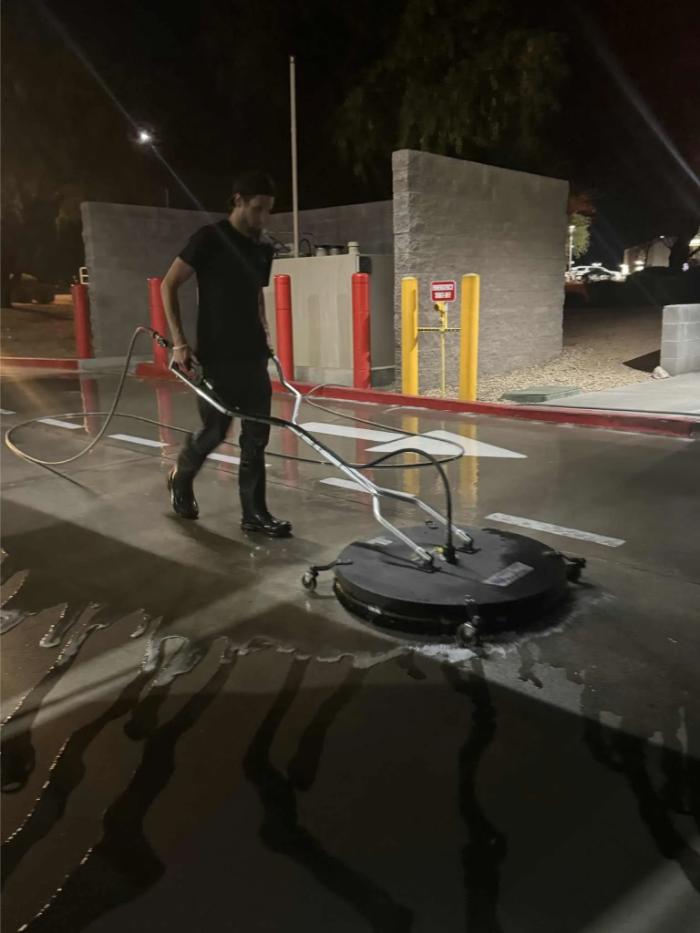
AZ Power Clean technician performing commercial exterior cleaning on a Chandler property