
Introduction: The Importance of Curb Appeal and Cleanliness
First impressions matter more than most commercial property owners realize. When potential customers, clients, or tenants approach your building, they form an opinion within seconds—and that opinion is largely based on what they see. A pristine exterior communicates professionalism, attention to detail, and respect for both customers and employees. Conversely, a dirty, stained, or neglected building sends the opposite message, potentially costing you valuable business relationships before anyone even walks through your door.
Beyond aesthetics, maintaining a clean commercial property is essential for safety and regulatory compliance. Slippery sidewalks covered in grime, mold-stained walkways, and accumulated debris create liability risks that no property manager wants to face. Regular cleaning prevents accidents, reduces insurance claims, and demonstrates your commitment to providing a safe environment. In the competitive Phoenix market, where businesses constantly vie for attention, your property’s appearance can be the differentiator that sets you apart from competitors.
Professional exterior maintenance also protects your investment by extending the lifespan of building materials and preventing costly repairs. Dirt, pollutants, and organic growth like mold and mildew don’t just look unsightly—they actively deteriorate surfaces over time. By implementing a comprehensive cleaning strategy, you’re not just improving appearance; you’re preserving your property’s value and avoiding expensive restoration projects down the road.
Know Your Building: Material-Specific Cleaning Techniques
Every commercial property is unique, constructed from various materials that each require specialized care. Understanding your building’s composition is the first step toward effective maintenance. Brick surfaces, for instance, are porous and require gentle yet thorough cleaning to remove embedded dirt without damaging the mortar joints. High-pressure washing can erode mortar, leading to structural issues, so a lower-pressure approach with appropriate detergents is essential for brick facades.
Glass surfaces demand streak-free cleaning techniques that enhance transparency while protecting any protective coatings. Commercial window cleaning requires professional-grade squeegees, purified water systems, and specialized solutions to achieve spotless results. Phoenix’s hard water and dust storms make glass maintenance particularly challenging, requiring more frequent attention than in other climates.
Metal surfaces—including aluminum, stainless steel, and decorative metalwork—need careful consideration to prevent oxidation and discoloration. Different metals react uniquely to various cleaning agents, and using the wrong product can cause permanent damage. Stainless steel, for example, requires cleaning in the direction of the grain with pH-neutral solutions to maintain its luster and protective chromium layer.
Stucco and EIFS (Exterior Insulation and Finishing System) are common in Arizona construction and require soft washing techniques rather than high-pressure cleaning. These synthetic surfaces can trap moisture if cleaned improperly, leading to mold growth and deterioration. Understanding these material-specific requirements ensures your cleaning approach enhances rather than damages your property.
Protecting Your Investment Through Proper Techniques
The cost of replacing damaged building materials far exceeds the investment in proper cleaning services. When you understand your building’s composition and employ appropriate techniques, you’re making a smart business decision that pays dividends in reduced maintenance costs and extended material lifespan. Professional cleaning services bring expertise in identifying materials and selecting the right approach for each surface.
Concrete and Pavement Cleaning: Walking Pathways to Perfection
Concrete surfaces—including sidewalks, parking lots, loading docks, and entryways—endure constant foot and vehicle traffic, making them prone to staining, oil accumulation, and organic growth. These high-traffic areas are often the first surfaces visitors encounter, making their cleanliness critical to your property’s overall impression. Regular concrete cleaning removes stubborn stains from oil, grease, gum, rust, and other contaminants that diminish your property’s professional appearance.
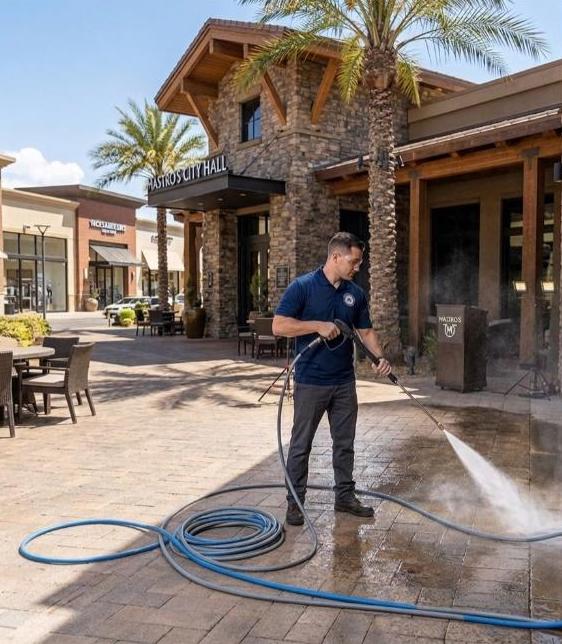
Pressure washing is highly effective for concrete cleaning, but the technique matters significantly. Professional-grade equipment with adjustable pressure settings ensures thorough cleaning without etching or damaging the surface. Hot water pressure washing is particularly effective for oil and grease removal, breaking down petroleum-based stains that cold water alone cannot eliminate.
Beyond aesthetics, clean concrete surfaces are safer surfaces. Mold, mildew, and algae create slippery conditions that pose serious liability risks, especially after rain or during early morning hours when dew accumulates. Regular cleaning eliminates these hazards, reducing slip-and-fall accidents that could result in costly lawsuits and insurance claims.
Concrete sealing is an often-overlooked step that provides tremendous long-term benefits. After thorough cleaning, applying a quality sealer protects the surface from staining, reduces future cleaning requirements, and enhances the concrete’s appearance with a subtle sheen. Sealed concrete is also more resistant to freeze-thaw damage and chemical deterioration, extending its functional lifespan significantly.
Addressing Common Concrete Challenges
Gum removal is a persistent challenge for many commercial properties, particularly retail centers and restaurants. Specialized gum removal equipment and solutions dissolve these sticky deposits without damaging the underlying concrete. Oil stain removal requires appropriate degreasers and sufficient dwell time to break down petroleum products that have penetrated the porous concrete surface.
The Power of Pressure Washing: When and How to Use It
Pressure washing is one of the most versatile and effective tools in commercial property maintenance, capable of transforming dirty, weathered surfaces into like-new conditions. However, understanding when and how to use this powerful technique is crucial for achieving optimal results without causing damage. Not all surfaces can withstand high-pressure water, and improper technique can lead to costly repairs.
The key to effective pressure washing lies in matching pressure levels to surface types. Concrete and asphalt can typically handle 3,000-4,000 PSI, making them ideal candidates for standard pressure washing. Softer surfaces like wood, stucco, and painted surfaces require lower pressure—often below 1,500 PSI—combined with appropriate cleaning solutions in what’s known as “soft washing.” This gentler approach relies more on chemistry than force to achieve thorough cleaning.
Water temperature also plays a significant role in cleaning effectiveness. Hot water pressure washing excels at removing grease, oil, and organic materials, making it ideal for restaurant exteriors, parking lots, and industrial facilities. Cold water pressure washing works well for general dirt and debris removal on most surfaces.
Timing your pressure washing services strategically maximizes results and minimizes disruption to business operations. Early morning or evening appointments reduce customer interference and allow surfaces to dry during optimal conditions. In Phoenix’s intense heat, avoiding midday pressure washing prevents rapid drying that can leave streaks and residue.
Professional Expertise Makes the Difference
While rental pressure washing equipment is available, professional services deliver superior results through experience, commercial-grade equipment, and appropriate cleaning solutions. Professionals understand surface-specific requirements, recognize potential damage before it occurs, and complete work efficiently with minimal business disruption. The investment in professional pressure washing protects your property while achieving results that DIY approaches simply cannot match.
Seasonal Cleaning Strategies: Adapting to Phoenix’s Climate
Phoenix’s unique desert climate presents distinct challenges and opportunities for commercial property cleaning. The intense summer heat, monsoon season’s dramatic storms, and winter’s surprisingly active pollen season all require tailored maintenance approaches. Understanding these seasonal patterns allows property managers to proactively address cleaning needs rather than reactively responding to problems.
Summer in Phoenix brings temperatures exceeding 115°F, creating rapid evaporation that can leave mineral deposits and streaks on glass and metal surfaces. During these months, scheduling cleaning during cooler morning hours improves results and protects both workers and surfaces from heat stress. Summer is also ideal for thorough concrete cleaning and sealing, as the heat accelerates drying times for sealers and coatings.
Monsoon season—typically July through September—brings dust storms (haboobs), heavy rain, and debris accumulation that require immediate post-storm attention. Scheduling cleaning services shortly after major weather events removes mud, organic debris, and staining before they set permanently. Clogged drains and gutters during monsoon season can cause water damage, making post-storm inspections and cleaning essential.
Fall and winter in Arizona see increased pollen from desert plants and trees, coating surfaces with fine yellow dust that diminishes appearance and can trigger allergies. Regular cleaning during these months maintains professional appearance and indoor air quality by preventing pollen from being tracked inside. Winter’s milder temperatures also provide optimal conditions for exterior painting projects and more extensive cleaning work.
Creating a Climate-Responsive Maintenance Schedule
Property managers should adjust cleaning frequency based on seasonal conditions. Increase pressure washing frequency during monsoon season to address storm-related debris. Schedule window cleaning more frequently during pollen season. Plan major building washing projects during mild weather months when conditions support thorough, streak-free cleaning. This climate-responsive approach ensures your property maintains consistent appearance year-round while optimizing cleaning effectiveness.
Eco-Friendly Cleaning Solutions: Safe and Sustainable Practices
Environmental responsibility isn’t just good ethics—it’s good business. Today’s tenants, customers, and employees increasingly value sustainability, making eco-friendly cleaning practices an important differentiator for commercial properties. Fortunately, advances in cleaning technology have made green cleaning solutions as effective as traditional chemical approaches while protecting water quality, landscaping, and human health.
Biodegradable cleaning solutions break down naturally without leaving harmful residues in soil or water systems. These plant-based products effectively remove dirt, grease, and organic growth while minimizing environmental impact. Many eco-friendly cleaners actually outperform traditional chemicals because they’re specifically engineered for particular cleaning challenges rather than relying on harsh, general-purpose ingredients.
Water conservation is another crucial aspect of sustainable cleaning. Professional services employ water reclamation systems that capture, filter, and reuse cleaning water, significantly reducing consumption. Hot water cleaning requires less water overall because heat and pressure combination achieves results faster than cold water approaches. Low-flow nozzles and proper technique minimize water waste while maintaining cleaning effectiveness.
Protecting surrounding landscaping during cleaning operations demonstrates environmental stewardship and preserves your property’s overall appearance. Pre-wetting plants before cleaning, using plant-safe cleaning solutions, and rinsing vegetation after cleaning prevents damage to expensive landscaping investments. These simple precautions maintain the complete aesthetic package your property presents.
Benefits Beyond Environmental Impact
Eco-friendly cleaning solutions also improve indoor air quality and reduce health concerns for employees and customers with chemical sensitivities. Properties that demonstrate environmental commitment often attract quality tenants willing to pay premium rates. Green cleaning practices reduce long-term material damage, as harsh chemicals can accelerate deterioration of building surfaces. Sustainability is an investment that delivers returns across multiple dimensions.
Routine Checks and Preventive Maintenance: Building a Cleaning Calendar
Consistent maintenance is far more cost-effective than emergency cleaning services or major restoration projects. Establishing a comprehensive cleaning calendar ensures nothing falls through the cracks while distributing costs predictably throughout the year. A well-designed maintenance plan addresses different property areas according to their specific needs and traffic patterns.
Start by conducting a thorough property assessment, identifying all exterior surfaces, their materials, and current condition. Document high-traffic areas that require more frequent attention, such as main entrances, parking lots, and loading areas. Note problem areas prone to staining, organic growth, or debris accumulation. This assessment becomes the foundation for your customized cleaning calendar.
Create a tiered maintenance schedule with daily, weekly, monthly, quarterly, and annual tasks. Daily tasks might include entrance sweeping and trash removal. Weekly tasks could cover parking lot sweeping and entrance glass cleaning. Monthly maintenance might address sidewalk pressure washing and building spot cleaning. Quarterly services could include comprehensive building washing and concrete sealing. Annual tasks might involve roof cleaning and extensive restoration work.
Regular inspections are crucial for catching small issues before they become expensive problems. Schedule monthly property walks to identify new stains, damage, or maintenance needs. Document findings with photos and notes, tracking changes over time. This proactive approach allows you to address concerns during regular maintenance rather than requiring emergency service calls.
Technology Tools for Maintenance Management
Property management software can streamline maintenance scheduling, track service completion, and manage vendor relationships. Digital photo documentation creates accountability and helps justify cleaning budgets to ownership. Some professional cleaning services offer scheduled maintenance programs with automatic reminders and priority scheduling, removing the administrative burden from property managers while ensuring consistent care.
Choosing Reliable Cleaning Services: What to Look For
Selecting the right commercial cleaning partner significantly impacts your property’s appearance, safety, and maintenance costs. With numerous options available in the Phoenix market, property managers must evaluate providers carefully to ensure they deliver professional results, reliable service, and good value. Several key factors distinguish exceptional cleaning services from adequate ones.
Experience with commercial properties matters tremendously. Companies specializing in commercial exterior cleaning understand the unique challenges of maintaining business properties, including working around operating hours, managing customer interactions professionally, and addressing large-scale cleaning projects efficiently. Ask potential providers about their commercial portfolio and request references from similar properties.
Equipment quality directly correlates with results quality. Professional-grade pressure washing equipment, water reclamation systems, and specialized tools deliver superior outcomes compared to consumer-grade alternatives. Inquire about the equipment providers use and how they maintain it. Well-maintained, professional equipment indicates a company’s commitment to quality and suggests they take their business seriously.
Insurance and licensing protect you from liability. Verify that cleaning services carry adequate general liability insurance and workers’ compensation coverage. Request certificates of insurance and confirm they’re current. Licensed, bonded, and insured companies demonstrate professionalism and protect your property from financial risk if accidents or damage occur during cleaning.
Customer service and communication separate great companies from good ones. Responsive providers who return calls promptly, answer questions thoroughly, and address concerns quickly make the business relationship smooth and stress-free. Read online reviews focusing on customer service experiences, not just cleaning results.
Questions to Ask Potential Providers
Before hiring a commercial cleaning service, ask about their experience with your specific building materials, their approach to environmental sustainability, their scheduling flexibility, and their quality assurance processes. Request detailed proposals outlining specific services, products used, and pricing structures. Don’t automatically choose the lowest bidder—consider value, reliability, and expertise when making your decision.
DIY Tips for Minor Touch-Ups: When You’re Tight on Budget
While professional cleaning services deliver optimal results, budget constraints or minor issues between scheduled cleanings sometimes require in-house solutions. Property managers and maintenance staff can handle certain tasks effectively with proper knowledge, tools, and techniques. Understanding what you can safely do yourself—and what requires professional expertise—helps balance budget considerations with property appearance.
Basic entrance maintenance keeps high-visibility areas presentable between professional cleanings. Invest in a quality commercial broom, dust mop, and entrance mat system. Daily sweeping prevents dirt accumulation and tracked-in debris. Weekly mopping with appropriate floor cleaners maintains appearance without damaging surfaces. Replace entrance mats regularly, as worn mats lose effectiveness and appear unprofessional.
Spot cleaning addresses individual stains or marks before they set permanently. Keep a supply of appropriate cleaning solutions for common issues—degreaser for oil spots, mildew remover for organic growth, and all-purpose cleaner for general dirt. Always test cleaning products in inconspicuous areas first to ensure they don’t damage or discolor surfaces. Address spills and stains immediately for easiest removal.
Consumer-grade pressure washers (1,300-2,000 PSI) can handle light-duty tasks like patio cleaning, small concrete areas, and regular maintenance of previously cleaned surfaces. However, avoid using them on delicate surfaces, large projects, or heavily soiled areas where they’ll prove inadequate. Understand your equipment’s limitations and recognize when professional services are necessary.
Window cleaning with squeegees, microfiber cloths, and proper solutions can maintain glass appearance between professional services. Work on overcast days or cooler temperatures to prevent rapid drying that causes streaking. Use distilled water for final rinsing to avoid mineral deposits. However, multiple-story buildings and extensive glass facades require professional equipment and safety measures.
Know Your Limitations
DIY cleaning saves money only when done correctly. Improper techniques damage surfaces, creating repair costs far exceeding professional cleaning expenses. Recognize situations requiring professional expertise—difficult stains, delicate materials, safety concerns involving heights or hazardous conditions, and large-scale projects. Smart property managers know when DIY approaches make sense and when calling professionals is the wiser investment.