
Transform Your Business with the Power of Pressure Washing
In the competitive landscape of commercial property management, first impressions aren’t just important, they’re everything. Pressure washing has emerged as one of the most effective and scientifically proven methods for maintaining the exterior appearance and structural integrity of commercial properties throughout the Greater Phoenix metro area. This powerful cleaning technique combines physics, chemistry, and engineering to deliver results that traditional cleaning methods simply cannot match.
The Greater Phoenix area presents unique challenges for property owners and managers. With intense desert sun, seasonal monsoon storms, and dust accumulation from the surrounding environment, commercial buildings face constant assault from the elements. These environmental factors create the perfect conditions for dirt buildup, organic growth, and surface degradation that can diminish your property’s curb appeal and potentially compromise safety.
Beyond aesthetics, pressure washing plays a critical role in maintaining safe walking surfaces, preventing slip-and-fall hazards, and protecting your investment from long-term damage. Understanding the science behind this transformative service helps business owners make informed decisions about their property maintenance strategies. When you comprehend how pressure washing works at a fundamental level, you can better appreciate why it’s become an indispensable tool for successful commercial property management in Phoenix and surrounding communities.
What is Pressure Washing: The Basics Behind the Blast
At its core, pressure washing harnesses the fundamental principles of physics to achieve remarkable cleaning results. The process involves forcing water through a pump system that dramatically increases its pressure before expelling it through a specialized nozzle at high velocity. This concentrated stream of water creates kinetic energy that dislodges contaminants from surfaces with precision and efficiency.
A pressure washing system consists of several key components working in harmony. The pump serves as the heart of the operation, drawing water from a source and pressurizing it to levels ranging from 1,000 to 4,000 PSI (pounds per square inch) or higher for commercial applications. This pressurized water travels through reinforced hoses designed to withstand extreme pressure without bursting or leaking.
The nozzle represents the final and perhaps most critical component, controlling the water’s spray pattern and impact force. Different nozzle configurations create varying spray angles, from narrow zero-degree streams that concentrate maximum force on small areas to wider forty-degree fans that cover larger surfaces more gently. Professional technicians select the appropriate nozzle based on the surface material and cleaning requirements.
Temperature also plays a significant role in pressure washing effectiveness. Hot water pressure washing systems heat water to temperatures exceeding 200 degrees Fahrenheit, which dramatically enhances the cleaning power by breaking down oils, greases, and sticky residues more effectively than cold water alone. This thermal energy works synergistically with mechanical pressure to tackle even the most stubborn contaminants.
The Chemistry of Clean: How Pressure Washing Lifts Stains Away
While pressure alone achieves impressive results, the true magic of professional pressure washing often lies in the strategic application of cleaning chemistry. Understanding the molecular interactions between cleaning agents, contaminants, and surface materials enables technicians to customize their approach for optimal outcomes.
Surfactants represent the workhorses of pressure washing chemistry. These specialized molecules feature both hydrophilic (water-loving) and hydrophobic (water-repelling) ends that position themselves at the interface between water and contaminants. This molecular arrangement reduces surface tension, allowing cleaning solutions to penetrate and encapsulate dirt, oil, and grime particles, effectively lifting them away from the surface.
Different contaminants require different chemical approaches. Alkaline detergents excel at breaking down organic materials, oils, and proteins, making them ideal for removing food residue, bird droppings, and general grime from commercial properties. Acidic solutions work effectively on mineral deposits, rust stains, and efflorescence—the white, chalky residue that often appears on concrete and masonry surfaces in the Phoenix area due to mineral-rich water evaporation.
Professional pressure washing services carefully match cleaning agents to surface materials to ensure effective cleaning without damage. Delicate surfaces like painted wood or certain types of stone require gentler, pH-neutral solutions, while robust concrete or industrial metal surfaces can withstand stronger formulations. This chemical knowledge separates amateur cleaning from professional results.
The dwell time, the period cleaning agents remain on surfaces before rinsing—also impacts effectiveness. Allowing solutions to work for the appropriate duration gives molecules time to break molecular bonds between contaminants and surfaces, ensuring complete removal when the high-pressure rinse follows. This scientific approach produces superior results compared to indiscriminate spraying.
The Environmental Angle: Why Pressure Washing is Eco-Friendly
Contrary to common misconceptions, professional pressure washing represents one of the most environmentally responsible cleaning methods available to commercial property owners. When executed properly with modern equipment and techniques, pressure washing conserves resources while delivering exceptional results.
Water efficiency stands as one of pressure washing’s greatest environmental advantages. High-pressure systems use significantly less water than traditional cleaning methods like garden hoses or manual scrubbing. The concentrated force of pressurized water accomplishes in minutes what might take hours with conventional approaches, using a fraction of the water volume. Modern pressure washing equipment can clean large commercial surfaces while consuming as little as 2-3 gallons per minute.
The ability to clean effectively without harsh chemicals further enhances pressure washing’s environmental credentials. Many cleaning applications require only water pressure to achieve satisfactory results, eliminating chemical runoff concerns entirely. When cleaning agents are necessary, professional services use biodegradable, eco-friendly formulations that break down naturally without harming surrounding vegetation or contaminating groundwater.
Responsible water management during pressure washing operations ensures compliance with Phoenix area environmental regulations. Professional technicians employ containment and reclamation systems that capture runoff, preventing contaminated water from entering storm drains or natural waterways. This captured water can be filtered and properly disposed of or recycled, minimizing environmental impact.
Preventing surface degradation through regular pressure washing also contributes to sustainability. By removing corrosive contaminants before they cause permanent damage, pressure washing extends the lifespan of building materials, reducing the need for resource-intensive replacements and renovations. This preventative maintenance approach aligns with sustainable business practices and environmental stewardship.
Safety First: Mitigating Risks with Proper Pressure Washing Techniques
The powerful forces involved in pressure washing demand respect and expertise. Operating pressure washing equipment safely requires comprehensive training, proper protective equipment, and adherence to established safety protocols that protect both technicians and property.
Pressure washing equipment generates enough force to cause serious injury if mishandled. Water expelled at 3,000 PSI can cut through skin, damage eyes, and cause other traumatic injuries. Professional technicians undergo rigorous training to operate equipment safely, maintaining appropriate distances from surfaces and never directing spray toward people, animals, or fragile objects.
Surface damage represents another critical safety consideration. Excessive pressure or incorrect nozzle selection can etch concrete, strip paint, splinter wood, crack glass, or dislodge mortar from brick and stone surfaces. Experienced professionals understand the delicate balance between effective cleaning and material preservation, adjusting pressure levels and techniques based on surface characteristics.
Ladder safety and fall prevention require particular attention when cleaning elevated surfaces like building facades or second-story areas. Professional services invest in proper equipment including stabilized ladders, aerial lifts, and fall protection systems that keep technicians safe while accessing hard-to-reach areas. This equipment represents significant investment but ensures worker safety and property protection.
Electrical hazards pose unique challenges during pressure washing operations. Water and electricity create dangerous combinations, so professionals carefully identify and protect electrical panels, outdoor outlets, lighting fixtures, and other electrical components before beginning work. Ground fault circuit interrupters and proper grounding protocols prevent potentially fatal electrocution incidents.
Economic Enhancement: The Financial Benefits of Regular Pressure Washing
Smart business owners recognize that regular pressure washing represents investment rather than expense. The financial returns from systematic exterior cleaning extend far beyond superficial appearance improvements, delivering measurable economic benefits that directly impact profitability.
Preventative maintenance through pressure washing helps avoid costly repairs by removing damaging contaminants before they cause permanent harm. Mold, mildew, algae, and accumulated dirt retain moisture against building surfaces, accelerating deterioration of paint, siding, and structural materials. Regular cleaning eliminates these threats, preventing rot, corrosion, and decay that would require expensive remediation.
Property value enhancement represents another significant financial benefit. Commercial properties with clean, well-maintained exteriors command higher market values and attract quality tenants willing to pay premium rents. First impressions influence prospective tenants’ and customers’ perceptions of your business, with clean properties signaling professionalism and attention to detail.
Tenant retention improves when property owners demonstrate commitment to maintenance and appearance. Clean, safe environments make tenants proud to associate with your property, reducing turnover costs and vacancy rates. Similarly, retail and hospitality businesses experience increased customer traffic when their exteriors project cleanliness and invite patronage.
Energy efficiency can improve through pressure washing of building exteriors and roofing surfaces. Removing dark contaminants that absorb solar heat helps reduce cooling costs in Phoenix’s intense summer climate. Clean surfaces reflect more sunlight, maintaining lower surface temperatures and reducing heat transfer into building interiors.
Liability reduction provides financial protection by eliminating slip-and-fall hazards on walkways, parking lots, and entryways. Algae, mold, and accumulated grime create dangerously slippery surfaces, particularly when wet. Regular pressure washing removes these hazards, reducing accident risk and protecting businesses from costly injury claims and insurance rate increases.
Choosing the Right Partner: What to Look for in a Pressure Washing Service
Selecting the right pressure washing partner significantly impacts results, property protection, and overall satisfaction. Commercial property owners should evaluate potential service providers across several critical dimensions to ensure professional, reliable service delivery.
Experience with commercial properties distinguishes professional services from residential-focused companies. Commercial pressure washing presents unique challenges including larger surface areas, diverse materials, accessibility issues, and coordination requirements. Providers with extensive commercial experience understand these challenges and possess the equipment, expertise, and procedures to address them effectively.
Equipment quality and variety indicate a provider’s capability and professionalism. Modern, well-maintained pressure washing systems deliver consistent results while minimizing breakdown risks that could delay project completion. Providers should maintain diverse equipment including various pressure levels, hot and cold water capabilities, and specialized attachments for different applications.
Insurance and licensing protect property owners from liability and ensure compliance with local regulations. Reputable pressure washing services carry comprehensive general liability insurance, workers’ compensation coverage, and any required Phoenix area business licenses. Request certificates of insurance before allowing any work to proceed on your property.
Customer service excellence manifests in communication quality, scheduling flexibility, and responsiveness to concerns. Professional providers maintain clear communication throughout the engagement, arrive punctually for scheduled appointments, and address questions or issues promptly. References from other commercial property owners provide valuable insights into service quality and reliability.
Environmental compliance demonstrates responsibility and protects clients from regulatory violations. Pressure washing services should understand and follow Phoenix area water use regulations, storm drain protection requirements, and chemical handling protocols. Ask potential providers about their environmental practices and runoff management procedures.
Real-Life Impact: The Transformational Effect on Properties
The practical applications of professional pressure washing span virtually every exterior surface of commercial properties, with dramatic before-and-after transformations that immediately enhance appearance and functionality.
Parking lot and garage cleaning removes oil stains, tire marks, and accumulated grime that create unsightly conditions and safety hazards. Regular pressure washing restores pavement to nearly new condition, clearly revealing parking lines and directional markings that guide traffic flow. Clean parking areas project professionalism and make customers feel more comfortable visiting your business.
Building facade washing eliminates dust, pollution residue, bird droppings, and weathering stains that accumulate over time. Whether your property features stucco, painted surfaces, metal panels, or glass, professional pressure washing removes years of environmental buildup, revealing original colors and finishes. This transformation dramatically improves curb appeal and reinforces positive brand perception.
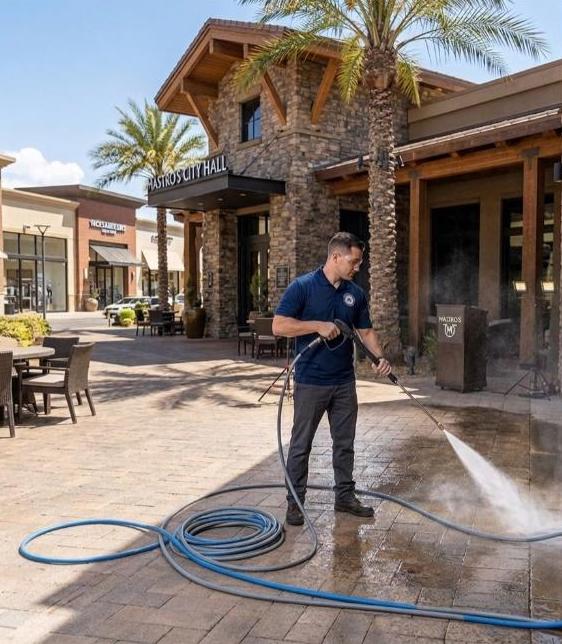
Sidewalk and entryway cleaning creates inviting pathways that welcome customers and tenants. Pressure washing removes gum, beverage stains, dirt buildup, and organic growth that creates slip hazards and conveys neglect. Clean, well-maintained walkways demonstrate attention to detail and commitment to visitor safety and comfort.
Dumpster pad and loading dock areas benefit tremendously from regular pressure washing. These high-traffic zones accumulate grease, spills, and debris that attract pests and create unpleasant odors. Professional cleaning eliminates these problems, improving sanitation and reducing pest activity around your property.
Outdoor dining areas and patios require meticulous cleaning to meet health standards and create pleasant environments for customers. Pressure washing removes food residue, beverage spills, and environmental contaminants that compromise hygiene and aesthetics. Clean outdoor spaces encourage customer use and enhance dining experiences.