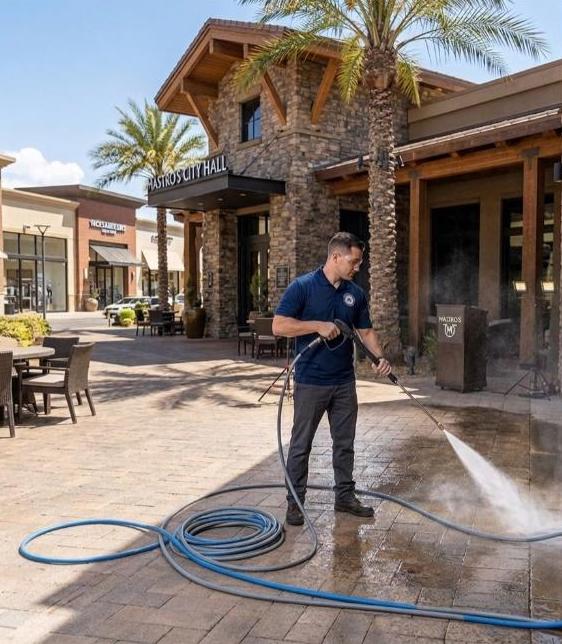

In Phoenix, AZ, where the sun beats down relentlessly and dust is a constant companion, maintaining your concrete surfaces is essential. Power washing is a fantastic way to restore your driveways, patios, and walkways to their former glory, removing years of grime, oil stains, and dirt. But the job isn’t truly finished until you consider sealing concrete after power washing. The biggest mistake we see homeowners make, however, isn’t skipping the sealer altogether – it’s rushing the application, misunderstanding the crucial drying time required.
At AZ Power Clean, we understand that protecting your investment is key. That’s why beyond delivering pristine results with our comprehensive our concrete cleaning services services, we also emphasize proper post-cleaning care, especially the critical timing of concrete sealer application. Applying a sealer too soon after power washing can actually do more harm than good, trapping moisture and significantly shortening the lifespan of your protective coat.
The Critical Window: Moisture Content and Curing
Why Concrete Needs to Be Completely Dry Before Sealing
Imagine trying to paint a wet wall; the paint won’t adhere properly, it might bubble, or peel off. The same principle applies to concrete sealing. Concrete is a porous material, and when power washed, it absorbs a significant amount of water. This moisture needs a chance to evaporate fully before any sealer is applied.
Applying a sealer to damp concrete creates a barrier that traps this moisture within the concrete slab. This trapped moisture can lead to a host of problems, including:
- Poor Adhesion: The sealer won’t bond effectively to the concrete, leading to premature peeling, flaking, or delamination.
- Cloudiness or Whitening: Moisture trapped beneath the sealer can cause a milky white appearance, especially with topical sealers, ruining the aesthetic.
- Blistering: As trapped water tries to escape, it can create blisters or bubbles in the sealer layer.
- Reduced Durability: The sealer’s protective qualities are compromised, meaning it won’t repel stains, resist abrasion, or protect against UV damage as intended.
- Mold and Mildew Growth: Trapped moisture creates an ideal environment for organic growth underneath the sealer, which can be challenging to remove.
💡 Key Takeaway: Proper drying time after power washing is non-negotiable for effective concrete sealing. Skipping this step can lead to poor adhesion, aesthetic issues like cloudiness, and a significantly shortened sealer lifespan.
Recommended Drying Times
So, how long should you wait? There’s no single, universal answer, as several factors influence drying time. However, as a general rule of thumb, most professionals recommend waiting at least 24 to 48 hours after power washing before applying a sealer. In some cases, especially in humid conditions or with particularly dense concrete, this period might need to be extended.
Factors Affecting Concrete Drying Time:
| Factor | Impact on Drying Time |
|---|---|
| Humidity | Higher humidity means slower evaporation; concrete will take longer to dry. |
| Temperature | Warmer temperatures accelerate evaporation; concrete dries faster. |
| Sunlight Exposure | Direct sunlight helps speed up drying. Shaded areas will take longer. |
| Air Movement | Good airflow facilitates faster drying. Stagnant air slows it down. |
| Concrete Porosity | More porous concrete can absorb more water and may take longer to release it all. |
💡 Key Takeaway: A minimum of 24-48 hours is generally recommended for concrete to dry after power washing, but always consider local conditions like Phoenix’s dry heat versus a more humid environment, which can shorten or extend this window significantly.
How to Check if Your Concrete is Ready
While waiting the recommended time is a good start, it’s always best to perform a quick test to ensure your concrete is truly ready for sealer application:
- Visual Inspection: Look for any dark, damp patches. The entire surface should appear uniformly light and dry.
- The “Tape Test”: Tape a 1’x1′ plastic sheet (like a trash bag cut open) firmly to the concrete surface with duct tape on all four sides. Leave it for 24 hours. If you see condensation or dark spots on the concrete when you remove it, the concrete is still too wet.
The Impact on Sealer Lifespan and Concrete Maintenance
The primary goal of concrete maintenance after cleaning, especially with sealer application, is longevity and protection. A properly applied sealer acts as a shield against stains, UV damage, water penetration, and even helps prevent surface deterioration from freeze-thaw cycles (though less of a concern in Phoenix). When the timing for sealing concrete after power washing is off, all these benefits are severely compromised.
A sealer that fails prematurely means more frequent reapplication, extra cost, and wasted effort. It’s a classic example of “an ounce of prevention is worth a pound of cure.” Investing the proper drying time upfront ensures your concrete maintenance efforts genuinely pay off.
💡 Key Takeaway: Testing for dryness is crucial. Tools like a simple plastic sheet can confirm if the concrete is ready, ensuring maximum sealer performance and extending its protective lifespan against common wear and tear.
Choosing the Right Concrete Sealer for Phoenix
Once your concrete is thoroughly dry, selecting the right sealer is the next step. For Phoenix’s climate, UV resistance and heat tolerance are important. There are two main types:
- Penetrating Sealers: These soak into the concrete, reacting chemically to form a barrier within the pores. They offer excellent long-term protection, don’t change the surface appearance, and are less prone to peeling.
- Topical Sealers: These form a protective film on the surface. They can provide a glossy or matte finish and offer good stain resistance. Acrylic-based topical sealers are common but require careful application to avoid trapping moisture.
Consulting with a professional concrete cleaning and sealing company in Phoenix can help you choose the best product for your specific needs and ensure correct application techniques.
Have questions about professional concrete cleaning in Phoenix? Give us a call today.
Frequently Asked Questions About Sealing Concrete
Can I use a leaf blower to speed up the drying process?
While a leaf blower can help clear standing water immediately after power washing, it won’t significantly reduce the overall drying time required for the concrete pores to release absorbed moisture. Natural evaporation over 24-48 hours is still necessary.
What happens if I seal my concrete when it’s still damp?
Sealing damp concrete can lead to several problems, including poor sealer adhesion, premature peeling or flaking, a milky white appearance (known as “blushing”), and reduced overall durability and protection.
How often should concrete be sealed in Phoenix, AZ?
The reapplication frequency depends on the type of sealer used, the amount of traffic the concrete receives, and exposure to elements. Generally, topical sealers may need reapplication every 1-3 years, while penetrating sealers can last 5-10 years or more.
Is sealing concrete really necessary after power washing?
While not strictly “necessary” for the cleaning itself, sealing is highly recommended to protect your concrete from stains, weathering, UV damage, and to extend its overall lifespan. It’s a crucial step in comprehensive concrete maintenance, especially in harsh climates like Phoenix.