
In Phoenix, AZ, where the sun bakes everything, unsightly oil stains on asphalt and concrete parking lots aren’t just an eyesore; they can be a real hazard and a sign of neglected property. From leaky engines to spilled fluids, these stains quickly accumulate, embedding themselves deep into porous surfaces. As professionals, we know that effectively removing oil stains from asphalt and concrete parking lots requires more than just a quick rinse. It demands specialized knowledge, powerful equipment, and the right techniques to restore your property’s appearance and safety.
At AZ Power Clean, we’ve tackled countless oil-stained parking lots across the Phoenix metro area. We understand the nuances of various surfaces and the best approaches for stubborn stains. For businesses looking to maintain a pristine exterior, understanding professional parking lot oil stain removal methods is crucial. If you’re interested in keeping your commercial property looking its best, we invite you to learn more about our comprehensive parking lot cleaning services.
The Challenge of Oil Stains on Commercial Surfaces
Oil, grease, and other automotive fluids pose unique challenges when they seep into asphalt or concrete. These materials are porous, acting like sponges that absorb hydrocarbons. The longer a stain sits, the deeper it penetrates, making it exponentially harder to remove. In Phoenix’s heat, these substances can further bake into the surface, becoming almost fused with the pavement.
💡 Key Takeaway: Timely action is critical for oil stain removal. The fresher the stain, the higher the chance of complete removal, as oil hasn’t had ample time to deeply penetrate the porous asphalt or concrete.
Why DIY Methods Often Fall Short
Many property managers or business owners attempt to tackle oil stains with household cleaners or basic pressure washers. While these might offer superficial improvement for very fresh, minor spills, they rarely achieve professional results. Here’s why:
- Insufficient Power: Standard pressure washers lack the hot water and high PSI needed to emulsify and lift deeply embedded oil.
- Wrong Chemistry: Household detergents aren’t formulated for the complex chemical breakdown required for petroleum-based stains.
- Risk of Damage: Improper use of strong chemicals or high-pressure cold water can damage asphalt binders or etch concrete surfaces, leading to costly repairs.
- Environmental Concerns: Disposing of oil-laden runoff improperly can lead to environmental violations.
The Impact of Neglected Stains
Beyond aesthetics, neglected oil stains can:
- Degrade Pavement: Oil can soften asphalt, leading to premature deterioration and potholes. For concrete, it can weaken the surface.
- Create Slip Hazards: Especially after rain, oil residue makes surfaces slick, increasing the risk of slips and falls for pedestrians and vehicles.
- Negative Impression: A dirty, stained parking lot sends a poor message about your business’s attention to detail and professionalism.
Initial Site Assessment for Effective Cleaning
Before any cleaning begins, AZ Power Clean conducts a thorough assessment. We identify the type of surface (asphalt, concrete, pavers), the age and depth of the stains, and the overall condition of the pavement. This allows us to tailor our approach, selecting the most effective asphalt cleaning techniques and products.
Professional Oil Stain Removal Techniques
Our approach for removing oil stains from asphalt and concrete parking lots relies on a combination of specialized chemicals and powerful equipment.
Utilizing Commercial-Grade Degreasers
The first line of defense against stubborn oil stains is a high-quality, commercial-grade degreaser. These aren’t your average garage cleaners. Our professional degreasers are formulated to:
- Emulsify Oil: They break down the oil into tiny particles, allowing it to mix with water.
- Penetrate Deeply: Designed to seep into the pores of concrete and asphalt, reaching the embedded contaminants.
- Eco-Friendly Options: We prioritize solutions that are effective yet environmentally responsible, especially when dealing with runoff.
Application involves carefully saturating the stained area, allowing the degreaser sufficient dwell time to work its magic. This dwell time varies based on the stain’s age and severity.
💡 Key Takeaway: Commercial-grade degreasers are essential. They don’t just sit on the surface; they chemically emulsify the oil, preparing it to be thoroughly rinsed away, which is crucial for deep stains.
The Power of Hot-Water Surface Cleaners
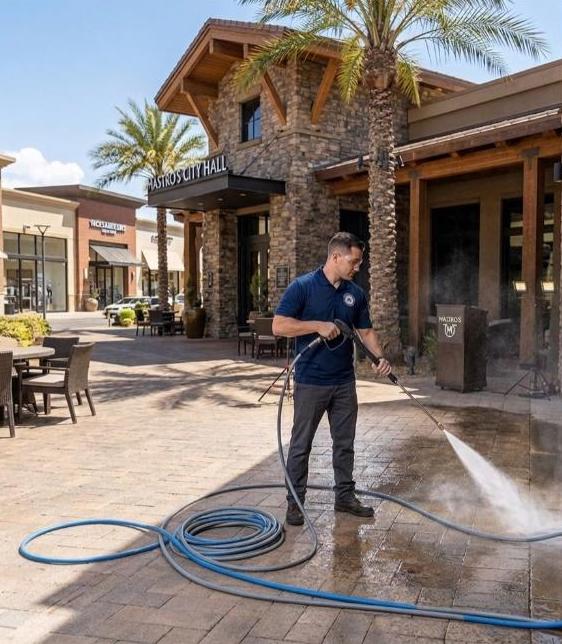
Once the degreaser has done its work, the real power comes from our hot-water surface cleaners. This is a critical distinction from standard cold-water pressure washing. Hot water significantly enhances the cleaning process by:
- Melting & Softening: High-temperature water (often 200°F or more) helps melt and soften hardened oil and grease, making it easier to lift.
- Boosting Degreaser Efficacy: The heat accelerates the chemical reaction of the degreaser, leading to more thorough emulsification.
- Sterilization: Hot water also helps sanitize the surface, removing bacteria and other contaminants often associated with spills.
- Reduced Water Usage: Hot water cleaning is often more efficient, requiring less overall water to achieve superior results.
Our surface cleaners operate with high pressure and wide cleaning paths, ensuring uniform cleaning without the zebra-striping often seen with wands.
The Importance of Repeated Treatments
For older, deeply embedded stains, a single treatment is rarely enough. We often employ a strategy of repeated applications of degreaser and subsequent hot-water cleaning. This multi-pass approach allows us to gradually draw out and remove layers of contamination, achieving the cleanest possible outcome.
Sometimes, a poultice application is necessary. This involves applying a paste-like mixture of absorbent material and a strong degreaser, allowing it to dry and draw the oil out of the pavement. Once dry, the poultice is removed, taking the oil with it.
💡 Key Takeaway: Stubborn, old stains often require multiple treatments and sometimes specialized poultice methods. Patience and persistence with professional techniques yield the best results for deep penetration.
When Are Stains Permanent vs. Treatable?
While our goal is always complete removal, it’s important to set realistic expectations. Some stains, particularly those that are very old or have been repeatedly exposed to heat and sunlight, can oxidize and permanently discolor the pavement.
| Stain Characteristic | Treatability Outlook |
|---|---|
| Fresh, superficial oil stain | Highly treatable; good chance of complete removal. |
| Older, embedded oil stain (weeks-months) | Treatable with professional methods; may require multiple passes for significant reduction. |
| Very old, oxidized stain (years) | Challenging; often results in significant lightening, but some discoloration may remain. |
| Stain with chemical etching or asphalt degradation | Permanent damage; cleaning will improve appearance but cannot repair physical damage. |
In cases where complete removal isn’t possible, our methods can still significantly lighten the stain, making it far less noticeable and improving the overall cleanliness of the parking lot. For asphalt surfaces, sealing and striping after cleaning can further enhance the appearance and protect against future stains.
Preventative Measures and Ongoing Maintenance
To minimize future oil stains and maintain the cleanliness of your Phoenix parking lot, consider these tips:
- Regular Sweeping: Removes loose debris and minor spills before they embed.
- Prompt Spill Cleanup: Educate staff to address fresh spills immediately with absorbent materials.
- Catch Basins/Drip Pans: Encourage tenants or employees with leaky vehicles to use drip pans.
- Scheduled Professional Cleaning: Regular maintenance cleaning, even without major stains, helps prevent build-up and keeps surfaces pristine.
For businesses in Phoenix, AZ, partnering with a professional like AZ Power Clean for regular parking lot maintenance can save money in the long run by extending the life of your pavement and keeping your property looking its best.
Have questions about professional concrete cleaning in Phoenix? Give us a call today.
Frequently Asked Questions About Oil Stain Removal
When should I call a professional for oil stain removal?
You should call a professional when stains are large, deeply embedded, or if you’re dealing with sensitive surfaces like decorative concrete or aged asphalt. Professionals have the right equipment, chemicals, and expertise to effectively remove stains without causing further damage to your property or the environment.
What types of surfaces can AZ Power Clean clean?
We specialize in cleaning a wide range of commercial surfaces, including asphalt parking lots, concrete driveways, sidewalks, loading docks, dumpster pads, and pavers. Our methods are tailored to the specific material to ensure effective and safe cleaning.
Is the oil stain removal process safe for the environment?
AZ Power Clean uses eco-friendly degreasers and ensures proper containment and disposal of contaminated runoff whenever necessary. We comply with all local environmental regulations to protect the surrounding landscape and water systems.
How long does the oil stain removal process take?
The duration depends on the size of the area, the number and severity of the stains, and the type of surface. A typical parking lot may take a few hours to a full day. We provide a time estimate during our initial assessment.