For restaurants in Phoenix, AZ, a clean kitchen is paramount, but often, the area around the dumpster pad gets overlooked. This oversight can lead to serious consequences, from failing health inspections to driving away customers with pervasive odors and attracting unwanted pests. Concrete pad cleaning for restaurant dumpster areas isn’t just about aesthetics; it’s a critical component of maintaining hygiene, ensuring compliance, and protecting your business’s reputation.
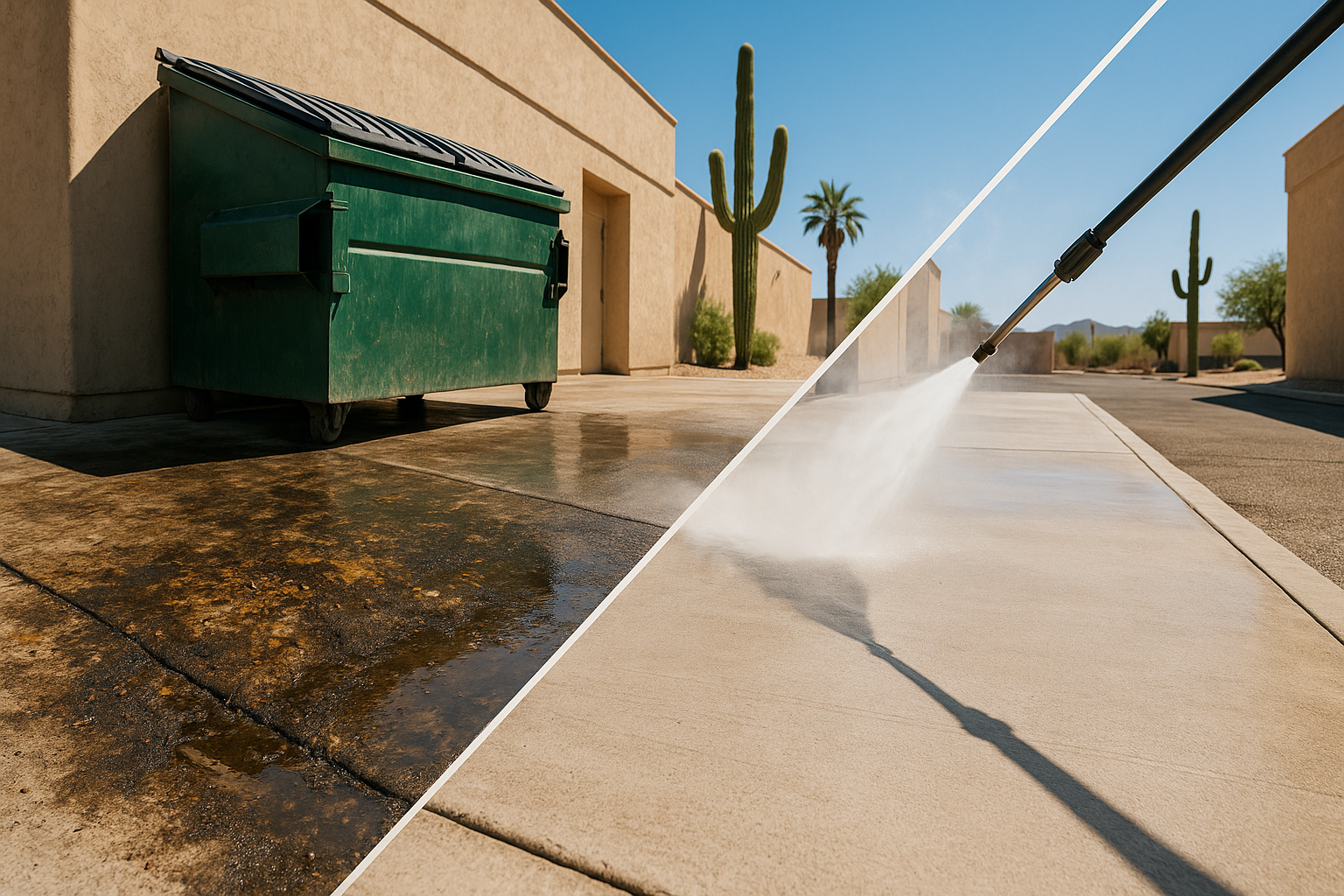
The desert heat in Phoenix only amplifies the issues caused by accumulated food waste, grease, and liquids. These substances seep into the porous concrete, creating a breeding ground for bacteria and a magnet for pests. Regular, professional attention to this often-neglected space is essential. At AZ Power Clean, we understand the specific demands of restaurant environments and offer specialized concrete cleaning services to keep your dumpster areas pristine and compliant.
Ensuring Health, Safety, and Compliance with Professional Dumpster Pad Cleaning
Meeting Health Code Compliance in Phoenix
Health inspectors in Phoenix are meticulous, and a dirty dumpster pad can quickly lead to citations. The concrete pad itself needs to be a “nonabsorbent material such as concrete,” smooth, and durable, but that doesn’t mean it’s self-cleaning. Accumulated waste, grease, and sludge create numerous violations:
- Surface Integrity: Food debris and corrosive liquids can degrade the concrete over time, creating uneven, absorbent surfaces that trap more grime.
- Pest Infestation: Unclean pads are an open invitation to rodents, roaches, and flies, which are direct health code violations.
- Odor Control: Persistent foul odors emanating from a dirty pad can be perceived as unsanitary, reflecting poorly on the entire establishment.
- Slip Hazards: Grease and wet organic matter create dangerous slip-and-fall risks for your staff and waste removal teams.
Regular dumpster pad cleaning demonstrates a commitment to hygiene and regulatory standards, showing inspectors you take health and safety seriously.
💡 Key Takeaway: A clean restaurant dumpster pad is non-negotiable for health code compliance, preventing citations and ensuring your business meets critical safety and hygiene standards in Phoenix.
Battling Odors with Targeted Cleaning
The smell of decaying food, stagnant liquids, and rancid grease is a major deterrent for customers and an unpleasant reality for employees. These odors don’t stay confined to the dumpster area; they can waft into patios, dining areas, and even permeate the surrounding neighborhood, especially in the Phoenix heat.
Traditional rinsing simply pushes the problem around. Professional dumpster pad cleaning goes beyond surface-level washing. We use specialized, enzymatic cleaners and degreasers designed to break down organic matter and neutralize odors at their source. This deep cleaning process eliminates the bacteria that cause unpleasant smells, rather than just masking them, ensuring a fresh and inviting environment for everyone.
Eliminating Pests and Preventing Infestations
Dumpster pads are prime real estate for pests if not properly maintained. Rodents, cockroaches, flies, and other insects are constantly on the lookout for food sources and shelter. Leftover food particles, grease, and stagnant water provide all three, creating an ideal breeding ground. A robust dumpster pad cleaning regimen is your first line of defense against these unwelcome invaders.
- Rodents: Rats and mice are attracted to food scraps and can quickly colonize dirty areas, posing health risks and damaging property.
- Cockroaches: These resilient pests thrive in dark, greasy environments. A dirty dumpster pad provides both, allowing them to multiply rapidly and potentially migrate into your kitchen.
- Flies: Attracted to decaying organic matter, flies can carry pathogens and become a nuisance to customers and staff alike.
By regularly removing all food residues, grease, and waste buildup, professional cleaning makes the area inhospitable for pests, drastically reducing the risk of infestation and protecting your restaurant’s reputation.
💡 Key Takeaway: Professional cleaning eradicates the food sources and breeding grounds for pests, significantly reducing the risk of infestations and improving the overall sanitation of your restaurant’s exterior.
The Professional Approach to Dumpster Pad Cleaning
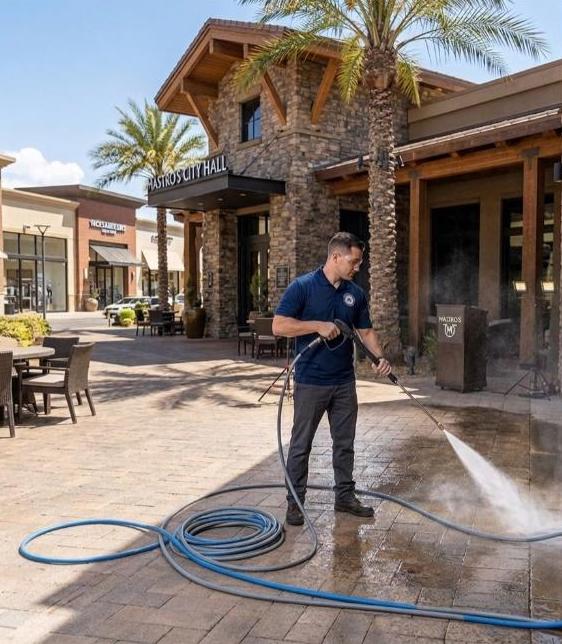
Effective dumpster pad cleaning requires more than just a hose and a brush. Our process involves specialized equipment and eco-friendly yet powerful cleaning solutions:
- Pre-treatment: We apply commercial-grade degreasers and enzymatic cleaners that penetrate deep into the concrete’s pores, breaking down stubborn grease, oil, and organic waste.
- Hot Water Pressure Washing: Using high-pressure, hot water, we thoroughly blast away all contaminants. The heat sanitizes the surface, killing bacteria and germs more effectively than cold water alone.
- Deodorizing & Sanitizing: After cleaning, we apply professional-grade sanitizers and deodorizers to eliminate lingering bacteria and ensure a fresh scent.
- Runoff Collection and Disposal: Critically, we employ proper wastewater recovery methods. In Phoenix, it’s illegal to allow contaminated runoff to enter storm drains. Our team collects and disposes of all wastewater responsibly, adhering to local environmental regulations.
💡 Key Takeaway: Professional dumpster pad cleaning utilizes hot water pressure washing, specialized chemicals, and responsible wastewater recovery to deliver a deep clean that is both effective and environmentally compliant.
Recommended Frequency for Food Service Exterior Maintenance
The ideal frequency for dumpster pad cleaning depends on several factors, including the volume of waste generated, the type of food served (e.g., greasy vs. non-greasy), and local Phoenix weather conditions. However, for most restaurants, a recurring schedule is necessary.
| Restaurant Type / Volume | Recommended Cleaning Frequency | Key Rationale |
|---|---|---|
| High-Volume Full-Service (e.g., diners, fast-casual) | Monthly to Bi-Monthly | High grease production, constant organic waste accumulation. Essential for odor and pest control. |
| Moderate Volume (e.g., cafes, bakeries) | Bi-Monthly to Quarterly | Less grease, but still significant organic waste. Regular cleaning maintains hygiene. |
| Low Volume / Minimal Waste (e.g., office breakrooms, small boutiques with food) | Quarterly to Bi-Annually | Lower risk, but periodic cleaning prevents long-term buildup and maintains appearance. |
Establishing a consistent food service exterior maintenance schedule with AZ Power Clean ensures that your dumpster pad remains clean, compliant, and free from odors and pests year-round. We work with you to tailor a plan that fits your specific needs and budget.
Have questions about professional concrete cleaning in Phoenix? Give us a call today.
Frequently Asked Questions About Restaurant Dumpster Pad Cleaning
Why is regular dumpster pad cleaning so important for Phoenix restaurants?
In Phoenix’s hot climate, food waste and grease decompose rapidly, leading to severe odors and attracting pests like rodents and roaches. Regular cleaning is crucial for health code compliance, preventing infestations, eliminating foul smells, and maintaining a professional image.
What kind of waste builds up on a dumpster pad?
Dumpster pads accumulate a mix of food particles, grease, cooking oils, sugary liquids, general trash residue, and dirt. This creates a highly unsanitary environment that seeps into porous concrete.
Can I just hose down my dumpster pad myself?
Simply hosing down a dumpster pad is ineffective and can be harmful. It pushes contaminants into storm drains, which is illegal in Phoenix, and doesn’t adequately remove grease, sanitize the surface, or neutralize odors. Professional services use specialized equipment, hot water, and proper runoff collection to ensure a thorough and compliant clean.
How often should a restaurant schedule dumpster pad cleaning?
Most Phoenix restaurants benefit from monthly or bi-monthly dumpster pad cleaning, especially those with high waste volume or significant grease production. Lower-volume establishments might manage quarterly cleanings, but a consistent schedule is always recommended to prevent major issues.