
In Phoenix, stamped, decorative, and stained concrete surfaces are a popular choice for patios, driveways, and commercial walkways. They add significant curb appeal and character, mimicking everything from natural stone to wood. However, unlike plain gray concrete, these specialized finishes require a far more nuanced approach to cleaning. Using the wrong techniques or harsh chemicals can quickly degrade the color, strip away protective sealers, and permanently damage the aesthetic appeal you invested in.
At AZ Power Clean, we often see the aftermath of improper cleaning attempts – faded colors, chalky surfaces, or even chipped patterns. Our expertise in cleaning stamped decorative stained concrete safely is built on understanding the unique layers and materials involved. We know that preserving the integrity of your decorative finish while effectively removing dirt, grime, and environmental buildup is paramount. This isn’t just about making it look clean; it’s about extending the life and beauty of your investment in the harsh Phoenix environment. When it comes to maintaining these specialized surfaces, trusting professionals who understand concrete cleaning services services is crucial.
concrete cleaning services services
The Nuances of Cleaning Decorative Concrete Safely in Phoenix
Decorative concrete isn’t just concrete. It’s a system composed of the concrete slab itself, a coloring agent (stain or dye), and often a protective sealer. Stamped concrete adds another layer of complexity with its textured surface, often incorporating a powdered release agent that also contributes to the final look.
Understanding Your Decorative Concrete Finish
Before any cleaning begins, identifying the type of finish is key to choosing the correct method. Each type has specific vulnerabilities.
Stamped Concrete Cleaning Considerations
Stamped concrete replicates the look of natural materials through patterns pressed into the wet concrete. It typically involves:
- Integral color or color hardener: For the base color.
- Release agent: A powder or liquid applied before stamping, which prevents the stamp mats from sticking and often provides a secondary, contrasting color.
- Sealer: A protective coating that enhances color, provides gloss, and shields against UV rays, moisture, and abrasion.
The texture can trap dirt more easily, but aggressive cleaning can strip the release agent and sealer, dulling the pattern and color. High pressure can even chip the concrete itself, especially around edges of the stamped pattern.
Stained Concrete Cleaning Considerations
Stained concrete involves reactive acid stains or water-based stains that penetrate the concrete surface to create translucent, variegated color effects. This color is not merely topical; it becomes part of the concrete. However, a sealer is almost always applied over stained concrete to protect the color and provide durability. Harsh chemicals can etch the concrete or react with the stain, while high pressure can damage the sealer, leaving the stain vulnerable to fading and wear.
Dyed Concrete Cleaning Considerations
Concrete dyes, either integral or topical, provide vibrant, uniform colors that don’t react with the concrete in the same way as acid stains. Like stained concrete, dyes are typically protected by a sealer. The same cautions apply: protect the sealer to protect the dye. Once a sealer is compromised, the dye underneath is exposed to UV degradation and wear.
💡 Key Takeaway: Decorative concrete’s beauty comes from multiple layers – color, texture, and sealer. Improper cleaning methods can easily damage any of these layers, leading to costly repairs or irreversible aesthetic harm.
The AZ Power Clean Approach: Safe & Effective Decorative Concrete Cleaning
Our method is designed to deep clean without compromising the integrity of your decorative finish. It’s a balance of effective cleaning power and gentle application.
Low-Pressure Washing (Soft Washing)
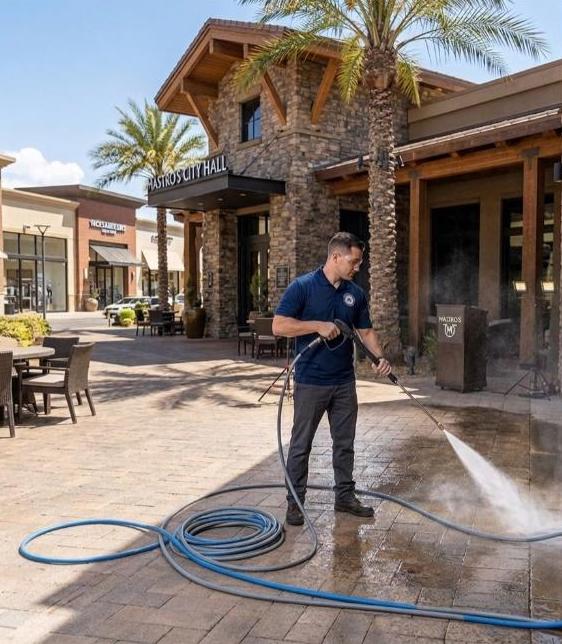
Unlike high-pressure washing which can exceed 3000 PSI and strip sealers, we utilize a soft washing approach for decorative concrete. This involves:
- Controlled PSI: We typically operate at much lower pressures, often below 1500 PSI, and sometimes as low as 500-800 PSI, especially for delicate finishes.
- Wide Fan Tips: Instead of pinpoint nozzles, we use wide-angle spray tips that disperse the water pressure, allowing for a broader, gentler rinse.
- Heat and Flow: We rely more on heated water and higher flow rates, combined with appropriate detergents, to lift dirt effectively without needing extreme pressure.
The aim is to gently loosen and flush away contaminants without etching the surface, chipping patterns, or eroding the protective sealer.
Eco-Friendly Detergent Compatibility
The choice of cleaning agent is critical. We strictly avoid:
- Bleach or Ammonia: These can permanently discolor stained concrete and degrade sealers.
- Harsh Acids: Acids will etch concrete, dull colors, and strip sealers.
- Solvent-based Cleaners: These can dissolve or damage acrylic sealers.
Instead, we use pH-neutral, biodegradable detergents specifically formulated for decorative concrete. These solutions are safe for the environment and effective at breaking down organic growth, dirt, and light oil stains without harming the finish.
Rotary Surface Cleaners with Soft Brushes
For textured surfaces like stamped concrete, a rotary surface cleaner fitted with soft nylon bristles is invaluable. This tool allows for:
- Uniform Cleaning: It provides consistent pressure and scrubbing action across the surface, preventing zebra striping or uneven cleaning often seen with wand applications.
- Gentle Agitation: The brushes gently agitate the surface to dislodge embedded dirt from the textured pattern without the need for excessive water pressure.
- Containment: Many surface cleaners also help contain the wash water, which is important for controlled cleaning and, if necessary, water reclamation in sensitive areas.
Thorough Rinsing and Drying
After cleaning, a comprehensive rinse is crucial to remove all detergent residues, which if left behind, can leave streaks or attract new dirt. Given Phoenix’s dry climate, drying often happens quickly, but we ensure the surface is completely clear of standing water.
Sealer Protection and Reapplication
Our cleaning process is designed to protect existing sealers. However, cleaning can sometimes reveal areas where the sealer has naturally worn down, especially in high-traffic areas or spots exposed to harsh sun. We can assess the condition of your sealer and recommend reapplication if needed, which is vital for long-term protection and maintaining the vibrant look of your decorative concrete.
💡 Key Takeaway: Professional decorative concrete cleaning uses a combination of low-pressure soft washing, pH-neutral detergents, and specialized rotary tools to clean deeply without damaging the finish or sealer.
Step-by-Step Safe Cleaning Process for Decorative Concrete
Our process is meticulous and designed for optimal results in Phoenix:
- Initial Assessment: We inspect the concrete to identify the type of finish, existing damage, stubborn stains, and the condition of the sealer.
- Debris Removal: Loose dirt, leaves, and other debris are removed by sweeping or blowing the area.
- Pre-treatment: A suitable, eco-friendly detergent is applied to the surface, allowed to dwell for a specific period to break down contaminants.
- Gentle Agitation: For textured surfaces, a soft-bristle brush or a low-RPM rotary surface cleaner is used to gently agitate the dirt without harming the sealer or pattern.
- Low-Pressure Rinse: The entire area is rinsed thoroughly using low-pressure washing to flush away all dirt and detergent residues.
- Spot Treatment (if necessary): For persistent stains (e.g., rust, oil), targeted, non-abrasive treatments are applied with care.
- Post-Cleaning Inspection & Recommendations: A final check ensures cleanliness, and we provide recommendations for ongoing maintenance or sealer reapplication to extend the life of your decorative concrete.
| Do’s for Cleaning Decorative Concrete | Don’ts for Cleaning Decorative Concrete |
|---|---|
| ✅ Use low-pressure washing (soft washing). | ❌ Use high-pressure washers (>1500 PSI). |
| ✅ Apply pH-neutral, biodegradable detergents. | ❌ Use bleach, ammonia, or acidic cleaners. |
| ✅ Employ soft-bristle brushes or rotary surface cleaners. | ❌ Use wire brushes or abrasive scrubbers. |
| ✅ Reapply sealer every 2-5 years as needed. | ❌ Allow standing water or chemical residues to dry on the surface. |
💡 Key Takeaway: Regular, gentle cleaning by professionals helps preserve the color and texture of your decorative concrete, preventing premature wear and maintaining its original beauty for years to come.
Have questions about professional concrete cleaning in Phoenix? Give us a call today.
Frequently Asked Questions About Decorative Concrete Cleaning
How often should I have my stamped or stained concrete professionally cleaned?
For most residential decorative concrete in Phoenix, we recommend professional cleaning every 12-24 months. High-traffic commercial areas or surfaces exposed to heavy organic debris might benefit from annual cleaning. Regular sweeping and hosing down can help extend the time between professional services.
Can I use my home pressure washer on my decorative concrete?
We strongly advise against using a standard home pressure washer on stamped, stained, or dyed concrete. Consumer-grade pressure washers often lack precise pressure control and can easily exceed safe PSI limits, leading to stripped sealers, dulled colors, or even damaged patterns. Professional equipment and training are essential for safe and effective cleaning.
What about oil stains or rust spots on my decorative concrete?
Oil and rust stains require specialized treatment. We use specific cleaning agents designed to lift these stains without harming the decorative finish. It’s crucial not to use general-purpose degreasers or harsh acids, as they can cause irreversible damage to the concrete’s color or sealer. Prompt treatment is always best for stubborn stains.
When should I consider resealing my decorative concrete after cleaning?
The lifespan of a sealer varies, typically lasting 2-5 years depending on traffic and UV exposure. After a thorough cleaning, it’s an ideal time to assess the sealer’s condition. If it’s showing signs of wear, dullness, or the concrete appears to absorb water readily, it’s likely time for reapplication. Resealing not only restores gloss but also provides crucial protection against fading, moisture, and abrasion.