Safeguarding Your Phoenix Property: The Link Between a Clean Parking Lot and Reduced Slip-and-Fall Liability
For any commercial property owner in Phoenix, a parking lot is often the first impression a visitor gets. Beyond aesthetics, however, it represents a significant area of potential liability. A neglected parking lot, rife with debris, oil stains, and slippery grime, isn’t just an eyesore—it’s a hazard waiting to happen. The connection between a clean parking lot and reduced slip-and-fall liability is direct and substantial, impacting everything from customer safety to your insurance premiums.
Operating a business in the Valley means dealing with unique challenges like dust, monsoonal rains, and relentless sun, all of which contribute to rapid parking lot deterioration and the accumulation of dangerous substances. Our experience across Phoenix has shown that proactive maintenance is not just good practice; it’s a critical legal safeguard. Implementing regular parking lot cleaning services is a key strategy for mitigating risk and demonstrating due diligence in premises safety.
💡 Key Takeaway: A clean parking lot directly reduces the risk of slip-and-fall incidents, a primary concern for commercial property owners in Phoenix due to liability laws. Proactive cleaning demonstrates due diligence and safeguards your business.
The Hidden Dangers in Your Parking Lot
What might seem like minor blemishes can quickly become major slip hazards, leading to costly accidents and premises liability claims.
Debris, Oil, and Grime: Common Hazards
Parking lots are constantly exposed to various contaminants. Each type of buildup presents its own set of dangers:
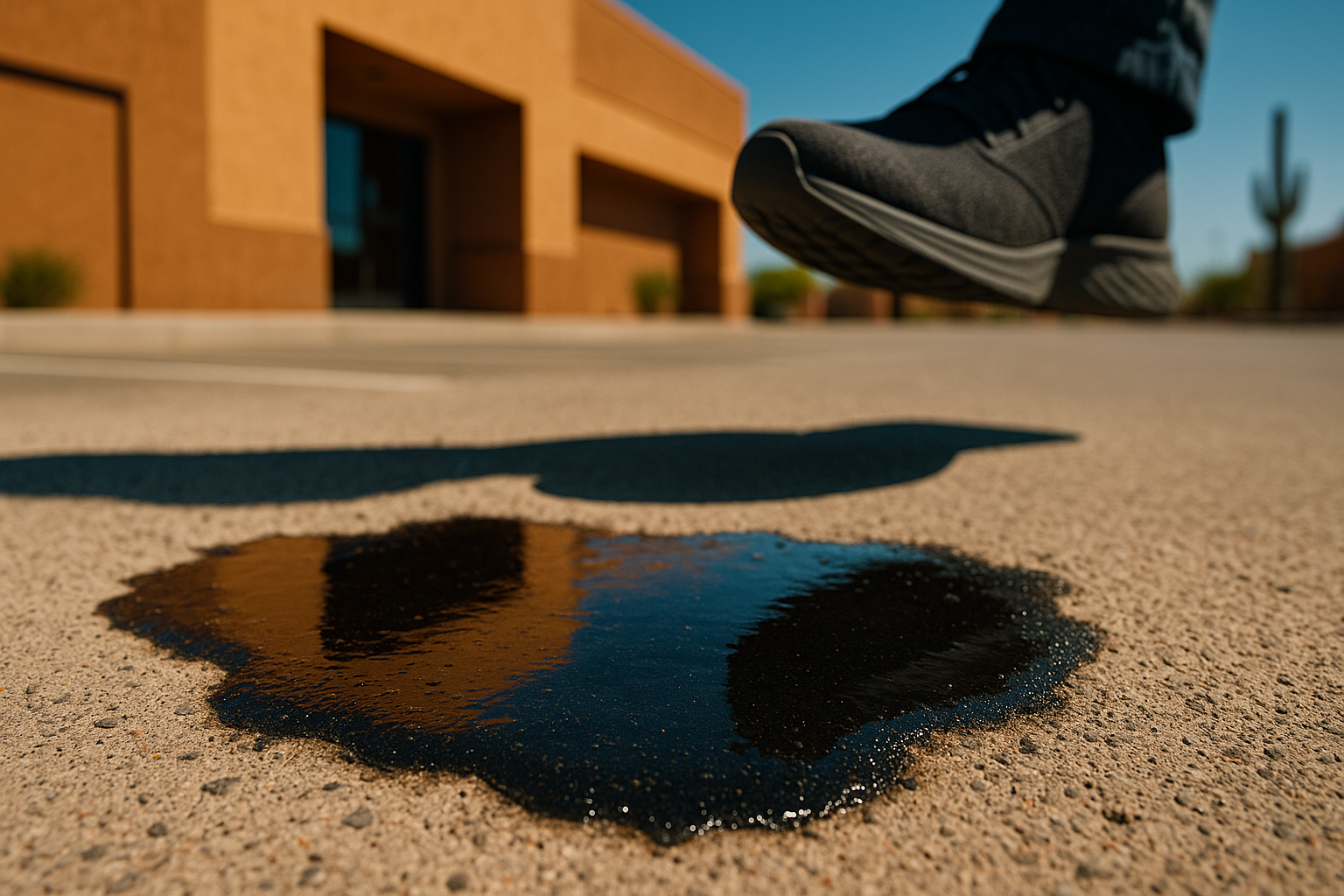
- Oil and Grease: Leaks from vehicles create slick patches that are nearly invisible until someone slips. These are particularly treacherous when wet.
- Antifreeze and Other Fluids: Often brightly colored, these liquids can create extremely slippery conditions.
- Dirt and Dust Buildup: Phoenix’s dusty environment means fine particles settle everywhere. When mixed with even a little moisture (like morning dew or a sprinkler overspray), this creates a muddy, slick film.
- Organic Debris: Fallen leaves, twigs, and discarded trash can obscure uneven surfaces or create unstable footing, especially when wet or hidden in shadows.
These elements turn a seemingly flat surface into a minefield of potential falls, leading to sprains, fractures, or even more severe injuries.
Surface Buildup: Algae, Moss, and Tire Marks
Beyond spills and loose debris, the very surface of your parking lot can become a hazard over time:
- Algae and Moss: In shaded or damp areas, especially near irrigation or after monsoon rains, algae and moss can thrive, creating an extremely slippery, greenish film on concrete and asphalt.
- Tire Marks and Rubber Residue: Over time, tire friction leaves behind rubber deposits that can reduce the pavement’s natural texture, contributing to a slicker surface.
- Weathering and Erosion: Constant sun exposure, heavy vehicle traffic, and temperature fluctuations can degrade the pavement surface, creating tiny imperfections that hold moisture and contribute to biological growth.
These accumulations often go unnoticed until an accident occurs, highlighting the need for specialized cleaning techniques that address both surface and subsurface grime.
The Legal Landscape: Parking Lot Slip-and-Fall Liability
Property owners have a legal obligation to maintain their premises in a reasonably safe condition for invitees (customers, visitors, employees). This is the core of premises liability law.
- Duty of Care: As a commercial property owner, you have a duty to identify and address known or reasonably discoverable hazards in your parking lot.
- Proving Negligence: In a slip-and-fall claim, the injured party must typically prove that the property owner either knew about the dangerous condition and failed to fix it, or *should have known* about it through reasonable inspection and maintenance.
- Damages: Successful claims can result in significant financial damages, including medical expenses, lost wages, pain and suffering, and legal fees.
A well-documented, consistent parking lot cleaning program serves as crucial evidence that you are upholding your duty of care, making it much harder for plaintiffs to prove negligence.
💡 Key Takeaway: Property owners are legally obligated to maintain safe parking lots. A consistent cleaning program provides concrete evidence against claims of negligence in slip-and-fall incidents, potentially saving significant legal costs and damages.
Insurance Carrier Expectations and Risk Reduction
Your commercial liability insurance carrier isn’t just there to pay out claims; they are interested in risk mitigation. A clean parking lot aligns directly with their goals.
- Reduced Claims: Fewer slip-and-fall incidents mean fewer claims filed against your policy.
- Lower Premiums: A history of proactive maintenance and fewer claims can lead to more favorable insurance premiums over time. Insurance companies reward businesses that actively manage risk.
- Demonstrating Diligence: When an insurance adjuster reviews a claim, evidence of a robust maintenance schedule, including regular professional cleaning, weighs heavily in your favor. It shows you’re not negligent.
- Compliance: Some insurance policies or commercial leases may even implicitly or explicitly require certain levels of property maintenance, which includes keeping parking lots clean and safe.
Think of professional parking lot cleaning as an investment in your insurance portfolio. It’s a proactive step that protects your bottom line and reputation.
The Solution: A Proactive Parking Lot Cleaning Program
Implementing a regular and thorough cleaning regimen is the most effective way to prevent slip-and-fall accidents and reduce your liability.
Regular Sweeping and Debris Removal
This is the first line of defense against accumulating hazards.
- Daily or Weekly Sweeping: Depending on traffic, manual sweeping or using a mechanical sweeper removes loose debris like trash, leaves, sand, and small rocks.
- Prompt Spill Cleanup: Any spills of oil, grease, or other liquids should be addressed immediately with absorbent materials and appropriate cleaning agents.
- Seasonal Adjustments: Increase frequency during high-wind periods or after monsoon rains in Phoenix, when debris accumulation is highest.
Pressure Washing for Deep Cleaning
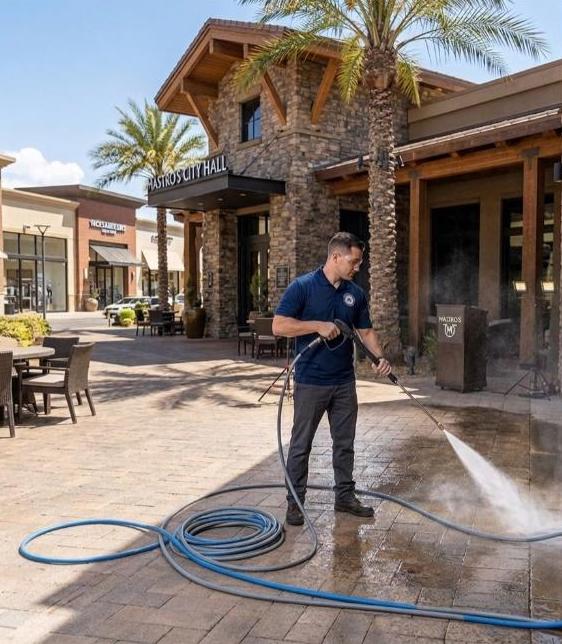
Beyond sweeping, periodic deep cleaning with professional pressure washing is essential to tackle embedded grime and slippery surface buildup.
- Targeting Oil and Grease: High-quality commercial pressure washers combined with degreasing agents effectively emulsify and remove stubborn oil stains that sweeping alone cannot touch.
- Eliminating Organic Growth: Pressure washing, often with appropriate detergents, obliterates algae, moss, and mildew, restoring the pavement’s natural traction.
- Surface Restoration: Removes years of accumulated dirt, tire marks, and grime, refreshing the appearance and texture of the asphalt or concrete.
- Professional Equipment: Specialized surface cleaners ensure even cleaning without streaking, and hot water pressure washing can be particularly effective on grease and oil.
Spill Management and Remediation
Beyond routine cleaning, having a protocol for unexpected spills is crucial.
- Emergency Kits: Maintain spill kits with absorbents and cleaning agents for rapid response.
- Employee Training: Ensure staff know how to report and safely manage spills before professional cleaning can be arranged.
💡 Key Takeaway: A comprehensive parking lot cleaning program should include regular sweeping for debris and professional pressure washing to eliminate slippery oil, grime, and organic growth. This proactive approach is your strongest defense against liability claims.
Benefits Beyond Liability Reduction
While liability reduction is a critical benefit, a clean parking lot offers several other advantages for your Phoenix business:
- Enhanced Curb Appeal: A clean, well-maintained parking lot makes a strong positive first impression, attracting more customers and reflecting positively on your brand.
- Improved Safety for Everyone: Beyond preventing falls, a clean lot is generally safer for vehicle and pedestrian traffic.
- Extended Pavement Lifespan: Removing corrosive substances like oil, antifreeze, and other chemicals helps preserve the integrity of your asphalt or concrete, reducing the need for costly repairs and resurfacing.
- Better Drainage: Clear drains and surfaces free of debris allow water to flow properly, preventing standing water that can cause further damage and slip hazards.
Investing in professional parking lot cleaning for your Phoenix commercial property is a smart business decision that pays dividends in safety, aesthetics, and financial security.
Have questions about professional concrete cleaning in Phoenix? Give us a call today.
Frequently Asked Questions About Parking Lot Cleaning and Liability
How often should a commercial parking lot be cleaned in Phoenix?
The frequency depends on several factors, including traffic volume, type of business, and proximity to construction or dusty areas. Generally, commercial parking lots in Phoenix benefit from sweeping weekly or bi-weekly, with professional deep pressure washing performed quarterly or bi-annually. Heavy traffic or areas prone to spills may require more frequent attention.
What types of substances contribute most to slip-and-fall risks in a parking lot?
The most common culprits are oil and grease spills, anti-freeze, and other automotive fluids. Beyond those, accumulated dirt and dust, especially when wet, create a slick film. Organic growth like algae or moss in shaded areas can also be extremely slippery. Even loose gravel or debris can cause an unexpected slip.
Does a clean parking lot actually impact my business insurance rates?
While a direct, immediate reduction isn’t guaranteed, a well-maintained property with a documented cleaning schedule demonstrates a proactive approach to risk management. Insurance carriers view this favorably, potentially leading to more competitive rates over time and significantly strengthening your position if a liability claim ever arises, which can save you far more than any premium adjustment.
Can I just sweep my parking lot myself to avoid liability?
Regular sweeping is a good start, as it removes loose debris. However, sweeping alone cannot remove embedded oil stains, tire marks, algae, or deep-seated grime that contribute to slip hazards. Professional pressure washing is essential for a truly clean and safe surface, as it addresses the deeper issues that manual sweeping cannot resolve.
What is premises liability in the context of parking lots?
Premises liability refers to the legal responsibility of a property owner for injuries that occur on their property due to a dangerous condition. In the context of parking lots, this means the owner can be held liable if someone slips and falls due to a hazard (like an oil slick or excessive debris) that the owner knew about or reasonably should have known about, and failed to address.