Protecting Your Phoenix Property: Understanding Pressure Washing Surface Damage Prevention
In Phoenix, a clean exterior makes a statement, and for many property owners, pressure washing is the go-to solution for tackling stubborn dirt, dust, and grime. However, without the right approach, this powerful cleaning method can quickly turn from an asset into a liability, leading to significant pressure washing surface damage. Our years of experience cleaning countless homes and businesses across the Valley have shown us firsthand the common pitfalls and how to avoid them.
Proper technique and equipment selection are paramount to effective and safe cleaning. When not handled by a professional, a simple pressure washing job can inadvertently strip paint, etch concrete, blow out grout lines, or even force water into unwanted spaces behind siding. Understanding these risks is the first step in preventing costly repairs. For those seeking an expert pressure washing service, knowing what to look out for can save you a lot of headache and expense.
💡 Key Takeaway: Incorrect pressure washing techniques, especially high pressure on delicate surfaces, can cause irreversible damage like stripped paint, etched concrete, and water intrusion. Always assess the surface and choose the appropriate pressure and nozzle.
Stripped Paint and Compromised Finishes
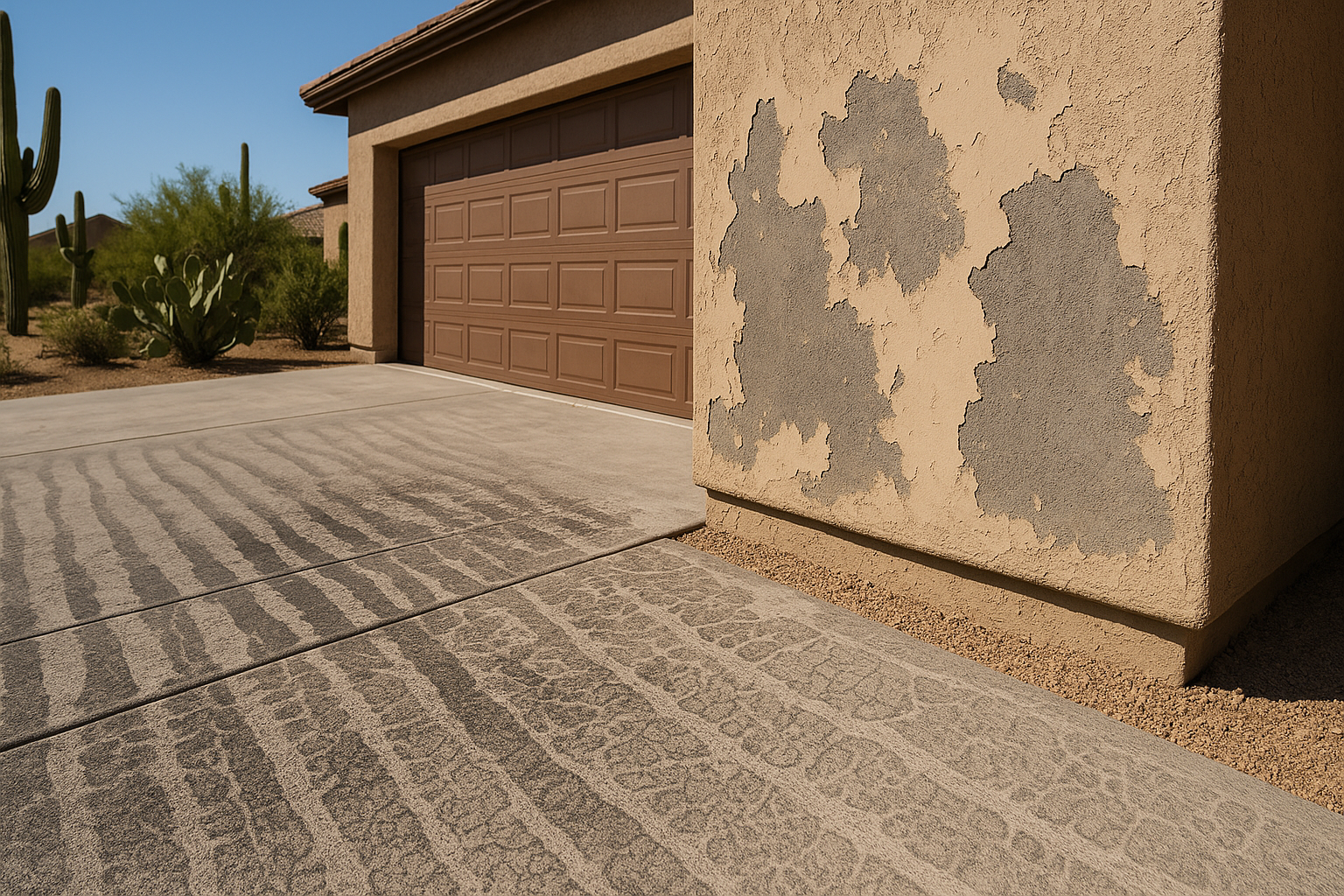
One of the most common and visible types of pressure washing damage occurs when paint is stripped from surfaces like wood siding, fences, decks, or even stucco. This typically happens due to excessive pressure or holding the nozzle too close to the surface.
Understanding the Risk: Paint Stripping
Paint, stain, and sealants are protective layers designed to withstand weathering, not intense, concentrated water streams. A pressure washer can easily cut through these finishes, leaving behind unsightly marks, exposed wood, or bare patches. Beyond the aesthetic damage, removing these protective layers leaves the underlying material vulnerable to moisture, UV rays, and rot.
- Wood Surfaces: Decks, fences, and painted siding are particularly susceptible. The wood itself can also be gouged.
- Stucco and Masonry: While tougher, aggressive pressure can chip paint off stucco or damage the integrity of painted brick.
- Vehicles: Consumer Reports warns that pressure washing can damage car paint, potentially leading to rust.
Prevention Strategies: Soft Washing and Proper Nozzles
The solution here is almost always “soft washing.” This technique involves using lower pressure (typically under 1000 PSI) combined with specialized cleaning detergents to break down dirt, mold, and mildew. The detergents do the heavy lifting, allowing for a gentle rinse.
- Fan Nozzles: Opt for a 25-degree (green) or 40-degree (white) fan tip. Red (0-degree) nozzles are almost never appropriate for painted surfaces.
- Distance: Maintain a consistent distance of 12-18 inches from the surface. Always start further away and move closer if needed, testing in an inconspicuous area.
- Sweeping Motion: Use broad, overlapping, sweeping motions. Never hold the nozzle in one spot.
- Detergents: Biodegradable, pH-neutral cleaning solutions are often sufficient and safer for painted surfaces.
Etched Concrete and Unsightly “Tiger Stripes”
Concrete, while robust, is not immune to pressure washing mistakes. Etching, streaking (often called “tiger stripes”), and aggregate exposure are common issues seen on driveways, patios, and walkways.
Understanding the Risk: Concrete Etching
Concrete is a porous material. High-pressure streams, especially with a narrow nozzle, can erode the cement paste from the surface, exposing the aggregate underneath and creating permanent lines or an uneven texture. This is often visible as lighter streaks where the pressure washer was applied too aggressively.
- New Concrete: Freshly poured concrete is particularly vulnerable due to its still-curing surface.
- Older, Deteriorated Concrete: Cracks and weak spots can worsen under high pressure, leading to spalling.
- Surface Cleaners: While effective, improper use of a surface cleaner can still cause swirls if not used correctly or if the pressure is too high.
Prevention Strategies: Surface Cleaners and Consistent Technique
For large concrete surfaces, a dedicated pressure washer surface cleaner attachment is invaluable. These tools provide even pressure distribution over a wider area, drastically reducing the risk of streaks and etching.
- Surface Cleaner Attachment: Invest in or rent a walk-behind surface cleaner. These devices rotate high-pressure jets beneath a shroud, ensuring uniform cleaning.
- Consistent Overlap: When using a surface cleaner, walk at a steady pace and ensure each pass slightly overlaps the previous one to avoid lines.
- Wider Nozzles (if no surface cleaner): Use a 25-degree or 40-degree nozzle. Never use a 0-degree nozzle on concrete.
- Lower PSI for Delicate Concrete: While driveways can handle higher PSI (2500-3000 PSI), more decorative or aged concrete may require lower pressure.
💡 Key Takeaway: For concrete, always use a surface cleaner attachment to ensure even pressure and prevent etching or “tiger stripes.” If using a wand, maintain proper distance and use a wide fan tip.
Blown-Out Grout and Damaged Mortar
Pressure washing brick, tile, or stone can be effective, but the mortar and grout lines are often the weakest links. Damage here can compromise the structural integrity and aesthetics of the surface.
Understanding the Risk: Grout and Mortar Erosion
The mortar between bricks or stones, and the grout between tiles, is softer than the surrounding material. High-pressure water can easily dislodge, chip away, or completely remove these materials, creating gaps that allow water intrusion and further deterioration. This is especially true for older homes with aged mortar.
- Brick Walls: Mortar joints can crumble under direct, high-pressure spray.
- Tile Patios/Walkways: Grout can be blasted out, leading to loose tiles and weed growth.
- Natural Stone: Softer stone types can be pitted or etched.
Prevention Strategies: Reduced Pressure and Angled Spray
The key to cleaning these surfaces safely is significantly reducing the pressure and being mindful of the spray angle.
- Soft Washing is Best: Again, soft washing with appropriate detergents is usually the safest and most effective method for masonry.
- Lower PSI: Keep pressure below 1500 PSI, and even lower for very old or delicate masonry (around 500-1000 PSI).
- Wider Fan Tips: Use a 40-degree or specialized masonry cleaning nozzle.
- Angled Spray: Always spray at an angle to the surface, never directly perpendicular to a grout line. This helps to lift dirt without directly impacting the joint.
- Increased Distance: Hold the nozzle further away, generally 18-24 inches, and adjust as needed.
Water Intrusion Behind Siding and into Attics/Walls
This is arguably one of the most insidious forms of pressure washing damage because it’s often not immediately apparent and can lead to severe, long-term problems.
Understanding the Risk: Hidden Water Damage
Modern homes, especially those with vinyl or fiber cement siding, are designed to shed water. However, the seams, overlaps, and edges of siding are not watertight against the force of a pressure washer. Blasting water directly into these areas can force it behind the siding, into wall cavities, insulation, and even attic spaces.
- Mold and Mildew Growth: Trapped moisture creates an ideal environment for mold and mildew, leading to health issues and structural damage.
- Electrical Damage: Water can seep into electrical outlets or wiring, posing fire hazards.
- Rotting Wood: Wood framing or sheathing can rot over time, compromising structural integrity.
- Insulation Damage: Wet insulation loses its effectiveness and can develop mold.
Prevention Strategies: Downward Angle and Mindful Spraying
The critical rule here is to mimic natural water flow – always spray downwards.
- Downward Angle Only: When cleaning siding, always spray with the nozzle angled downwards, never upwards. This follows the natural drainage path and prevents water from being forced up under siding panels.
- Avoid Direct Spray on Openings: Keep the spray away from windows, doors, vents, light fixtures, and electrical outlets. These are common points of entry for water.
- Reduced Pressure: Vinyl and fiber cement siding rarely require high pressure. Soft washing with appropriate detergents and a wide fan tip is almost always sufficient.
- Maintain Distance: A greater distance from the surface helps diffuse the water’s force, reducing the likelihood of intrusion.
💡 Key Takeaway: Never spray upwards into siding or directly at seams, windows, or electrical fixtures. Always direct the water downwards to prevent hidden water intrusion and potential mold or structural damage.
Choosing the Right Equipment and Detergents for the Job
The type of pressure washer, nozzles, and detergents you use play a crucial role in preventing surface damage. Knowing your tools is key to a successful clean.
| Surface Type | Recommended PSI Range | Best Nozzle Type(s) | Key Considerations |
|---|---|---|---|
| Wood (Decks, Fences, Siding) | 500-1200 PSI | 25° (Green), 40° (White) | Soft wash technique, maintain distance, use wood-safe detergents. |
| Vinyl Siding | 1000-1500 PSI | 40° (White), Soap Nozzle | Soft wash, always spray downwards, avoid direct spray on seams/openings. |
| Concrete (Driveways, Patios) | 2000-3000 PSI | Surface Cleaner, 25° (Green) | Use surface cleaner for even results, avoid 0° nozzle, consistent motion. |
| Brick & Masonry | 500-1500 PSI | 40° (White), Soap Nozzle | Soft wash, lower pressure for old mortar, spray at an angle to joints. |
| Roofs (Asphalt Shingles) | <500 PSI (Soft Wash Only) | Soap Nozzle, Low-Pressure Rinser | Never pressure wash shingles. Use dedicated roof cleaning solutions and very low-pressure rinse or garden hose. |
💡 Key Takeaway: Always match your equipment and technique to the surface. A professional understands the nuances of different materials and uses specialized tools and detergents to ensure a safe, effective clean.
When to Call a Professional Pressure Washer in Phoenix, AZ
While DIY pressure washing can seem appealing, the risks of surface damage pressure washing are significant. For homeowners and businesses in Phoenix, AZ, trusting a professional like AZ Power Clean means relying on expertise that protects your property.
Professionals:
- Have the Right Equipment: Commercial-grade machines, a wide array of nozzles, and specialized surface cleaners for every job.
- Understand Pressure and Flow: Know exactly how much PSI is safe for each specific surface, from delicate painted trim to tough concrete.
- Utilize Advanced Techniques: Employ soft washing, chemical pre-treatments, and specific rinse patterns to clean effectively without damage.
- Are Insured: In the rare event of accidental damage, a reputable company is insured, protecting your investment.
- Save You Time and Effort: Let you avoid the hassle, potential frustration, and physical demands of tackling a big cleaning project yourself.
Don’t let improper pressure washing techniques turn your cleaning project into a costly repair job. Our team at AZ Power Clean has the knowledge, tools, and experience to safely and effectively restore the beauty of your property.
Have questions about professional concrete cleaning in Phoenix? Give us a call today.
Frequently Asked Questions About Pressure Washing Surface Damage
What is soft washing, and why is it safer for certain surfaces?
Soft washing uses low-pressure water combined with specialized cleaning solutions to remove dirt, mold, algae, and grime. It’s safer because the chemicals do most of the work, allowing for a gentle rinse (typically at garden hose pressure). This eliminates the risk of damage like stripped paint, etched surfaces, or water intrusion that high pressure can cause, making it ideal for roofs, siding, and delicate painted surfaces.
Can I pressure wash my roof?
Generally, no. Traditional high-pressure washing can severely damage asphalt shingles by dislodging granules, reducing the roof’s lifespan, and voiding warranties. For roofs, soft washing is the recommended method. It safely removes moss, algae, and lichen without damaging the shingles or compromising their integrity.
How do I avoid “tiger stripes” on my concrete driveway?
The best way to avoid “tiger stripes” or streaking on concrete is to use a pressure washer surface cleaner attachment. This tool provides even, consistent pressure across a wider area, preventing the concentrated lines caused by a wand’s narrow spray. If you must use a wand, use a 25-degree or 40-degree fan tip, maintain consistent distance, and ensure significant overlap with each pass.
What PSI is considered too high for house siding?
For most residential siding, including vinyl, aluminum, and fiber cement, any pressure above 1500 PSI is generally considered too high and risks damage. Soft washing, using pressures below 1000 PSI (often as low as 500 PSI or even garden hose pressure) combined with appropriate detergents, is the safest and most effective method for cleaning house siding.
Is it possible to repair pressure washing damage like etched concrete or stripped paint?
Repairing etched concrete is often difficult and can require resurfacing or expensive restoration, as the damage is to the material’s surface. Stripped paint can be repainted, but it requires thorough preparation, including scraping, priming, and repainting, which can be a significant cost and effort. This is why prevention is always the best strategy when it comes to pressure washing.