In the bustling culinary scene of Phoenix, AZ, a restaurant’s exterior is much more than just a facade; it’s a critical part of your brand, a beacon for hungry customers, and a silent statement about your establishment’s hygiene standards. While much attention is rightly paid to interior cleanliness, the challenges of cleaning restaurant storefronts grease residue and other exterior buildup are often underestimated. This oversight can impact everything from your customer foot traffic to those crucial health inspection scores.
At AZ Power Clean, we understand the unique demands placed on restaurant exteriors. Unlike typical retail storefronts, food service establishments contend with a specific cocktail of contaminants: kitchen exhaust fallout, spilled food and drinks, high foot traffic, and even smoking residue from outdoor areas. These elements combine to create stubborn stains and unsanitary conditions that regular sweeping and hosing simply can’t tackle.
Ensuring your restaurant’s exterior is meticulously clean is not just about aesthetics; it’s about maintaining a reputation for excellence and adhering to the highest standards of public health. Our team specializes in tackling these specific issues, providing expert storefront pressure washing services tailored for the food industry in Phoenix.
Beyond the Kitchen Doors: Why Your Restaurant’s Exterior Needs Professional Attention
Your restaurant’s cleanliness journey doesn’t end at the kitchen line. The moment a customer steps onto your property, their perception begins. A dirty exterior, stained with grease or food residue, can instantly create doubts about what’s happening behind closed doors.
The Unique Challenges of Restaurant Storefront Cleaning
Restaurant exteriors face a gauntlet of challenging substances that go beyond typical dirt and dust. These require specialized cleaning techniques and equipment to effectively remove.
Types of Stubborn Buildup
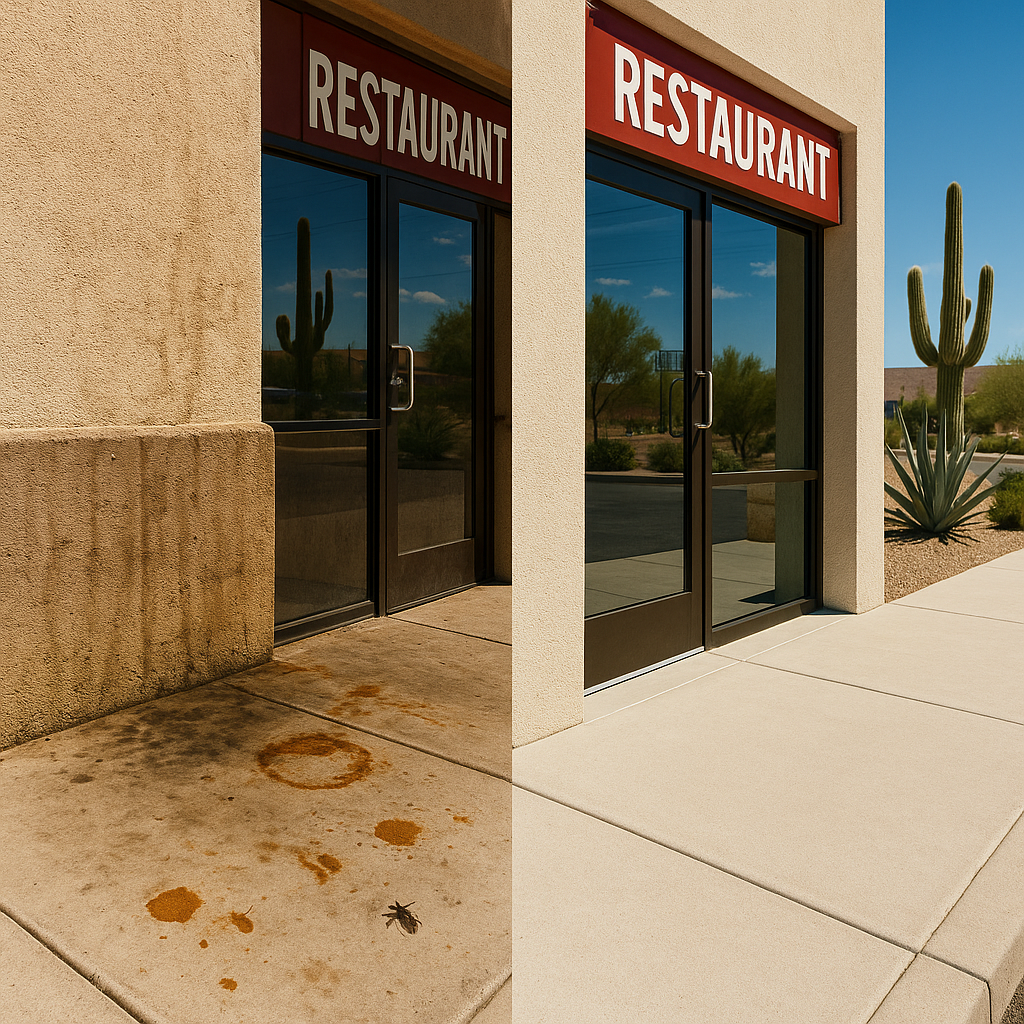
- Grease and Oil Residue: This is perhaps the most pervasive and challenging contaminant. From exhaust vents to accidental spills on patios and sidewalks, grease quickly accumulates, becoming sticky, dark, and attracting more dirt. It can create slippery hazards and unpleasant odors.
- Food and Drink Spills: Entrances, waiting areas, and outdoor dining spaces are magnets for spilled food, sugary drinks, and coffee stains. These attract pests and can quickly become a breeding ground for bacteria if not thoroughly cleaned.
- Smoking Residue: For establishments with designated smoking areas, tar and nicotine stains can accumulate on walls, sidewalks, and entryways, leaving unsightly yellow-brown marks and persistent odors.
- General Foot Traffic Grime: Combined with Phoenix’s dust and dirt, constant foot traffic grinds contaminants into your concrete and tile, leading to dull, darkened surfaces.
- Mold and Mildew: While less common in our dry climate, areas with irrigation runoff or constant shade can still develop mold and mildew, particularly on north-facing walls or awnings.
💡 Key Takeaway: Restaurant storefronts endure a unique blend of grease, food spills, and foot traffic grime that requires more than just basic cleaning to remove effectively and maintain hygiene.
Beyond the Visible: The Impact on Health Inspections
Health inspectors don’t just examine your kitchen; they observe the entire premise, including the exterior. While direct health code violations for a dirty sidewalk might be rare, a neglected exterior can raise red flags and influence an inspector’s overall impression of your establishment’s commitment to sanitation.
Specific Health Code Concerns
- Pest Attraction: Food residue and grease on sidewalks, patios, and near dumpsters are a major attractant for insects and rodents. Health inspectors are vigilant about any signs of pest activity near entry points or food service areas.
- Odor Control: Rancid grease and decaying food spills create unpleasant odors that can permeate the air, making your restaurant less appealing and potentially violating public nuisance codes.
- Slipping Hazards: Grease and spilled drinks create dangerous, slippery surfaces. While this is primarily a safety concern for patrons and staff, it also reflects poor maintenance, which can influence an inspector’s judgment.
- Overall Sanitation Impression: An inspector seeing a well-maintained, clean exterior often translates to an expectation of similar standards inside. Conversely, a dirty exterior suggests a lax approach to cleanliness, inviting closer scrutiny.
First Impressions: Customer Perception and Your Bottom Line
In the competitive Phoenix restaurant market, every detail counts. Your storefront is your primary advertisement, speaking volumes about the quality and care diners can expect.
- Attracting New Customers: A sparkling clean exterior invites curiosity and confidence. People are more likely to try a restaurant that looks well-cared for.
- Retaining Existing Customers: Regular patrons appreciate a consistent, clean environment. It reinforces their choice to dine with you and encourages repeat visits.
- Brand Image: Whether you’re a fine dining establishment or a casual eatery, cleanliness upholds your brand’s promise of quality and hygiene. Dirty exteriors can quickly erode trust.
- Competitive Edge: When customers have many choices, a clean, inviting entrance can be the deciding factor between your restaurant and a competitor’s.
💡 Key Takeaway: A clean restaurant exterior is vital for attracting customers, maintaining a positive brand image, and ensuring compliance with health standards by preventing pest attraction and safety hazards.
The AZ Power Clean Approach to Restaurant Storefronts
Tackling stubborn restaurant grime requires more than just a hose and a brush. Our professional approach involves a combination of specialized equipment, eco-friendly detergents, and expert techniques.
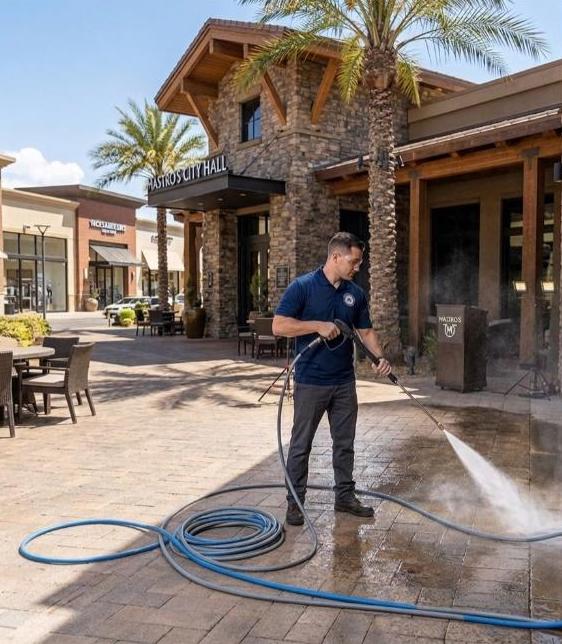
- Hot Water Pressure Washing: Hot water is incredibly effective at emulsifying and breaking down grease and oil, far superior to cold water alone. Our equipment delivers high-temperature water to melt away even the toughest buildup.
- Commercial-Grade Degreasers: We use biodegradable, restaurant-safe degreasers that penetrate and lift grease and food residue without damaging surfaces or harming the environment.
- Surface Cleaners: For large flat areas like sidewalks and patios, specialized surface cleaners ensure an even, streak-free clean, effectively removing embedded grime.
- Targeted Spot Treatment: Chewing gum, stubborn stains, and specific problem areas receive focused attention for complete removal.
- Water Reclamation (where necessary): In sensitive areas or those with strict environmental regulations, we can implement water reclamation to ensure no contaminated runoff enters storm drains.
💡 Key Takeaway: Professional cleaning services utilize hot water pressure washing, commercial-grade degreasers, and specialized tools to effectively remove restaurant-specific grime, ensuring a superior clean.
DIY vs. Professional Restaurant Exterior Cleaning
While some restaurant owners might consider tackling exterior cleaning themselves, the specialized nature of the grime and the importance of a thorough, compliant clean often make professional services the more practical and effective choice.
| Feature | DIY Cleaning | Professional Cleaning (AZ Power Clean) |
|---|---|---|
| Equipment | Consumer-grade pressure washer, standard detergents | Commercial hot water pressure washers, surface cleaners, specialized tools |
| Effectiveness | May remove surface dirt; struggles with embedded grease, oil, and deep stains | Thorough removal of all contaminants, deep cleaning, sanitation |
| Safety | Risk of damage to surfaces (e.g., etching concrete, paint stripping), personal injury | Trained technicians, correct pressure for surfaces, proper chemical handling, insurance |
| Time & Labor | Significant time and effort required, often with suboptimal results | Efficient, fast, and high-quality results, minimal disruption to operations |
| Compliance | Potential for health code issues if not thoroughly cleaned; runoff concerns | Ensures optimal hygiene, addresses pest attractants, responsible waste management |
Don’t let a neglected exterior detract from your restaurant’s hard-earned reputation. Invest in professional restaurant exterior cleaning to ensure your Phoenix establishment always makes the best impression, inside and out.
Have questions about professional concrete cleaning in Phoenix? Give us a call today.
Frequently Asked Questions About Restaurant Storefront Cleaning
How often should a restaurant storefront be professionally cleaned?
For most Phoenix restaurants, a professional deep cleaning every 1-3 months is recommended, especially for high-traffic areas, outdoor dining spaces, and locations near kitchen exhausts. Regular maintenance ensures grease and food residue don’t build up to unmanageable levels, maintaining curb appeal and hygiene.
What areas of a restaurant exterior typically need cleaning?
Key areas include sidewalks, entryways, patios, dumpster pads, drive-thrus, building facades (especially near kitchen vents), awnings, and parking lot surfaces. Any area exposed to food traffic, spills, or kitchen exhaust will accumulate grease and grime.
Will power washing damage my restaurant’s exterior surfaces?
When done incorrectly, yes. However, professional pressure washing services like AZ Power Clean use appropriate pressure settings, nozzle types, and cleaning solutions tailored to each surface (concrete, stucco, tile, etc.). This ensures effective cleaning without causing damage such as etching concrete, stripping paint, or damaging mortar.
Is exterior restaurant cleaning important for pest control?
Absolutely. Food residue, grease spills, and garbage odors on your storefront, sidewalks, and dumpster pad are significant attractants for pests like ants, cockroaches, and rodents. Regular, thorough cleaning eliminates these food sources and helps deter pests from congregating near your establishment, contributing to overall pest management efforts.