Maintaining a commercial property in Phoenix, AZ means understanding the unique challenges our climate presents. Your parking lot is often the first impression visitors get, and keeping it in top shape is crucial for both aesthetics and safety. When it comes to asphalt maintenance, property owners frequently ask about the difference between seal coating vs power washing parking lot surfaces. While both are vital services, knowing which one to apply and when is key to a long-lasting, great-looking parking lot.
At AZ Power Clean, we’ve seen firsthand the results of both proper and improper maintenance sequences. Power washing and seal coating serve distinct purposes, and applying them in the correct order can save you significant time and money while maximizing your asphalt’s lifespan.
The Foundation of a Well-Maintained Parking Lot
Think of your parking lot as an investment that needs regular care. Just like you wouldn’t paint a dirty wall, you shouldn’t seal a contaminated asphalt surface. Understanding the individual roles of power washing and seal coating will clarify why one absolutely precedes the other in most maintenance scenarios.
Understanding Power Washing for Parking Lots
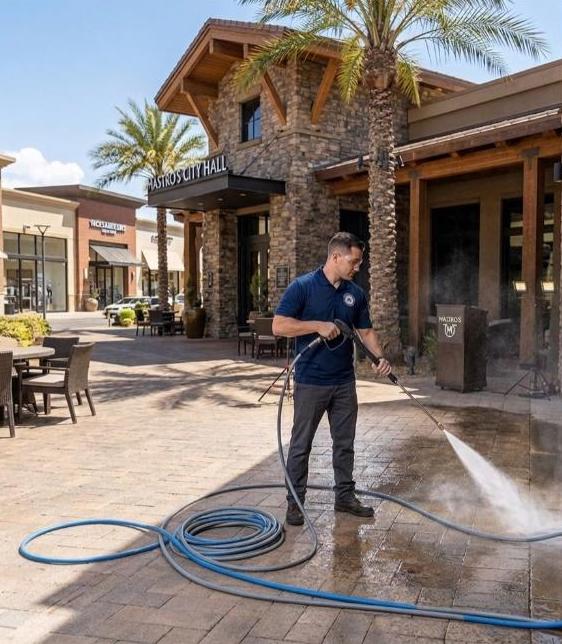
Power washing is a fundamental first step in any comprehensive parking lot maintenance plan. It’s a deep cleaning process that uses high-pressure water to effectively remove dirt, grime, oil stains, rubber marks, discarded chewing gum, and other debris that accumulates on your asphalt surface. In Phoenix’s dusty environment, this accumulation can be significant and detract from your property’s appearance.
Beyond aesthetics, power washing plays a critical role in preparing the surface for subsequent treatments like seal coating. If oil, dirt, or loose aggregate remains on the asphalt, the sealcoat won’t adhere properly, leading to premature peeling, cracking, and a significantly shortened lifespan for the sealant. Our team specializes in using the right pressure and techniques to clean asphalt thoroughly without causing damage. For a detailed look at how professional cleaning can transform your property’s exterior, see the full guide on parking lot cleaning.
💡 Key Takeaway: Power washing is the essential first step for any asphalt maintenance, preparing the surface by removing all contaminants to ensure proper adhesion of sealcoats and maximize their effectiveness.
Understanding Seal Coating for Parking Lots
Seal coating is a protective treatment applied to asphalt surfaces. It involves covering the asphalt with a layer of coal tar pitch or asphalt emulsion mixed with fillers and additives. This protective layer acts as a barrier against the elements, significantly extending the life of your pavement.
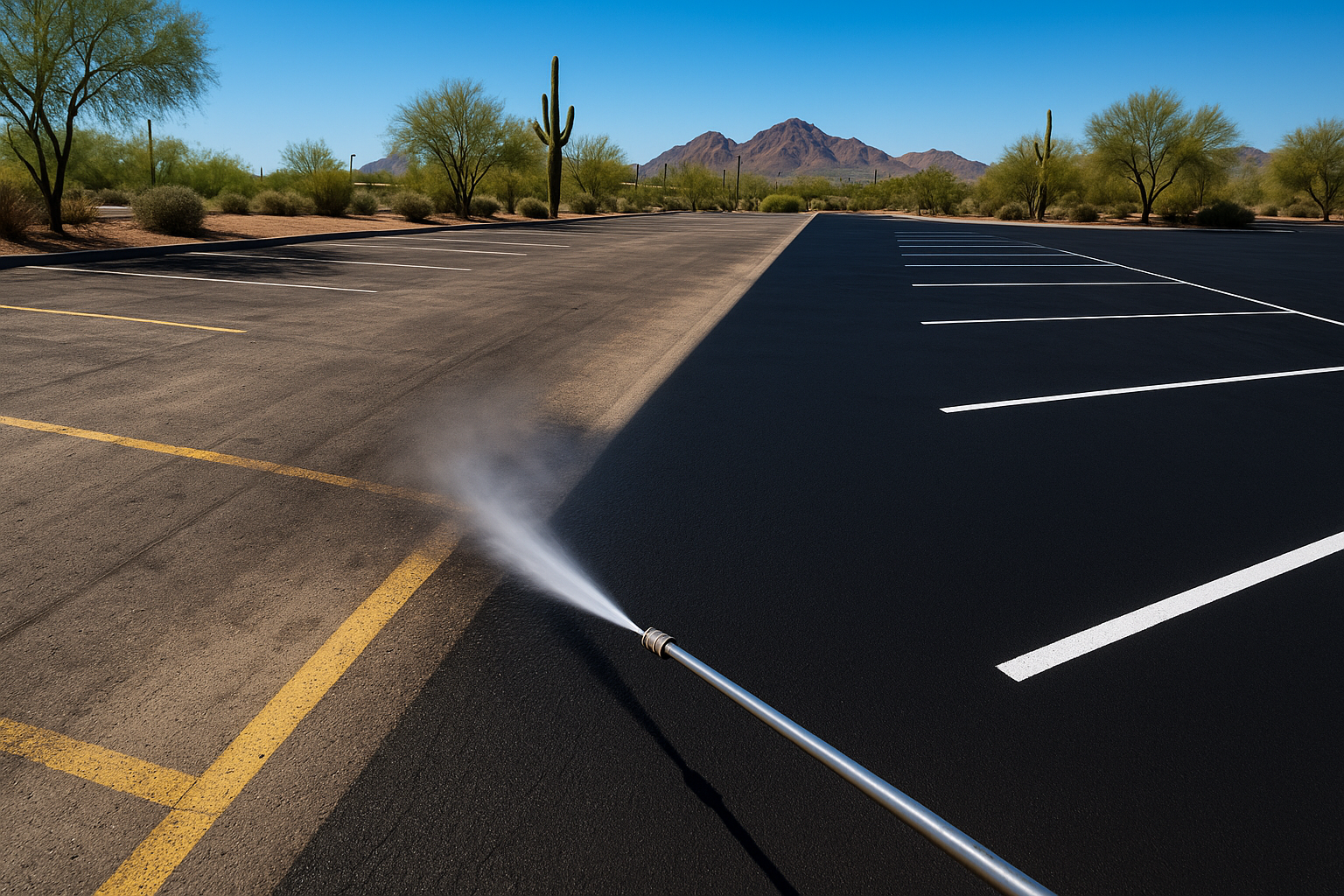
In the harsh Phoenix sun, asphalt can quickly oxidize, leading to fading, brittleness, and cracking. Seal coating replenishes the binders that are lost due to oxidation and UV exposure, preventing water penetration, oil and gas spills from deteriorating the asphalt, and slowing down the formation of cracks and potholes. It also restores that rich, dark black appearance, enhancing curb appeal and making line striping more visible.
💡 Key Takeaway: Seal coating is a preventative measure that protects your asphalt from weathering, UV damage, and chemical spills, extending its lifespan and restoring its aesthetic appeal.
Seal Coating vs Power Washing: The Crucial Order
Now that we’ve established what each service entails, the question of which comes first has a clear answer: power washing always precedes seal coating. This isn’t just a suggestion; it’s a critical best practice for effective asphalt sealing prep and long-term pavement health.
Imagine trying to apply a fresh coat of paint to a car covered in mud and grime. The paint wouldn’t stick, it would peel prematurely, and the final finish would look terrible. The same principle applies to asphalt. A clean, debris-free surface allows the sealcoat to bond directly and strongly with the asphalt pavement, creating a durable and long-lasting protective layer. If you seal a dirty parking lot, the sealcoat will only adhere to the dirt and oil, leading to quick failure, wasted product, and the need for costly reapplication.
Therefore, a typical parking lot maintenance order would be:
- Assessment and minor repairs (e.g., crack filling).
- Thorough power washing to remove all surface contaminants.
- Drying time to ensure the surface is completely dry.
- Application of seal coat.
- Curing time before allowing traffic.
💡 Key Takeaway: The correct parking lot maintenance order is power washing first, then seal coating. A clean surface is non-negotiable for sealcoat adhesion and longevity.
Service Comparison: Power Washing vs. Seal Coating
Here’s a quick overview of how these two services compare:
| Feature | Power Washing | Seal Coating |
|---|---|---|
| Primary Purpose | Deep cleaning and surface preparation | Asphalt protection and rejuvenation |
| What it Removes/Adds | Removes dirt, oil, grime, stains | Adds a protective layer |
| Frequency | Annually or as needed for cleanliness | Every 2-4 years, depending on traffic and condition |
| Immediate Benefit | Improved appearance, better traction, prepares for sealing | UV protection, prevents water damage, enhances color |
| Long-term Impact | Supports overall pavement health, extends sealing effectiveness | Significantly extends asphalt lifespan, reduces repair costs |
Why Professional Expertise Matters in Phoenix, AZ
While the principles of power washing and seal coating are straightforward, the application requires precision and expertise, especially in the Phoenix desert. Our extreme temperatures and intense UV exposure demand specialized knowledge in product selection and application techniques. Using too much pressure during power washing can damage asphalt, while improper sealcoat application can lead to a short-lived finish that peels or flakes.
AZ Power Clean brings years of experience in both power washing and seal coating to your Phoenix property. We understand the local conditions, use professional-grade equipment, and apply the correct techniques to ensure your parking lot receives the best possible care. Entrusting your parking lot maintenance to professionals guarantees a durable, aesthetically pleasing, and safe surface for years to come.
💡 Key Takeaway: Professional power washing and seal coating services are crucial in Phoenix’s climate to ensure proper application, maximize longevity, and protect your investment from extreme weather.
Have questions about professional concrete cleaning in Phoenix? Give us a call today.
Frequently Asked Questions About Parking Lot Maintenance
What happens if I sealcoat without power washing first?
If you sealcoat without first power washing, the sealant will likely not adhere properly to the asphalt. It will bond with the dirt, oil, and debris on the surface instead of the pavement itself, leading to premature peeling, cracking, and a significantly shortened lifespan for the sealcoat. This means your investment will not provide the protection or aesthetic benefits you expect.
How often should a parking lot be power washed?
For general cleanliness and maintenance, most commercial parking lots in Phoenix benefit from power washing annually. However, high-traffic areas or lots prone to heavy oil spills and debris might require more frequent cleaning. Power washing is also a mandatory step before any seal coating or line striping projects.
How often should a parking lot be seal coated?
Typically, asphalt parking lots should be seal coated every 2 to 4 years. The exact frequency depends on several factors, including the volume of traffic, the age and condition of the asphalt, and environmental exposure. Regular seal coating is a cost-effective way to protect your asphalt and extend its overall lifespan.
Can I power wash my newly seal-coated parking lot?
It’s crucial to allow a newly seal-coated parking lot ample time to cure, usually 24-48 hours minimum, before allowing traffic, and at least 30 days before any aggressive cleaning like power washing. Power washing too soon can strip away the fresh sealcoat, compromising its protective barrier. When you do power wash, use appropriate pressure and techniques to avoid damaging the coating.