In Phoenix, AZ, maintaining sparkling office windows isn’t just about aesthetics; it’s about preserving your building’s professional image and ensuring optimal light transmission. However, many building managers overlook a critical factor influencing how quickly windows get dirty: the strategic (or not-so-strategic) placement of rooftop equipment like HVAC units and solar panel arrays. Understanding how solar HVAC placement affects office window cleaning is key to developing an efficient and cost-effective maintenance plan.
The desert environment of Phoenix already presents challenges with dust and dirt. When you add the operational outputs of building systems, you create localized dirt “hotspots” that demand more frequent attention. At AZ Power Clean, we’ve observed firsthand how exhaust vents, condensation runoff, and even the natural path of rain across solar panels can create unique and stubborn patterns of building system window dirt. For a deeper dive into professional window maintenance, see the full guide.
The Overlooked Impact of Rooftop Equipment on Office Window Cleaning in Phoenix
Impact of HVAC Systems on Window Dirt
HVAC systems, while essential for keeping Phoenix offices cool, are also major contributors to dirty windows. The exhaust vents on rooftop units expel a mixture of dust, microscopic debris, and sometimes even oily residues, especially if near kitchen exhaust fans. Prevailing winds then carry this particulate matter directly onto nearby window surfaces. Over time, this creates a grimy film that’s tougher to remove than ordinary dust.
- Exhaust Contaminants: Dust, grease, and carbon particulates discharged from HVAC exhaust can cling to glass, forming stubborn stains.
- Condensation and Algae: Condensation lines or leaks from HVAC units can cause mineral deposits and encourage algae growth on windows below, leaving unsightly streaks and green patches.
- Air Intake Filtration: Even intake vents can draw in local dust, which, if filters aren’t meticulously maintained, can cycle back into the system and subtly contribute to the overall particulate load expelled elsewhere.
💡 Key Takeaway: HVAC exhaust and condensation are major culprits in accelerating window dirtying, requiring targeted cleaning strategies to address specific residues and mineral buildup.
How Solar Panel Arrays Affect Window Cleanliness
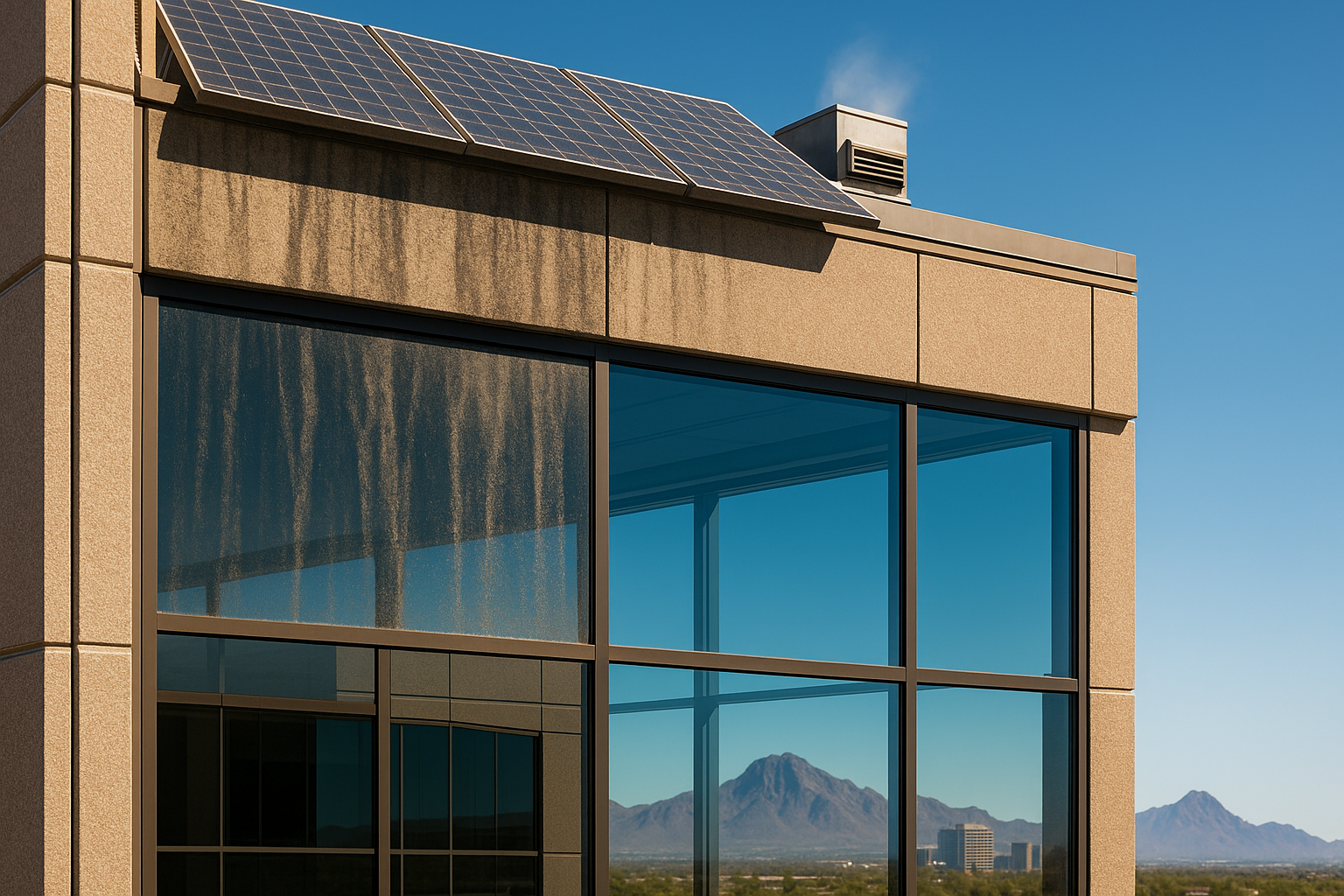
Solar panels are a fantastic investment for energy efficiency in Phoenix, but their placement can dramatically impact your commercial window cleaning schedule. While they’re busy converting sunlight into power, they also act as large, flat surfaces for dust and bird droppings to accumulate. When rain eventually falls, this concentrated dirt washes off the panels, often flowing directly onto windows below. This creates unsightly streaks and, if not cleaned promptly, can etch into the glass.
- Dust Accumulation & Runoff: Phoenix dust settles heavily on solar panels. When it rains, this concentrated grime washes off, creating dirty rivulets that run down the side of the building and onto windows.
- Bird Activity: Solar arrays provide ideal perching spots for birds. Their droppings are highly corrosive and visually disruptive, often landing on adjacent windows and requiring immediate attention.
- Reduced Light Transmission: Just like dirty solar panels reduce their efficiency (with some studies showing significant output increases after cleaning in polluted regions), dirty windows reduce natural light inside, increasing reliance on artificial lighting. Studies show that a thin film of dirt can reduce visible light transmission by up to 40%.
💡 Key Takeaway: Solar panels, while eco-friendly, can channel significant dirt and bird waste onto adjacent windows, demanding more frequent and specialized cleaning to prevent permanent damage and maintain curb appeal.
Understanding Building System Window Dirt Patterns
It’s not just the presence of rooftop equipment, but its specific arrangement relative to your windows that dictates unique “building system window dirt” patterns. For instance, a south-facing window below a west-facing HVAC exhaust will experience different soiling than an east-facing window adjacent to a solar array. Understanding these patterns is crucial for effective commercial window scheduling.
Our experienced team at AZ Power Clean can perform a detailed assessment of your building. We look at:
- Prevailing Wind Direction: How does the wind distribute airborne particles from vents?
- Drainage Paths: Where does water runoff from roofs and panels go?
- Equipment Proximity: How close are exhaust vents, cooling towers, and solar arrays to window sections?
- Sun Exposure: Intense Phoenix sun can bake dirt onto glass, making it harder to remove.
By mapping these influences, we can identify high-impact zones that require more frequent cleaning, rather than applying a one-size-fits-all approach that wastes resources and leaves some windows perpetually dirty.
💡 Key Takeaway: Identifying specific “building system window dirt” patterns based on equipment placement, wind, and drainage allows for a targeted cleaning approach that maximizes efficiency and cleanliness where it’s needed most.
Tailoring Your Commercial Window Cleaning Schedule
Given the specific challenges presented by solar and HVAC placement, a flexible and responsive commercial window cleaning schedule is essential for Phoenix businesses. A standard monthly or quarterly cleaning might be sufficient for some windows, but others—those directly impacted by rooftop equipment—may need more frequent attention to prevent severe buildup and potential glass degradation.
| Window Location/Influence | Typical Cleaning Frequency (Standard) | Recommended Frequency (Affected by Systems) |
|---|---|---|
| Ground-level, sheltered | Quarterly | Quarterly to Bi-monthly |
| Upper floors, minimal exposure | Bi-monthly | Monthly |
| Below HVAC exhaust/condensation lines | Monthly | Bi-weekly to Monthly (specialized cleaning) |
| Below solar panel arrays (runoff path) | Monthly | Bi-weekly to Monthly (post-rain essential) |
| High bird activity areas | Monthly | Weekly to Bi-weekly (spot cleaning) |
Working with a professional window cleaning service like AZ Power Clean allows you to develop a customized plan. We can adjust frequencies for specific building sections, use specialized cleaning agents for different types of residue, and ensure that your entire property maintains a consistently clean and professional appearance, enhancing energy efficiency and protecting your investment.
💡 Key Takeaway: A customized commercial window cleaning schedule, informed by the specific placement of HVAC systems and solar panels, ensures optimal cleanliness, prevents long-term damage, and provides better value than a generic, one-size-fits-all approach.
Have questions about professional concrete cleaning in Phoenix? Give us a call today.
Frequently Asked Questions About Office Window Cleaning
Why do windows near HVAC units get dirtier faster?
HVAC units expel dust, soot, and sometimes greasy residues through their exhaust vents. These particles are carried by the wind and settle on nearby window surfaces, creating a more persistent and difficult-to-remove film than general environmental dust.
How do solar panels contribute to dirty windows?
Solar panels collect significant amounts of dust and bird droppings. When it rains, this concentrated grime washes off the panels, often flowing directly onto windows situated below, leading to severe streaking and mineral deposits.
Can dirty windows impact office energy efficiency?
Yes. Dirty windows reduce the amount of natural light entering your office, forcing you to rely more on artificial lighting. A thin layer of dirt can significantly diminish light transmittance, thereby increasing energy consumption.
How often should commercial office windows be cleaned in Phoenix?
The ideal frequency varies greatly depending on factors like building location, exposure to high traffic, and crucially, the proximity and type of rooftop equipment (HVAC, solar panels). Windows near these systems may require cleaning bi-weekly or monthly, while other sections might only need quarterly attention. A professional assessment can help determine the optimal schedule.