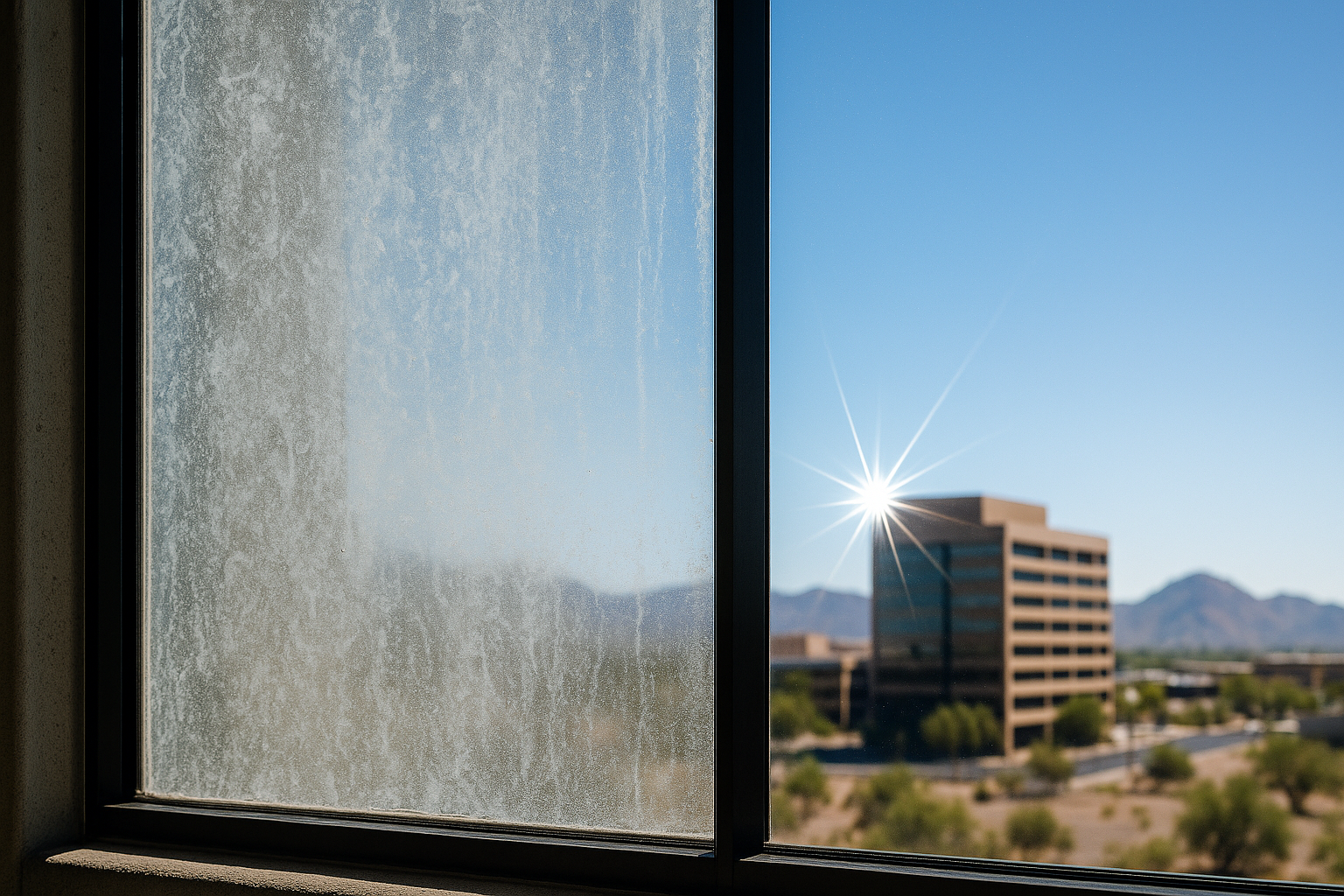
In Phoenix, AZ, where the sun beats down relentlessly and water is a precious resource, the presence of hard water stains on office windows is an all too common problem. These unsightly mineral deposits don’t just detract from your building’s appearance; they can actually etch into the glass over time, causing permanent damage if not addressed properly. For businesses, maintaining a pristine exterior is crucial for making a strong first impression. When it comes to effective hard water stain removal from office windows, a professional approach is essential to achieve lasting results.
Many businesses in Phoenix face unique challenges with their exterior maintenance, especially when it comes to glass. Our team at AZ Power Clean understands the local conditions that contribute to these stubborn stains. Whether it’s the aftermath of monsoon season or persistent sprinkler overspray, we’ve seen it all. Investing in regular office window cleaning not only keeps your property looking its best but also protects your investment in your building’s exterior. Hard water stains are more than just an aesthetic issue; they can compromise the integrity and longevity of your windows.
Understanding Hard Water Stains on Office Windows
Common Causes of Hard Water Deposits in Phoenix
The arid climate of Phoenix, combined with the hard water supply, creates a perfect storm for mineral deposits on glass. Two primary culprits are often responsible for the toughest hard water stains on commercial properties:
- Sprinkler Overspray: This is arguably the most common cause. Landscaping irrigation systems often spray water onto windows, especially on ground-level or lower-floor office spaces. When this water, rich in dissolved minerals like calcium and magnesium, evaporates in the intense Phoenix heat, it leaves behind a concentrated mineral residue. Repeated exposure builds up stubborn layers that become progressively harder to remove.
- HVAC Condensate Drainage: Commercial HVAC units generate condensate as they cool the air. If drainage lines are poorly routed or become clogged, this mineral-rich water can drip or stream down windows. Like sprinkler water, it evaporates, leaving behind a persistent trail of deposits that are often far more concentrated and difficult to remove than those from sprinklers.
💡 Key Takeaway: In Phoenix, sprinkler overspray and HVAC drainage are the leading causes of hard water stains on office windows. Understanding the source is key to both removal and prevention strategies.
Identifying the Severity of Mineral Stains
Not all hard water stains are created equal. Their severity depends on several factors, including:
- Duration: How long have the stains been present? Newer stains are typically easier to remove.
- Frequency of Exposure: Constant exposure leads to thicker, more ingrained deposits.
- Chemical Composition: The specific minerals in the water (calcium, magnesium, silica, etc.) influence how tenaciously they bond to the glass.
- Sun Exposure: Intense UV radiation “bakes” the minerals onto the glass, making them much harder to dislodge.
Professionals categorize stains from light to heavy, often determining if a simple acidic cleaner will suffice or if more aggressive mechanical methods are required for true window restoration.
Professional Techniques for Hard Water Stain Removal
Removing hard water stains effectively requires expertise, the right tools, and a deep understanding of glass chemistry. We employ a two-pronged approach:
- Chemical Restoration: Using specialized acidic cleaners designed to dissolve mineral deposits without harming the glass.
- Abrasive & Polishing Techniques: For deeply etched or heavy stains, mechanical removal with fine abrasives and polishing compounds.
💡 Key Takeaway: Professional hard water stain removal for office windows involves a combination of chemical and abrasive methods, chosen based on the stain’s severity and composition. DIY methods often fall short and can even damage glass.
Chemical Methods for Mineral Stain Glass Removal
For lighter to moderate hard water stains, chemical treatments are often the first line of defense. These products are formulated to break down the mineral bonds with the glass.
- Acid-Based Cleaners: Professional-grade acidic cleaners (often phosphoric or oxalic acid-based) are much stronger and more effective than household vinegar. They work by reacting with the alkaline mineral deposits, dissolving them into a solution that can then be rinsed away. Proper dwell time and application techniques are crucial to avoid damaging surrounding materials.
- Professional-Grade Spot Removers: Beyond general acidic cleaners, there are specialized hard water spot removers designed for specific mineral compositions or stubborn areas. These often contain chelating agents that bind to the minerals, lifting them from the glass surface.
When applying these chemicals, safety is paramount. Professionals wear appropriate PPE, and ensure proper ventilation, and precise application to protect both themselves and your property.
Abrasive and Polishing Techniques for Window Restoration
When chemical methods aren’t enough, particularly for heavily calcified or etched glass, abrasive techniques are necessary to achieve true window restoration.
- Fine Steel Wool (#0000 grade): Used carefully with a lubricating solution, this ultra-fine steel wool can gently abrade away surface-level mineral deposits without scratching the glass. It requires a skilled hand and constant lubrication to prevent damage.
- Specialized Polishing Compounds: For deeply etched glass, professional technicians use compounds containing micro-abrasives, similar to those used in automotive paint correction. These are applied with rotary or orbital polishers, slowly grinding down the top layer of the glass to remove the etchings and restore clarity. This is a meticulous process that demands experience to avoid distortion or further damage to the glass.
- Glass Resurfacing Tools: In extreme cases, specialized glass resurfacing tools, which essentially remove a microscopic layer of glass, may be employed. This is a last resort before considering full window replacement and is only performed by highly trained technicians.
💡 Key Takeaway: Abrasive methods like fine steel wool or polishing compounds are reserved for severe hard water stains and require professional expertise to prevent permanent scratching or damage to the glass.
Choosing the Right Hard Water Removal Strategy
The best approach for hard water stain removal from your office windows in Phoenix depends on the specific situation. Our technicians conduct a thorough assessment to determine:
- The type of glass (tempered, annealed, coated, etc.)
- The age and severity of the stains
- The source of the hard water (to advise on prevention)
This assessment allows us to tailor a solution that is both effective and safe for your property. We always aim for the least aggressive method first, escalating only when necessary.
| Hard Water Stain Severity | Recommended Professional Method | Notes |
|---|---|---|
| Light (recent spots, mild hazing) | Professional Acidic Cleaner / Spot Remover | Often combined with standard window cleaning techniques. Quickest and least invasive. |
| Moderate (visible build-up, slight etching) | Stronger Acidic Cleaner + Fine Steel Wool | Requires careful manual application and expert technique to avoid scratches. |
| Heavy (thick crust, deep etching, cloudy glass) | Polishing Compounds / Glass Resurfacing | Specialized equipment and extensive training needed. Aimed at window restoration. |
💡 Key Takeaway: Regular maintenance is the best defense against severe hard water stains. Addressing deposits early can save your business significant costs on extensive window restoration down the line.
Prevention is Key for Lasting Cleanliness
Once hard water stains are removed, preventing their return is crucial. Here are some strategies we recommend to our Phoenix clients:
- Adjust Sprinkler Systems: Re-aim sprinklers away from windows or install baffles to prevent overspray. Consider drip irrigation near window areas.
- Maintain HVAC Drainage: Ensure HVAC condensate lines are clear and properly routed away from building surfaces and windows. Regular HVAC maintenance can prevent clogs.
- Implement Regular Professional Window Cleaning: Frequent cleaning (monthly or quarterly, depending on exposure) helps remove mineral deposits before they have a chance to bond and etch into the glass. This is the most effective long-term solution.
- Apply Protective Coatings: In some cases, applying a professional hydrophobic glass coating can make the surface less prone to mineral adhesion and easier to clean in the future.
For businesses in Phoenix, AZ, dealing with hard water stains on office windows doesn’t have to be a recurring nightmare. With the right professional approach, your windows can be restored to their original clarity and protected against future damage. At AZ Power Clean, we combine our local expertise with proven techniques to deliver superior mineral stain glass removal and lasting results.
Have questions about professional concrete cleaning in Phoenix? Give us a call today.
Frequently Asked Questions About Hard Water Stain Removal
What makes Phoenix water “hard”?
Phoenix’s water supply contains a high concentration of dissolved minerals, primarily calcium and magnesium, picked up as water flows through the region’s geological formations. This mineral content is what defines “hard water.”
Can I use household cleaners like vinegar to remove hard water stains?
While vinegar can be effective on very light, fresh hard water spots, it’s typically insufficient for the stubborn, baked-on mineral deposits common in Phoenix. Stronger, professional-grade acidic cleaners are needed for effective mineral stain glass removal without leaving residue.
Will hard water stains permanently damage my office windows?
Yes, if left untreated, the minerals in hard water can etch into the glass surface, causing permanent damage that regular cleaning cannot reverse. This is why prompt and professional hard water stain removal is crucial for window restoration.
How often should I have my office windows cleaned to prevent hard water stains?
For most commercial properties in Phoenix, quarterly window cleaning is a good baseline. However, if your windows are frequently exposed to sprinkler overspray or HVAC drainage, monthly or bi-monthly cleaning might be necessary to prevent significant mineral buildup.