
Maintaining the exterior of commercial buildings in Phoenix, AZ is crucial for curb appeal and property value. When it comes to cleaning, property managers often face a critical decision: pressure washing vs soft washing commercial buildings. While both methods effectively remove dirt and grime, they differ significantly in technique, application, and the types of surfaces they are best suited for. Understanding these distinctions is key to preventing damage and achieving optimal results.
At AZ Power Clean, we understand the unique challenges of keeping commercial properties looking their best in the Arizona climate. When you’re looking for a reliable pressure washing service, choosing the right exterior cleaning method isn’t just about getting things clean; it’s about protecting your investment. This guide will help you navigate the nuances of pressure washing and soft washing, ensuring your building gets the care it needs.
Navigating Commercial Exterior Cleaning: Pressure Washing vs. Soft Washing
Understanding Pressure Washing
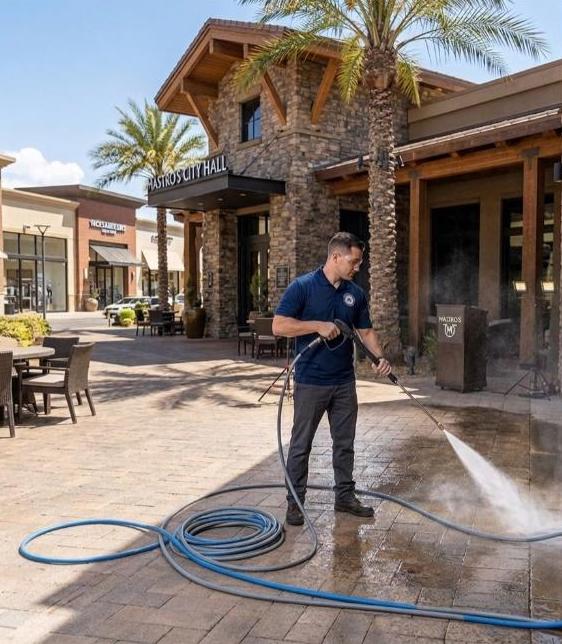
Pressure washing, as the name suggests, uses high-pressure water streams to blast away dirt, grime, mold, mildew, and other stubborn contaminants. The equipment typically operates at PSI (pounds per square inch) ranges from 1,500 to 4,000 PSI or even higher for specialized applications. This raw power makes it highly effective for resilient surfaces that can withstand intense force without damage.
For commercial properties, pressure washing is often the go-to for:
- Concrete surfaces: Sidewalks, parking lots, drive-thrus, and loading docks where oil stains, tire marks, and heavy foot traffic create deeply embedded dirt.
- Hard, unpainted brick: Removing efflorescence, graffiti, and years of accumulated pollutants.
- Metal dumpsters and enclosures: Sanitizing and degreasing heavily soiled areas.
- Some durable stone pavers: Revitalizing outdoor common areas.
While powerful, pressure washing requires a trained hand. Incorrect nozzle selection, excessive pressure, or holding the wand too close to a surface can cause irreversible damage, such as etching, streaking, or dislodging materials.
💡 Key Takeaway: Pressure washing uses high-force water (1,500-4,000+ PSI) ideal for robust surfaces like concrete, unpainted brick, and heavily soiled metal. Professional operation is crucial to prevent damage.
Exploring Soft Washing
In contrast to the brute force of pressure washing, soft washing employs a low-pressure water delivery system, typically operating at less than 500 PSI – often comparable to a garden hose. The real cleaning power comes from a blend of eco-friendly, biodegradable cleaning solutions specifically formulated to break down organic growth like algae, mold, mildew, bacteria, and other contaminants at a molecular level.
After the cleaning solution dwells on the surface for a short period, it’s gently rinsed away with low-pressure water. This method not only cleans but also sanitizes the surface, inhibiting future growth, which means a longer-lasting clean.
Soft washing is the preferred method for delicate surfaces on commercial buildings, including:
- Stucco and EIFS (Exterior Insulation and Finish Systems): Preventing cracking, chipping, or streaking.
- Vinyl and aluminum siding: Avoiding warping or dislodging panels.
- Painted surfaces: Protecting paint integrity and preventing peeling.
- Roofing materials (shingles, tiles): Removing moss, lichen, and algae without stripping granules or damaging fragile tiles.
- Window cleaning and glass facades: Achieving streak-free results without risking seal damage.
💡 Key Takeaway: Soft washing uses low-pressure water (<500 PSI) combined with specialized cleaning solutions to gently remove organic growth and dirt, making it safe for delicate surfaces.
Key Differences: Pressure Washing vs. Soft Washing
Understanding the fundamental differences in these pressure washing methods is paramount for effective and safe commercial cleaning. Here’s a quick comparison:
| Feature | Pressure Washing | Soft Washing |
|---|---|---|
| PSI Range | High (1,500 – 4,000+ PSI) | Low (Under 500 PSI) |
| Cleaning Mechanism | Force of water blast | Cleaning solutions dissolve contaminants |
| Primary Use | Heavy dirt, oil, grime, graffiti on durable surfaces | Organic growth (mold, algae, mildew), general dirt on delicate surfaces |
| Risk of Damage | Higher if not done correctly (etching, streaking, dislodging) | Very low (no surface etching, paint removal, or structural damage) |
| Effectiveness on Organic Growth | Removes surface layer, but spores may remain, leading to faster regrowth | Kills spores at the root, providing a longer-lasting clean |
Surface Compatibility: When to Use Which Method
Choosing the correct commercial cleaning techniques depends entirely on the building materials. Here’s a breakdown:
Stucco and EIFS
Soft Washing: Absolutely essential for stucco and EIFS. These porous materials are highly susceptible to damage from high-pressure water, which can chip, crack, or force water behind the siding, leading to moisture issues and mold within the wall cavities. Soft washing gently cleans without risk.
Metal Siding
Mostly Soft Washing: While metal siding can seem robust, high pressure can easily dent, warp, or strip paint, especially on older or thinner panels. Soft washing effectively removes dirt, oxidation, and grime without causing damage. In rare cases of extremely heavy, localized buildup on unpainted, very robust metal, a *very* low-pressure wash might be considered, but soft washing remains the safer primary choice.
Brick
Both, with caution: Unpainted, dense brick can often withstand moderate pressure washing (typically 1,500-2,000 PSI) to remove heavy grime or efflorescence. However, painted brick, older, softer bricks, or those with deteriorating mortar require soft washing to prevent damage to the surface or mortar joints. Always test a small, inconspicuous area first.
Glass and Windows
Soft Washing: High pressure can damage window seals, screens, and even crack glass. Soft washing, often combined with specialized window cleaning solutions and squeegees, provides a safe, streak-free clean for all commercial glass surfaces and window frames.
Roofing (Asphalt Shingles, Tile, Metal)
Soft Washing: This is the ONLY recommended method for cleaning roofs. Pressure washing can lift and remove asphalt granules, shorten shingle lifespan, void warranties, and dislodge tiles. For metal roofs, it can strip protective coatings. Soft washing effectively eliminates moss, algae, and lichen without harming the roofing material, preserving its integrity and appearance.
💡 Key Takeaway: Soft washing is universally safer for delicate materials like stucco, painted surfaces, roofing, and windows. Pressure washing is best reserved for durable, hard surfaces like concrete and unpainted brick under professional guidance.
Risk Assessment and Considerations
When selecting a cleaning method for your commercial property in Phoenix, assessing the risks associated with each is critical. The desert environment, with its intense sun and dust, makes surfaces prone to different types of buildup.
- Damage Risk: High-pressure washing carries a significant risk of damage to certain materials if not handled by an experienced professional. This includes etching, paint removal, wood splintering, window seal damage, and even structural issues. Soft washing, due to its low pressure, virtually eliminates these risks.
- Environmental Impact: Both methods can be environmentally friendly when proper precautions are taken. Our soft washing solutions are biodegradable, breaking down safely. However, runoff from cleaning chemicals needs to be managed responsibly, especially in a drought-prone area like Phoenix.
- Longevity of Clean: While pressure washing removes surface contaminants, soft washing treatments often kill the underlying organic growth (like mold and algae spores), leading to a cleaner surface that stays clean for a longer period. This can reduce the frequency of future cleanings.
Making the Right Choice for Your Phoenix Property
The decision between pressure washing and soft washing isn’t an “either/or” for an entire property; it’s often a combination of both. A commercial building in Phoenix might have concrete sidewalks (pressure washing), a stucco facade (soft washing), and a tile roof (soft washing). A professional cleaning company will assess each surface individually and apply the appropriate method.
Consider the age of your building, the specific materials used, and the type of dirt or growth present. For example, if your building has persistent green algae growing on its north-facing stucco walls, soft washing is the clear choice for effective, long-term removal.
💡 Key Takeaway: A hybrid approach, utilizing both pressure washing and soft washing where appropriate, is often the most effective and safest strategy for comprehensive commercial property cleaning in Phoenix.
Why Professional Expertise Matters
While DIY videos might make it seem simple, commercial pressure washing and soft washing are specialized tasks. Professionals have:
- The Right Equipment: Commercial-grade machines, a variety of nozzles, and specialized soft wash systems.
- Extensive Training: Knowledge of different surface materials, appropriate PSI settings, and proper chemical application.
- Safety Protocols: Adherence to safety standards for workers, building occupants, and landscaping.
- Insurance: Protection against accidental damage to your property.
For your commercial property in Phoenix, entrusting these tasks to experienced professionals like AZ Power Clean ensures that your building is cleaned thoroughly, safely, and effectively, enhancing its appeal and extending its lifespan.
Have questions about professional concrete cleaning in Phoenix? Give us a call today.
Frequently Asked Questions About Commercial Exterior Cleaning
What is the biggest risk of using the wrong cleaning method?
The biggest risk is irreparable damage to your building’s exterior, such as etching, cracking, stripping paint, or dislodging materials. This can lead to costly repairs and significantly reduce your property’s curb appeal and value.
How often should a commercial building be soft washed or pressure washed in Phoenix?
The frequency depends on several factors: the building’s location, exposure to sun and dust, foot traffic, and the type of materials. Generally, an annual cleaning is a good baseline, but high-traffic areas or properties prone to heavy dust or algae might benefit from more frequent attention.
Are the cleaning solutions used in soft washing safe for landscaping?
Reputable soft washing companies use biodegradable, eco-friendly solutions and take extensive precautions to protect surrounding landscaping. This includes wetting plants before, during, and after application, and sometimes covering sensitive vegetation to prevent any adverse effects.
Can I mix pressure washing and soft washing on the same building?
Yes, absolutely. In fact, for most commercial properties with various exterior surfaces, a combination of both methods is the most effective and safest approach. Professionals assess each specific area and apply the appropriate technique.